
A beautiful floor starts with a good plan. In a new home, your choices can affect the look of connected rooms, the feel underfoot, and how much upkeep you’ll handle later. To find the best flooring for new construction homes, start with the way you live: consider busy walkways, pets, children, moisture, and your overall budget. Then compare materials such as hardwood, luxury vinyl plank, laminate, engineered wood, and tile. Each has its own strengths and limitations, and product specifications matter. This guide will help you assess those tradeoffs, understand what to ask your installer, and plan for details like subfloor conditions and custom stair treads before work begins.
Key Takeaways
- Match flooring to each room: Consider moisture, foot traffic, comfort, and maintenance when comparing hardwood, engineered wood, LVP, laminate, and tile.
- Compare the full project cost: Ask whether your estimate includes installation, subfloor preparation, trim, transitions, and removal of existing flooring.
- Confirm installation details before work begins: Check product requirements, subfloor conditions, and installer credentials, then clarify who will complete the work.
Which Flooring Options Are Most Popular for New Homes?
Popular flooring choices for new homes include solid hardwood, engineered wood, luxury vinyl plank (LVP), laminate, and tile. Each offers a different balance of appearance, durability, care, and cost. Hardwood brings natural grain and can often be refinished. Engineered wood has a real-wood surface over a layered core. LVP and laminate offer wood-inspired styles, while tile is often chosen for rooms where splashes and moisture are part of daily life.
Rather than selecting one material for every room, consider how you use each space. A continuous floor through an open living area can create a cohesive look, while a different surface in a bathroom or laundry room may better suit the conditions there. Pets, children, muddy shoes, and frequent foot traffic can also affect which material makes sense.
Before choosing a style, check the product’s installation requirements, care instructions, and moisture limitations. The condition and levelness of the subfloor matter, too. A flooring professional can help assess your home and explain options for hardwood, LVP, laminate, and other flooring services.
Solid Hardwood: Natural Character and Refinishability
Solid hardwood is made from a single piece of wood and comes in different species, grain patterns, colors, and finishes. Its natural variations give each floor character, and its classic appearance works well in both traditional and contemporary homes. Hardwood can often be sanded and refinished as its surface wears, though the number of times depends on the board’s thickness and condition.
This option is popular in living rooms, bedrooms, and other spaces where homeowners want the look and feel of real wood. Solid hardwood can be affected by standing water and changes in humidity, so it may not suit every room. Ask about the wood species, finish, and maintenance needs before making a choice. The National Wood Flooring Association’s consumer resources offer more information about wood flooring and care.
Engineered Wood: A Layered Alternative to Solid Hardwood
Engineered hardwood has a real-wood surface layer bonded to a core made from multiple layers. This construction gives it the appearance of solid hardwood, while the layered structure can make it less prone to movement as temperature and humidity change. Performance varies by product, so check the manufacturer’s guidance for the conditions in your home.
Engineered wood can work well in many living spaces, but it is not automatically waterproof or suitable for every damp area. Some products can be refinished; others have a surface layer that is too thin for sanding. Before buying, ask how thick the wood layer is and what care the manufacturer recommends. This comparison of engineered and solid wood flooring explains key differences in construction and use.
Luxury Vinyl Plank (LVP): Water-Resistant Wood-Look Flooring
Luxury vinyl plank is designed to resemble wood, with styles ranging from subtle grain to more pronounced textures. Many products resist spills and are easy to clean, making LVP a popular option for kitchens, entryways, and busy households. Water resistance and scratch performance vary, so review the product specifications, wear layer, and warranty before choosing.
Depending on the product, LVP may be installed as a floating floor or secured with adhesive. Either way, the subfloor needs proper preparation to support a reliable installation. Consider how the plank’s color and width will look beside cabinetry and nearby flooring, as well as how the product should be cleaned. A professional can help match the material and installation method to the room. Explore ValorCraft’s luxury vinyl plank flooring services.
Laminate: Durable, Budget-Friendly Wood-Look Flooring
Laminate offers a wood-inspired look across a range of price points. It typically has a decorative image protected by a clear wear layer, with a fiberboard core beneath. Many products are designed to handle everyday wear and are simple to clean, making them worth considering for active households.
Water resistance depends on the specific product. Some laminate flooring is designed to tolerate spills for a limited time, but not every option is waterproof or appropriate for rooms with frequent moisture. Follow the manufacturer’s directions for cleaning and spill removal, and check the warranty’s terms. Laminate is often installed as a floating floor, so a clean, level subfloor is important. Read this overview of popular new-home flooring choices for more on laminate and other options.
Tile: A Durable Choice for Moisture-Prone Areas
Ceramic and porcelain tile are common choices for bathrooms, laundry rooms, and other spaces where floors may get wet. Tile is durable and easy to wipe clean, and its range of sizes, colors, and patterns makes it suitable for many design styles. In a wet area, though, the tile is only one part of the system. Grout, waterproofing, and installation details also affect how the floor performs.
Tile can feel cool and firm underfoot, so consider comfort as well as appearance. Check that the tile is suitable for the room and ask about slip resistance, grout care, and sealing requirements. Proper subfloor preparation is important for a stable installation. With the right product and planning, tile can serve as a practical surface in moisture-prone rooms while wood or wood-look flooring creates continuity through the rest of the home.
How Do Flooring Costs, Durability, and Care Compare?
The price on a flooring sample is only one part of the project cost. Material, installation, subfloor preparation, trim, transitions, and future care all affect what you’ll spend over time. A floor that costs less upfront may need different repairs or replacement sooner, while a refinishable surface may offer more years of use.
Start by matching the flooring to the room and your household’s routines. Consider spills, pets, foot traffic, and how much upkeep you’re comfortable with. Then request an estimate that spells out the full scope of work. ValorCraft Flooring’s installation and refinishing services include options for different materials and project needs across North Carolina.
Compare Material, Installation, and Long-Term Costs
Flooring estimates should include more than the cost of the product. Ask whether labor, removal of existing flooring, subfloor repairs or leveling, underlayment, trim, and transitions are included. These details can affect the final price, especially in a new home where floor heights need to meet cleanly across rooms.
Solid hardwood may require a larger initial investment, but it can often be sanded and refinished. Engineered wood has a real-wood surface over layered construction, while LVP and laminate offer wood-inspired styles at a range of price points. Tile costs depend on the material and installation details. Compare full estimates, and weigh them against your budget, design preferences, and room use, as Southern Luxe Flooring’s guide to popular new-home flooring recommends.
Assess Water Resistance, Scratches, Dents, and Foot Traffic
Think about the conditions each floor will face. LVP is often chosen for busy spaces and areas where spills are likely, but performance varies by product. Check the manufacturer’s water-resistance details and wear-layer specifications. Laminate can be durable and easy to clean, but don’t assume every product is waterproof or suitable for standing water.
Hardwood can scratch or dent, particularly in high-traffic areas. Engineered wood’s wear resistance depends partly on its surface layer and finish. Tile handles moisture well, though it can feel firm underfoot. Review product details before deciding, and ask how the floor is expected to perform in your home. Panel Town & Floors’ flooring guide offers more information about LVP wear layers and busy areas.
Plan for Cleaning, Repairs, Refinishing, and Product Care
Most floors benefit from regular sweeping or vacuuming with equipment suited to the surface. Clean spills promptly, use only recommended cleaning products, and check the flooring manufacturer’s instructions before damp mopping. Entry mats and felt pads beneath furniture can help reduce tracked-in grit and scratches. Avoid excess water and harsh cleaners unless the product guidance says they’re safe.
Repair needs vary, too. Hardwood may be refinished as its finish wears, while some LVP and laminate floors allow individual planks to be replaced. Tile grout may need periodic cleaning or sealing, depending on the product. Hardwood is sometimes refinished around every seven to 10 years, but traffic, finish, and care all affect timing. VM Flooring and More’s hardwood care guide provides further context.
Follow Manufacturer Guidance, Not Maintenance Myths
Installation requirements depend on the flooring product and the conditions inside the home. Some materials need time to adjust to the home’s temperature and humidity before installation; others have different requirements. Ask your installer to review the product instructions, moisture conditions, and subfloor preparation before work begins. Don’t assume every floor needs the same acclimation process.
Use product-specific instructions for cleaning and ongoing care, too. Ask which cleaners are appropriate, how to protect the surface, and what steps to take if a plank or tile is damaged. Broad claims about hardwood or other flooring materials may not apply to the specific product you choose. Wood Brothers Carpet’s guide to hardwood flooring myths is a useful reminder to verify care advice before acting.
Which Flooring Works Best in Each Room?
Choose flooring based on how each room is used, how much moisture it encounters, and the look and feel you want throughout your home. You can use one material across connected spaces for a continuous look, or select different flooring to meet each room’s needs.
Choose Flooring for Living Rooms and Open-Plan Spaces
Living rooms and open-plan areas often see steady foot traffic, so look for flooring that fits your household and is easy to care for. Luxury vinyl plank (LVP) is a popular option for its wood-inspired appearance and range of price points. Homeowners also choose hardwood for its natural grain and the option to refinish it over time. Discussions among new-home owners show that LVP is common across a range of home styles, as noted in this flooring discussion.
Before choosing LVP, compare the wear layer, warranty, and installation requirements. Product performance varies, so check the manufacturer’s specifications. Carrying the same flooring through connected rooms can create a cohesive look, though some layouts require transitions. ValorCraft’s flooring services include options for new-home projects.
Pick Flooring for Kitchens, Bathrooms, and Laundry Rooms
Kitchens, bathrooms, and laundry rooms need flooring suited to spills, splashes, and regular cleaning. Many LVP and luxury vinyl tile (LVT) products resist water, making them options to consider in moisture-prone areas. However, water resistance varies by product, and installation details and subfloor conditions matter. Check the manufacturer’s guidance and ask how the installer will handle seams, edges, and transitions.
Tile is another durable choice for these rooms, though grout needs routine cleaning and care. Think about comfort underfoot, slip resistance, and how the flooring will feel when you stand for longer periods. This guide to popular flooring for new homes compares options, but your room’s conditions should shape the final choice. A flooring professional can also check that the subfloor is suitable before installation.
Select Flooring for Bedrooms and Home Offices
Bedrooms and home offices generally face less moisture than kitchens or bathrooms, so you have more choices. Hardwood adds natural character and suits a range of interior styles. Carpet is still a common bedroom option if you prefer a softer, warmer surface. LVP and laminate can also provide a wood-inspired look with straightforward day-to-day cleaning.
For a home office, consider how a desk chair and other furniture may affect the floor. A chair mat can help protect the surface from rolling wheels. In bedrooms, factor in comfort, sound, and how the flooring will meet closets and hallways. Using the same material in adjoining areas can create a connected feel; choosing a different surface can define each room. If you’re weighing hardwood or vinyl, review the product’s care instructions so you know what regular maintenance will involve.
Plan Flooring for Entries, Hallways, and Stairs
Entries and hallways receive frequent foot traffic and can collect dirt, grit, and moisture from outside. Choose a floor that’s easy to clean and appropriate for the conditions. Laminate can be an affordable, wood-look option, but its water resistance varies by product. Check the manufacturer’s guidance before installing it near an exterior door. LVP may also suit a busy entry, depending on the product and installation.
Stairs call for careful measuring and a secure, well-finished installation. Nosing, edges, and transitions affect both the finished appearance and how the stairs feel underfoot. Custom stair treads can help coordinate stairs with nearby hardwood or other flooring. Include stair details, trim, and transitions when discussing your estimate with an installer. ValorCraft’s team uses in-house crews, and can help plan the work around the flooring and finish details you choose.
What Should You Consider Before Choosing New-Construction Flooring?
Choosing flooring for a new home means balancing appearance with the demands of everyday life. Before you settle on a material, consider your total budget, how each room will be used, and the conditions beneath the floor. A product that looks right in a sample can perform differently depending on moisture, foot traffic, installation quality, and maintenance.
It also helps to make flooring decisions early enough to coordinate them with the builder’s schedule. Material availability, subfloor preparation, trim, and stair details can all affect the work. Ask for a clear estimate that spells out what is included, and confirm that the installer is licensed and insured. ValorCraft Flooring’s installation services include subfloor preparation, trim work, and custom stair treads, details worth accounting for as you plan.
Budget for Materials, Installation, and Future Care
Compare the complete project cost, not only the flooring price per square foot. The estimate may also include delivery, subfloor preparation, underlayment, transitions, trim, and installation. Complex layouts or patterns can take more labor, as Hogan Flooring notes. Ask your installer to identify these costs and explain any assumptions in the estimate.
Plan for care after installation, too. Hardwood can be refinished, while other products may have specific cleaning instructions or repair limitations. Ask what routine upkeep involves and whether damaged planks or tiles can be replaced individually. Comparing these long-term needs alongside the initial price can help you choose a floor that fits your household and budget.
Match Flooring to Traffic, Pets, and Lifestyle
Consider what happens in each room on a typical day. Busy entries, kitchens, and hallways may need flooring that handles frequent foot traffic and routine cleaning. If you have children or pets, look at scratch resistance, water resistance, and how easily spills can be cleaned. Luxury vinyl plank is one option for active households, and Southern Luxe Flooring describes its practical qualities.
Your habits can help narrow the choices. Think about where shoes are left, whether pets’ water bowls sit on the floor, and how often you cook or entertain. Hardwood may suit a living room where you want natural grain, while a moisture-resistant product may be more practical near a laundry area. Choose based on how you’ll use the space, not just how a sample looks.
Check Moisture, Subfloor Conditions, and Comfort
Moisture exposure should help guide your choice, especially in kitchens, bathrooms, and laundry rooms. Check the product’s specifications and installation requirements rather than assuming every floor handles water the same way. LVP is often considered for moisture-prone rooms, but performance varies by product and installation. Southern Luxe Flooring discusses LVP’s use in kitchens and bathrooms.
The subfloor also needs attention before installation. Ask your builder or flooring professional to confirm it is clean, level, dry, and appropriate for the material. In North Carolina, humidity can affect some flooring products, so follow the manufacturer’s guidance on moisture testing and acclimation. Consider comfort and sound, too: underlayment, area rugs, and the floor assembly can all affect how a room feels. ValorCraft’s subfloor preparation services address this important part of the installation.
Balance Style, Resale Appeal, and Sustainable Materials
You don’t have to choose the builder’s standard flooring if it doesn’t fit your preferences. Consider color, grain, texture, and how the floor will connect rooms, particularly in an open-plan layout. If resale appeal matters, choose a style that feels personal but still works with a range of furniture and finishes. Hardwood may appeal to future buyers and can add resale value, as Southern Luxe Flooring notes.
For a more sustainable choice, ask about material sourcing, product emissions, expected lifespan, and disposal or recycling options. Look for specific documentation from the manufacturer rather than relying on vague environmental claims. Durability matters here, too: a well-chosen floor that lasts can help reduce the need for early replacement. Learn more about ValorCraft’s approach to flooring work as you compare materials and installation plans.
Which Flooring Styles Suit a New Home?
Explore Warm Wood Tones, Natural Grain, and Textured Finishes
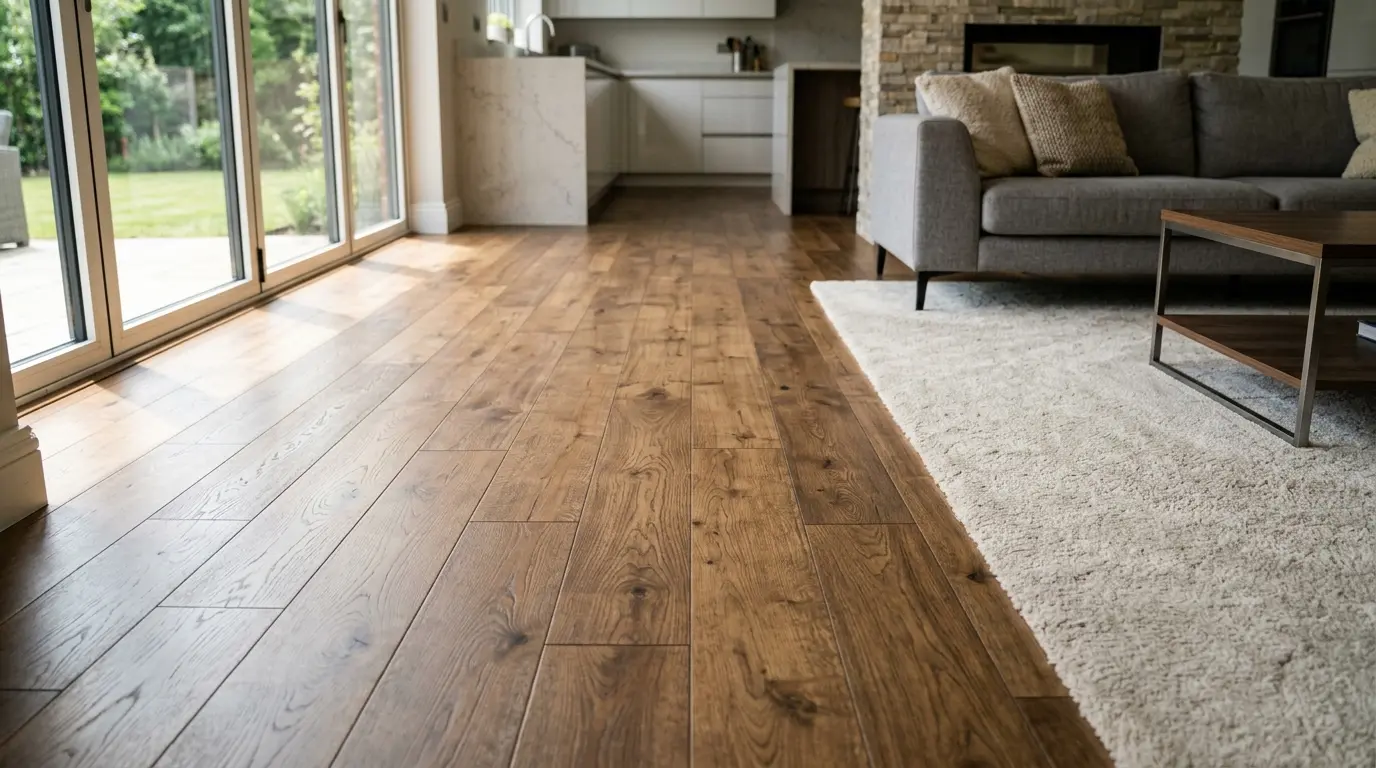
Warm wood tones can make a new home feel inviting and suit a range of decorating styles. Natural grain adds character, while matte or lightly textured finishes offer a more relaxed look than high-gloss surfaces. Solid hardwood is a classic choice, and it can be sanded and refinished when its surface shows wear. As Southern Luxe Flooring notes, hardwood comes in a variety of wood types, colors, and finishes for both traditional and modern homes.
Before settling on a shade, view samples in the rooms where they’ll be installed. Daylight, light fixtures, wall colors, and cabinetry can all affect how a floor looks. Ask your installer about finish options and care needs, too, especially if your household includes pets or children.
Consider Wood-Look LVP and Laminate
Luxury vinyl plank (LVP) and laminate can offer the appearance of wood in a range of colors and plank patterns. LVP is a popular option for rooms where spills are more likely, but water resistance varies by product. Check the manufacturer’s specifications for approved rooms, installation methods, and how quickly spills should be cleaned up.
Laminate can suit busy households looking for a wood-look floor at a different price point. However, not every laminate product is waterproof, so review its care instructions before choosing it for a kitchen or other moisture-prone space. Compare samples alongside your cabinets and trim, then weigh appearance, maintenance, and budget. A flooring professional can also help you determine whether a product is appropriate for the room and subfloor.
Choose Large-Format Tile for a Clean, Continuous Look
Large-format tile can create a streamlined look, with fewer grout lines than smaller tiles across the same area. It’s often considered for bathrooms, laundry rooms, and entries, where floors may face moisture or tracked-in dirt. If you prefer a tile or stone appearance with a different feel underfoot, luxury vinyl tile (LVT) offers another option. Some LVT products are designed to resemble stone, slate, or ceramic. Panel Town & Floors describes LVT as a low-maintenance alternative to traditional tile.
Look beyond color and pattern when comparing products. Ask about slip resistance, cleaning requirements, and whether the flooring is suitable for the room. Tile can feel cool underfoot, which may affect comfort in spaces where you stand for long periods. Proper subfloor preparation is also important for a lasting installation.
Coordinate Open Spaces and Choose Materials That Fit Your Priorities
In an open-plan home, flooring helps connect adjoining rooms. Using one material across a larger area can create a consistent look, while a transition can define a change in use, such as the move from a living area to a kitchen. Coordinate the floor with cabinetry, wall colors, and natural light without needing every finish to match exactly.
You can choose different materials for different rooms based on how you use them. Hardwood may suit a bedroom or living room, while a water-resistant product may be a more practical fit for a kitchen. You’re not limited to a builder’s standard selection. Compare samples and care instructions, and ask whether your preferred flooring suits the layout and subfloor. ValorCraft Flooring’s installation services include options for new-construction projects.
What Should You Plan Before Flooring Installation?
A successful flooring project starts before the first plank or tile goes down. Coordinate timing with the construction schedule, check the subfloor and moisture conditions, and clarify what the estimate includes. A few conversations up front can help prevent delays and make sure the finished floors suit your home.
Coordinate Flooring with the Construction Schedule
Choose your flooring early enough to coordinate delivery and installation with the builder and other trades. Painting, cabinetry, plumbing, and appliance work can all affect when flooring should be installed. The right sequence depends on the home, the material, and the installation method, so confirm the schedule with your builder and flooring installer.
You also don’t have to accept a builder’s standard selection. You can choose flooring that fits your design preferences and daily needs, then work with the team to plan when it will be installed. Browse popular flooring choices for new homes to start comparing options. Before work begins, clarify who will order the material, prepare the space, and protect completed floors during the remaining construction.
Confirm Subfloor Preparation and Moisture Conditions
The subfloor beneath your new flooring needs to be suitable for the product and installation method. It should be clean, stable, and within the manufacturer’s requirements for flatness. Depending on the flooring and site conditions, the installer may also need to check moisture levels before installation. These checks help identify issues that could affect how the finished floor performs.
Ask which preparation tasks are included in the estimate, and whether repairs or leveling would change the scope or price. Moisture requirements vary, so confirm how conditions will be assessed and what steps are needed if they fall outside the product guidelines. ValorCraft Flooring offers subfloor preparation as part of its flooring services. Discussing the condition of the subfloor before installation helps set clear expectations for the project.
Follow Product-Specific Acclimation and Installation Guidance
Flooring products don’t all have the same preparation requirements. Some may need time to acclimate in the home before installation, while others may not. Requirements can vary by product, installation method, and indoor conditions, so avoid relying on a general rule or assumption.
Ask your installer to confirm the manufacturer’s instructions for the exact flooring you’ve selected, including any guidance on temperature, humidity, and acclimation. Also clarify who is responsible for preparing and storing the material. This is especially helpful in new construction, where heating and cooling systems may not yet be operating consistently. The product’s instructions should guide the plan. For more context on how flooring choices can affect a project, read about modern flooring options.
Review the Estimate, Installer Credentials, Trim, and Stair Details
Before approving the work, review the estimate line by line. Check whether it covers materials, installation, subfloor preparation, removal and disposal, trim, and transitions between rooms. Ask how additional repairs or other unexpected work would be handled and priced. A detailed estimate makes it easier to understand the project scope and compare proposals.
Confirm that the installer is licensed and insured, and ask whether the company uses its own installation crew or subcontractors. Discuss details such as baseboards, doorways, custom stair treads, and how flooring will meet cabinets or other surfaces. These finishing choices can affect both the look and cost of the project. ValorCraft is a veteran-owned company with licensed and insured, in-house crews. Learn about the team or contact ValorCraft to discuss your flooring plans.
Frequently Asked Questions
What flooring is best for a new home?
There isn’t one best option for every home. Compare the room’s moisture exposure, foot traffic, comfort, appearance, and care requirements. Hardwood may suit living areas and bedrooms, while certain LVP or tile products may be a better fit for rooms where spills are common. Check each product’s specifications before choosing.
Can I use the same flooring throughout my home?
Yes, using one material across connected spaces can create a consistent look. You can also choose different surfaces for rooms with different needs, such as tile in a bathroom and wood or wood-look flooring elsewhere. Plan transitions between materials so the finished layout looks intentional.
What should a flooring installation estimate include?
Ask for a written estimate that clarifies material and labor costs, subfloor preparation, removal of existing flooring, underlayment, trim, transitions, and stair details. It should also explain how extra repairs or changes will be priced. Comparing the full scope helps you understand what each proposal covers.
How do I know if my subfloor is ready for new flooring?
The subfloor should meet the selected product’s requirements for cleanliness, stability, flatness, and moisture. A flooring professional can assess its condition and identify preparation needs before installation. This is especially useful in new construction, where site conditions and project timing can affect readiness.
When should I schedule flooring installation in a new home?
Coordinate the installation date with your builder and flooring contractor. The right sequence depends on the material, installation method, and other work happening in the home. Confirm when the flooring should arrive, whether the product has specific preparation requirements, and how finished floors will be protected during remaining construction.