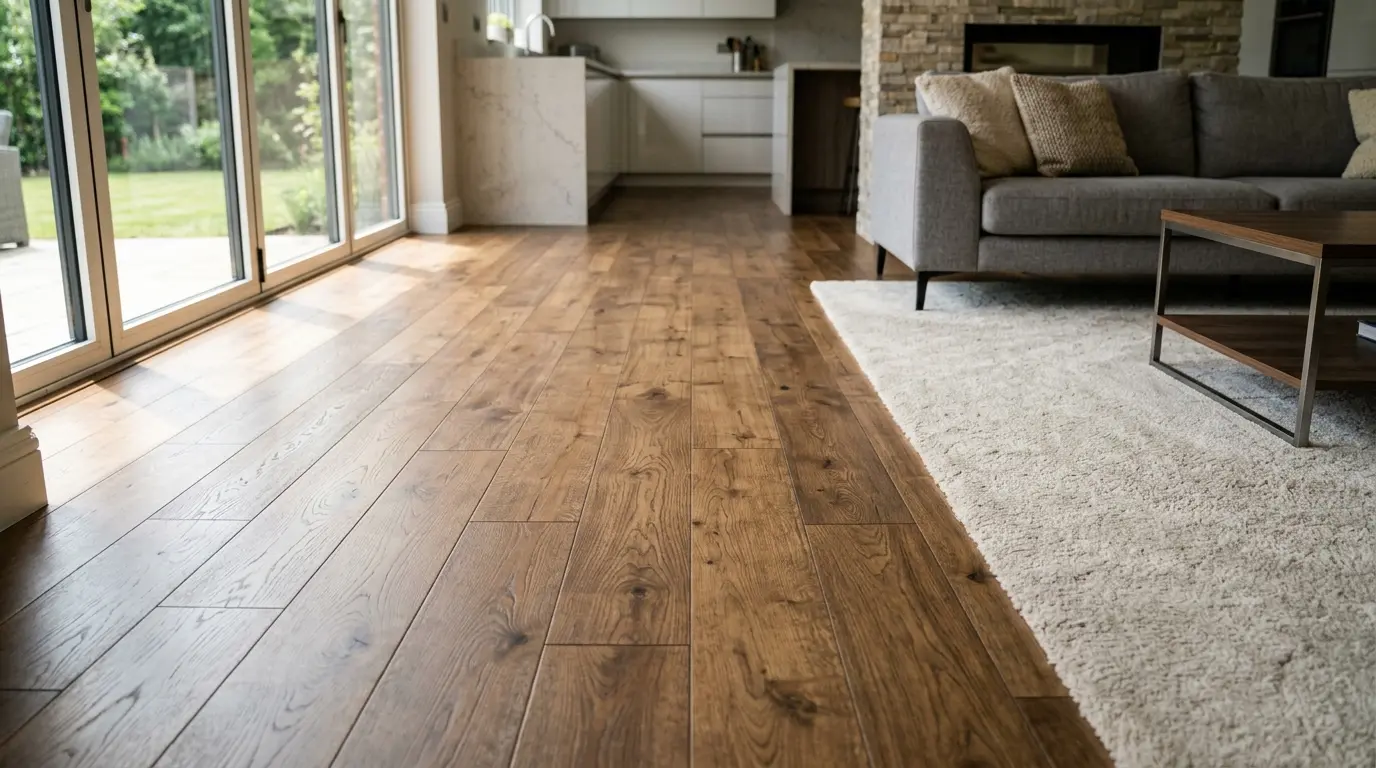
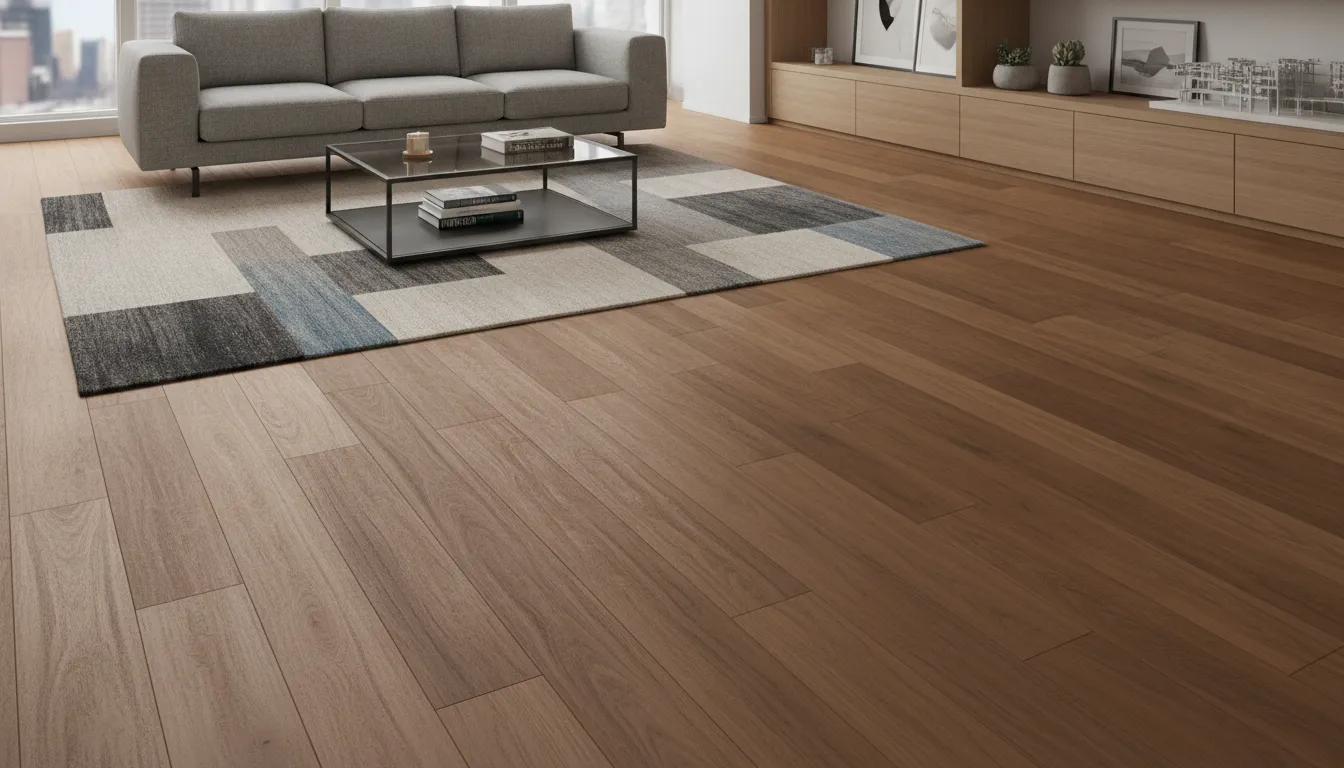
A beautiful wood floor should also fit the way you use your home. Engineered hardwood flooring comes in many species, finishes, and plank sizes, but appearance is only one part of the decision. The product’s construction can affect refinishing options, while the room’s moisture conditions and subfloor can shape the installation plan. These points are especially important when planning floors across several rooms or adding custom stair details. Before you choose a product, review its specifications and warranty, then ask how it will work in your particular space. This guide breaks down the choices in clear terms and explains when professional assessment can help prevent costly surprises.
Key Takeaways
- Engineered hardwood pairs real wood with a layered core: This design can reduce seasonal movement, but the flooring still needs protection from spills and excess moisture.
- Check the product details before choosing: Compare wear-layer thickness, core construction, finish, warranty, and installation requirements to find a floor suited to your rooms and refinishing plans.
- Plan the work with your installer: Ask for a subfloor and moisture assessment, confirm which tasks the estimate covers, and follow the manufacturer’s care instructions.
What Is Engineered Hardwood Flooring?
Engineered hardwood is a wood floor made from several bonded layers, with a surface layer of real hardwood over a supportive core. The top layer provides the grain, color, and texture you see, while the layers below help the plank stay dimensionally stable as indoor temperature and humidity change. This construction can make engineered hardwood a useful choice in rooms where solid hardwood may be more likely to expand or contract. It is still a wood product, however, and it is not waterproof.
Engineered hardwood comes in a wide range of species, plank sizes, finishes, and core constructions. The right option depends on the room, the condition of the subfloor, how the space is used, and the manufacturer’s installation requirements. A kitchen, for example, needs a floor suited to occasional spills and regular foot traffic, along with prompt cleanup and appropriate care. Before choosing a product, review its specifications and warranty, then confirm that it fits your project. ValorCraft Flooring offers hardwood installation and refinishing services for homeowners and other clients across North Carolina.
How the Real-Wood Wear Layer and Layered Core Work
The wear layer, sometimes called the veneer, is the real hardwood surface. It determines the visible species and much of the floor’s character, including its grain and natural color variation. Oak, maple, and hickory are common choices, though availability varies by product.
Below the wear layer, the core is built from bonded layers of wood or other materials. In many engineered products, wood layers run in different directions to help limit movement as conditions change. This layered construction supports stability, but it does not make the floor immune to moisture or eliminate the need for proper installation. Learn how engineered wood’s layered construction supports stability, then check the product details to see what materials and construction methods a specific floor uses.
Compare Types by Core, Wood Species, Plank Width, and Finish
Engineered hardwood products can look similar at first glance, but their specifications may differ. Cores can be made from plywood, high-density fiberboard, or other materials, and each product has its own installation and performance requirements. The surface may feature oak, maple, hickory, or another hardwood species, with a range of stains and finishes.
Consider plank width, texture, and sheen alongside color. Wider planks can create a more open look, while a brushed or hand-scraped surface adds texture. Matte finishes tend to show less glare than glossy ones, but every finish has its own care instructions. Compare the available species, finishes, and plank sizes, and make sure the product suits the room and subfloor. A flooring professional can help you assess those details before installation.
See How Wear-Layer Thickness Affects Refinishing and Lifespan
Wear-layer thickness helps determine whether an engineered hardwood floor can be sanded and refinished, and how many times. A thicker real-wood layer may allow more sanding than a thin veneer, but the usable material above the core and the manufacturer’s guidance also matter. Some floors may be suitable for a light recoat but not a full sanding.
Ask the manufacturer for the wear-layer measurement and written refinishing instructions before you buy. Avoid assuming that every engineered floor can be refinished, even if it has a real hardwood surface. With suitable care, some products can serve a home for many years, though lifespan also depends on installation quality, foot traffic, and maintenance. Review product guidance on engineered hardwood wear layers and refinishing, and ask a flooring professional to assess the floor before sanding or recoating.
What Are the Pros and Cons of Engineered Hardwood Flooring?
Engineered hardwood combines a real-wood surface with a layered core. That construction can offer more stability and installation options than solid hardwood, but it does not make the floor waterproof or suitable for every room. Product quality, moisture conditions, and installation all affect how well it performs. Consider these benefits and trade-offs before choosing a floor for your North Carolina home.
Weigh Its Real-Wood Look, Stability, and Installation Flexibility
Because its top layer is real wood, engineered hardwood has the natural grain and warmth of a wood floor. Products come in a range of species, colors, finishes, and plank widths, making it easier to find a look that suits your space. Beneath the surface, layers arranged in different directions help limit the movement that can happen as indoor temperature and humidity change.
Engineered hardwood can also be installed in different ways, including floating, glue-down, and nail-down methods. The suitable method depends on the product and the subfloor. Review the manufacturer’s instructions and have the subfloor assessed before installation. Explore the benefits of engineered wood flooring as you compare options.
Consider Moisture Sensitivity, Refinishing Limits, and Product Variability
Engineered hardwood is generally more stable than solid wood, but it is not waterproof. Leaks, standing water, and excess moisture can damage the wood surface or the layers beneath it. Rooms with moisture concerns need careful product selection and preparation. A flooring professional can check the subfloor and discuss suitable installation options as part of your flooring project.
Refinishing potential varies by product. It depends largely on the thickness of the real-wood wear layer and the manufacturer’s specifications. Some engineered floors can be sanded and refinished; others have a surface too thin for sanding. Compare the wear layer, core construction, finish, warranty, and care requirements before buying. With proper installation and maintenance, a quality floor can last for years, though its lifespan also depends on how heavily the room is used.
Compare Engineered and Solid Hardwood
Both engineered and solid hardwood have a genuine wood surface, but their construction affects how they perform. Solid hardwood is made from a single piece of wood and can often be refinished multiple times, depending on its thickness and condition. It can also expand or contract more in response to changes in humidity. Engineered hardwood has a wood wear layer over a layered core, which helps reduce seasonal movement.
The best choice depends on the room, subfloor, moisture conditions, and your plans for the floor. Engineered hardwood offers several installation methods, while solid hardwood may allow more future sanding when its thickness permits. Ask a flooring professional to compare the options for your home and provide a clear project estimate that accounts for installation and any needed subfloor or trim work.
How Do You Choose Quality Engineered Hardwood Flooring?
Choosing engineered hardwood takes more than picking a color you like. Compare the floor’s construction, finish, warranty, and installation requirements, then consider how it will perform in the rooms where you plan to install it. These details can help you find a product that fits your home, budget, and expectations for maintenance.
Compare Wear Layers, Core Construction, and Finishes
Engineered hardwood has a real-wood wear layer attached to a layered core. Check the wear layer’s thickness because it affects whether, and how many times, the floor may be refinished. Refinishing options vary by product, so confirm the manufacturer’s guidance instead of assuming every floor can be sanded.
Review the core construction as well. Products may use plywood or other materials, and their suitability depends on the product and installation conditions. Finally, consider the finish’s appearance and care requirements. A matte finish may suit a more understated look, while a glossier finish can make scuffs more noticeable. Use the manufacturer’s engineered flooring selection factors to compare species, plank dimensions, wear layers, and finishes.
Check Specifications, Warranties, and Installation Requirements
Before purchasing, read the product specifications. Confirm which installation methods are approved, whether the flooring works with your subfloor, and what conditions the manufacturer requires. Some products need to acclimate in the home before installation. Follow the instructions for the specific flooring rather than relying on a general guideline.
Check the warranty for coverage, exclusions, and requirements. Residential and commercial warranties may differ, and coverage can depend on proper installation, maintenance, and indoor conditions. Keep the product documents so you can refer to them later. A professional installer can help match the flooring and installation method to the subfloor. ValorCraft Flooring’s hardwood services include installation, subfloor preparation, and trim work for North Carolina homes and businesses.
Know What Engineered Hardwood Can and Cannot Handle
Engineered hardwood is generally less likely than solid hardwood to shift with changes in temperature and humidity, but it is not waterproof. Standing water, leaks, and repeated spills can still damage the wood surface or core. Check the manufacturer’s room-use guidance, and wipe up spills promptly.
For kitchens, lower levels, or other areas where moisture may be a concern, ask whether the product is suitable and what care it needs. Also consider sunlight, pets, foot traffic, and whether you may want to refinish the floor later. A thicker wear layer may allow more refinishing options, but the product’s construction and warranty matter too. Review the manufacturer’s guidance on engineered wood’s benefits and moisture limits before you decide.
How Much Does Engineered Hardwood Flooring Cost?
The cost of engineered hardwood flooring depends on more than the price of the planks. Your total project budget may include installation, subfloor preparation, trim, transitions, and work around stairs. Product quality, room layout, and installation method can all affect the estimate, so compare quotes that cover the same materials and tasks.
Budget for Materials and Professional Installation
Engineered hardwood often costs less than solid hardwood because it uses a real-wood wear layer over a layered core. The visible surface provides the look of the selected wood species, while the core uses other wood materials. Prices still vary based on species, finish, plank size, and wear-layer thickness. A thicker wear layer or specialty finish may cost more than a basic option. National Floors Direct describes how engineered flooring’s construction can affect material costs.
Include installation in your budget, not just the flooring. Labor costs can change if the installer needs to remove old flooring, prepare the subfloor, or work around obstacles. Ask for a written estimate that lists materials, labor, and additional work separately. This makes it easier to compare bids and understand what each includes. ValorCraft Flooring offers professional flooring installation services across North Carolina.
Compare Prices by Product Quality, Room Size, and Installation Method
Compare product specifications, not just color or wood species. Wear-layer thickness, core construction, finish, and manufacturer requirements can all affect price and performance. Plank width and length may also influence material costs. Since engineered flooring comes in different constructions and designs, review the product details before choosing. MTCopeland’s guide to engineered wood explains some of the differences to consider.
Room size is another factor, but layout matters too. A simple rectangular room may take less time to install than a space with alcoves, angled walls, or multiple doorways. Floating, glue-down, and nail-down installation methods have different labor and material requirements, and not every product supports every method. Ask your installer which option suits the flooring and subfloor. For a fair comparison, request estimates using the same product specifications and project scope.
Include Subfloor Prep, Trim, Transitions, and Stairs
A complete estimate should account for the work needed to prepare and finish the space. Subfloor preparation may involve cleaning, correcting uneven areas, or addressing moisture concerns. Ask whether the installer will inspect the subfloor and whether the estimate includes any recommended preparation. A floor that is not properly prepared may cause problems after installation.
Check whether the quote also covers baseboards or trim, transitions between flooring types, and work around stairs. Stair treads, landings, and edges often need custom fitting, which can add labor and materials. These details may not be included in a basic per-square-foot price. ValorCraft Flooring lists subfloor preparation and trim work among its services. Request an itemized estimate so you know which tasks are included and which are priced separately.
How Long Does Engineered Hardwood Flooring Last?
Engineered hardwood can last for decades, but its lifespan depends on the product, installation, and care. The wear layer is especially important: it affects how much surface wear the floor can handle and whether it can be refinished later.
Understand How Materials, Installation, and Care Affect Lifespan
Engineered hardwood has a real-wood surface over a layered core. Product quality and wear-layer thickness vary, so review the manufacturer’s specifications before choosing a floor. A thicker wear layer may allow more options for refinishing, while regular cleaning and prompt spill cleanup help protect the finish. With proper care, engineered wood flooring can last for decades.
Installation also affects how well the floor holds up. An uneven or damp subfloor can contribute to movement and damage over time. In North Carolina, ask your installer how they assess moisture and prepare the subfloor before installation. ValorCraft Flooring’s hardwood installation services include the preparation needed to support a durable result.
Find Out Whether You Can Refinish Engineered Hardwood
Whether an engineered hardwood floor can be refinished depends mainly on the thickness of its real-wood wear layer and the product’s construction. Some floors can be sanded and refinished, while others have a veneer too thin to sand safely. Even refinishable floors have limits on how many times they can be sanded, so check the manufacturer’s guidance before planning this work.
If the floor looks dull but the wood itself is in good condition, recoating may be an option. This adds a new finish without sanding down to the wood. The National Wood Flooring Association’s maintenance guidance explains recoating as one way to refresh a wood floor’s surface. Ask a flooring professional to assess your specific product before choosing between a recoat and a full refinish.
Choose When to Repair, Recoat, Refinish, or Replace
The best solution depends on the type and extent of the wear. A damaged plank may be repairable, while light surface wear may only need a compatible recoat. If scratches or other damage reach the wood, refinishing may work if the wear layer is thick enough. Widespread water damage, severe wear, or a veneer that cannot be sanded may make replacement the more practical choice.
Before deciding, confirm the floor’s refinishing limits and have its condition assessed. A professional can determine whether damage affects only the finish or reaches the wood and core. ValorCraft Flooring provides hardwood sanding and refinishing for North Carolina homeowners and can explain whether repair, recoating, refinishing, or replacement suits your floor.
How Do You Care for Engineered Hardwood Flooring?
Engineered hardwood has a real-wood surface, so regular, gentle care helps protect its finish. Cleaning and maintenance needs can vary by product, so check the manufacturer’s instructions before using a new cleaner or treatment.
Clean Regularly and Wipe Up Spills Promptly
Sweep or dust-mop regularly to remove grit and debris before they get tracked across the floor. For a more thorough clean, vacuum with the bare-floor setting and a soft attachment. Avoid letting dust accumulate, since small particles can scratch the finish underfoot.
Wipe up spills as soon as possible with a soft cloth. Don’t leave water on the floor or allow it to seep between planks. For routine cleaning, use a product approved for your floor’s finish and apply it sparingly. The National Wood Flooring Association’s maintenance guidance also recommends removing dust regularly and cleaning up spills promptly.
Use Entry Mats and Furniture Pads to Prevent Scratches
Place mats near exterior doors to catch dirt, grit, and moisture before they reach the floor. Choose mats with a backing that’s safe for wood flooring, and clean them often so trapped particles don’t rub against the planks. In high-traffic areas, a little prevention can help limit everyday wear.
Add felt pads to chair and table legs, and replace them when they become worn or collect grit. Lift furniture when moving it rather than dragging it. High heels and shoes with sports cleats can dent or scratch the wood surface, so consider removing them indoors. Twenty & Oak’s engineered hardwood care tips offer additional advice on reducing damage from footwear.
Control Indoor Humidity and Limit Sun Exposure
Wood responds to changes in moisture in the air. Significant swings in indoor humidity can cause planks to expand or contract, so keep your home environment as consistent as practical. Use heating, cooling, or a humidifier when needed, and follow the humidity recommendations provided by your flooring manufacturer.
Direct sunlight can gradually change the color of wood. Use curtains, blinds, or UV-filtering window coverings to reduce exposure near sunny windows. You can also move rugs and furniture occasionally so the floor ages more evenly. From the Forest’s care guidance explains how humidity and sun exposure can affect engineered hardwood.
Avoid Steam Cleaners, Wet Mops, and Abrasive Products
Steam cleaners and soaking-wet mops can expose flooring to excess heat and moisture, which may damage the finish or affect the wood beneath it. Use a microfiber mop that is only lightly damp, and dry any leftover moisture promptly. Don’t pour cleaner directly onto the floor unless the manufacturer recommends it.
Avoid scouring pads, abrasive powders, and harsh chemical cleaners. Wax-based products and oil soaps can leave residue or interfere with the finish, while ammonia may cause damage. Choose a cleaner labeled safe for your flooring type. If the surface looks worn or damaged, check the manufacturer’s instructions or ask a flooring professional before applying polish or refinishing products.
How Do You Install Engineered Hardwood Flooring?
Engineered hardwood can be installed as a floating floor, glued to the subfloor, or fastened with nails or staples. The right method depends on the specific flooring product, the subfloor, and the conditions in the room. A method that works for one product may not be approved for another, so check the manufacturer’s installation instructions before buying adhesive or beginning work.
A successful installation also depends on careful preparation. The subfloor must be clean, dry, and flat within the product’s stated tolerances. Moisture levels should be tested, and any issues addressed before planks go down. Follow the manufacturer’s guidance for acclimation and expansion gaps, too. Those requirements vary by product, so don’t rely on a general rule in place of the product instructions.
Finally, plan the layout and finishing details before you start. Plank direction, staggered joints, transitions, trim, and stair details all affect the finished look and fit. If the subfloor needs repair or you’re unsure which installation method suits your space, a flooring professional can assess the project first. ValorCraft Flooring provides hardwood installation and custom stair services for homeowners and other clients across North Carolina.
Choose a Floating, Glue-Down, or Nail-Down Method
A floating floor locks or connects planks to one another without fastening them directly to the subfloor. It can be a suitable choice when the product is designed for floating installation and the specified underlayment is used. In a glue-down installation, an approved adhesive bonds the planks to the subfloor. This method is often used over concrete, where nailing may not be appropriate. Nail-down installation fastens compatible flooring to a suitable wood subfloor.
Choose the method listed in the flooring manufacturer’s instructions, not simply the one that seems easiest. Adhesive type matters, too. Hardwood installation guidance cautions that water-based glue can cause wood to swell. Confirm that the product, subfloor, and installation method are compatible before work begins.
Prepare and Test the Subfloor for Moisture and Flatness
Start with a clean surface. Remove dust, debris, old adhesive, and anything else that could interfere with the flooring or adhesive bond. Check the subfloor for flatness and correct high or low spots using a suitable repair or leveling product. If the subfloor is uneven, planks may move, separate, or make noise underfoot.
Test moisture levels in the subfloor before installation. The testing method and acceptable readings depend on whether the subfloor is wood or concrete, as well as the flooring product’s requirements. If readings fall outside the permitted range, pause and address the source of moisture before proceeding. Floor & Decor’s installation guide also stresses the importance of a clean, smooth, dry surface. Careful preparation helps reduce the risk of problems after installation.
Follow Product Guidance for Acclimation and Expansion Gaps
Follow the manufacturer’s instructions for acclimation, including how long the flooring should remain in the installation area and whether cartons should be open or closed. Some guides recommend leaving flooring in the room for 72 hours, but that timing does not apply to every product. Requirements depend on the flooring and the home’s conditions, so use the instructions for the specific product you purchased.
Expansion gaps allow the floor to move as temperature and humidity change. Leave the specified space along walls and around fixed objects such as pipes and door frames. Keep the gap clear of anything that could restrict movement. Baseboards or shoe molding can cover the gap after installation, but they should not press down on a floating floor. Review the product’s installation guidance before work begins, and maintain the indoor conditions recommended by the manufacturer.
Arrange Planks, Stagger Joints, and Use the Right Adhesive and Tools
Plan the layout before setting the first plank. Measure the room, choose a plank direction, and check the width of the final row. If it would be very narrow, trimming the first row may create a more balanced appearance. Mix planks from several cartons to distribute variations in color and grain. Stagger end joints according to the manufacturer’s instructions, rather than repeating the same pattern in every row.
Use tools suited to your chosen installation method. A tapping block and pull bar can help join planks without damaging their edges. Glue-down installations require the specified adhesive and the correct trowel. Make careful cuts around walls and doorways, and clean adhesive residue as directed. The Floor & Decor installation guide offers a general overview, but follow the instructions supplied with your flooring.
Plan Transitions, Trim, and Stair Details
Decide where the flooring will meet carpet, tile, or another surface before installation. Choose transitions that suit the change in floor height and follow the product’s requirements for movement. Doorways, hallways, and room-to-room changes can affect plank direction and cut placement, so measure these areas before laying the floor. Check door clearances as well, especially where the new flooring may sit higher than the previous surface.
Trim should cover perimeter gaps without restricting a floating floor. Stairs also need product-specific planning: confirm that the chosen nosings or treads are compatible with the flooring and measure each step carefully. A well-finished edge can make a noticeable difference to the overall result. For help with hardwood installation and custom stair work, talk with ValorCraft Flooring about your project requirements.
What Installation Mistakes Should You Avoid?
Engineered hardwood has a real-wood surface, so careful preparation and installation matter. Problems with moisture, subfloor flatness, product acclimation, or plank layout can affect the floor’s appearance and performance. Before work begins, read the manufacturer’s instructions and check that the room and subfloor meet the product’s requirements.
Don’t Install Over an Uneven, Dirty, or Damp Subfloor
Engineered hardwood needs a clean, dry, level surface for a stable installation. Dust and debris can interfere with adhesive or create bumps beneath the planks. Low spots and ridges may lead to movement, squeaks, or gaps, while excess moisture can damage the flooring.
Before installation, clear away debris and check the subfloor for flatness and moisture. The acceptable limits depend on the flooring and subfloor, so follow the manufacturer’s specifications instead of relying on a visual check. Complete any needed leveling, repairs, or moisture treatment before laying planks. ValorCraft Flooring offers subfloor preparation as part of its flooring work.
Don’t Skip Acclimation or Required Expansion Gaps
Engineered hardwood can respond to changes in temperature and humidity. If the product instructions call for acclimation, keep the flooring in the installation room for the specified period before work begins. Some guidance recommends at least 72 hours, but timing varies by product and site conditions. Check the manufacturer’s directions, including its recommendations for room temperature and humidity.
Expansion gaps give the floor room to respond to normal changes. Their required size depends on the product and installation method, so don’t guess. Follow instructions around walls, doorways, pipes, and other fixed objects, then cover gaps with trim where appropriate. Floor & Decor’s installation guide also stresses acclimation and expansion space.
Don’t Use the Wrong Installation Method or Adhesive
Engineered hardwood may be installed as a floating floor or attached with nails or adhesive. The correct method depends on the product, subfloor, and manufacturer’s requirements. Using an unsupported method can affect how the floor holds together and performs over time.
For glue-down installation, select an adhesive approved for both the flooring and subfloor. Some installations over concrete require specialized adhesives, and an unsuitable product may cause problems such as wood swelling. Don’t substitute an adhesive based only on price or availability. Review the flooring and adhesive instructions before starting. Real American Hardwood’s installation tips explain why compatible materials are important.
Stagger Planks Properly and Take Time with Layout and Cuts
Plan the layout before installing the first plank. Open several boxes and mix planks to distribute natural variation in color and grain. Consider the starting row, doorways, transitions, and the final row. A little planning can help avoid narrow cuts at room edges and repeated end joints that stand out.
Stagger plank ends according to the manufacturer’s instructions. One guide recommends spacing end joints 4 to 6 inches apart, but the correct distance varies by product. Measure carefully around door frames, vents, and other details, and use appropriate tools for clean cuts. Dry-fitting complicated areas before cutting can help reduce waste and give the finished floor a more consistent appearance.
What Should North Carolina Homeowners Know Before Installation?
Engineered hardwood can be a practical choice for many North Carolina homes, but the product and installation plan should fit the conditions in your space. Humidity, moisture, subfloor condition, and room layout can all affect how the floor performs. Before work begins, review the manufacturer’s requirements and ask your installer to assess the home. That conversation can clarify which product and installation method make sense, what preparation is needed, and what the estimate includes.
Account for Indoor Humidity and Local Moisture
Seasonal humidity changes can cause wood flooring to expand or contract. Engineered hardwood’s layered construction generally makes it more dimensionally stable than solid hardwood, but it is still made with wood and is not waterproof. Spills, leaks, and excess moisture can damage it.
Ask what indoor conditions the manufacturer recommends and whether the flooring needs to acclimate before installation. The benefits of engineered wood flooring include greater stability in changing conditions, but product requirements still matter. Tell your installer about any rooms with a history of dampness or plumbing leaks. Moisture testing and repairs may be needed before flooring goes down.
Know When to Hire a Flooring Professional
A professional installation is especially helpful when a project involves multiple rooms, unusual layouts, stairs, or transitions between different flooring types. The right method, whether floating, glue-down, or nail-down, depends on the product as well as the subfloor and room conditions. An installer can inspect these details and check the manufacturer’s instructions before recommending an approach.
This assessment can also catch issues that may affect the finished floor, such as an uneven or damp subfloor. Engineered flooring allows for more installation options than solid hardwood, but flexibility does not mean every method suits every home. Ask your installer to explain why a particular method is appropriate for your space.
Ask About Clear Estimates, Subfloor Prep, and In-House Installation
Request an estimate that spells out the work, not just the flooring and labor. Check whether it includes removal of existing materials, subfloor preparation, trim, transitions, and stair details. Ask how the crew will check the subfloor for moisture and flatness, and whether any repairs are included or priced separately. Clear line items make it easier to compare estimates and understand what could change the project cost.
Also ask who will be completing the installation and how the company communicates if conditions change. ValorCraft Flooring uses professional in-house crews rather than subcontractors and emphasizes clear estimates and careful preparation. You can review the company’s approach to craftsmanship and ask how it applies to your project before scheduling.
Learn How ValorCraft Flooring Supports North Carolina Hardwood Projects
ValorCraft Flooring is a veteran-owned flooring company serving homeowners, builders, property managers, and commercial clients across North Carolina, including the Triad area. Its work includes hardwood installation and refinishing, subfloor preparation, trim, and custom stair details. Choosing a local team gives you a chance to discuss your home’s conditions and project needs directly with the people who will plan the work.
The company is licensed and insured, and its carpenter-run operation relies on in-house crews. Explore ValorCraft’s flooring installation and refinishing services to see what may fit your project. When you are ready, contact the team to discuss your rooms, product options, preparation needs, and estimate.
Related Articles
- Benefits of Engineered Wood Flooring
- Best Engineered Hardwood Flooring Brands
- 9 Essential Factors for Choosing the Perfect Engineered Wood Flooring
- What Are the Disadvantages of Engineered Wood Flooring?
- How to Maintain Engineered Hardwood Floors
Frequently Asked Questions
Is engineered hardwood a good choice for kitchens?
It can work in a kitchen if the product is approved for that use and the subfloor and installation meet its requirements. Engineered hardwood is not waterproof, so clean up spills quickly and address leaks promptly.
Can engineered hardwood be installed over concrete?
Some products can be installed over concrete, often with an approved glue-down method or as a floating floor. Check the flooring manufacturer’s instructions and have the concrete tested for moisture before installation.
How can I tell if my engineered hardwood can be refinished?
Check the product’s wear-layer thickness and manufacturer’s refinishing instructions. If you don’t know the product, ask a flooring professional to assess the surface before sanding, since some veneers are too thin for a full refinish.
What should a flooring estimate include?
Ask for a written, itemized estimate covering materials, installation, removal of existing flooring, subfloor preparation, trim, transitions, and stair work, where applicable. Confirm which repairs are included and which may cost extra.
What should I ask a North Carolina flooring installer before hiring them?
Ask who will complete the work, how the subfloor and moisture will be assessed, which installation method is recommended, and what the estimate covers. You can contact ValorCraft Flooring to discuss your project and request an estimate.