Pets, busy entryways, kitchen spills, and heavy furniture all put different demands on a floor. If you’re weighing engineered hardwood vs lvp, start by thinking about how each room works in everyday life. LVP may suit spaces where water resistance and simple cleaning matter, while engineered hardwood offers a real wood surface with natural grain variation. Neither option is right for every home or every room. Product details, installation requirements, and the condition of your subfloor can change the picture. This guide helps you compare those factors, so you can choose flooring that suits your household and discuss the project confidently with an installer.
Key Takeaways
- Match flooring to each room: Engineered hardwood brings natural wood character, while LVP can suit spaces where spills are more common. Check product specifications and room conditions before choosing.
- Confirm performance details: Review engineered hardwood’s veneer thickness and refinishing guidance, plus LVP’s wear layer, warranty, and care instructions. Neither flooring type is right for every home or moisture condition.
- Budget for the complete installation: Ask for an itemized estimate that includes subfloor preparation, removal, trim, transitions, stairs, and labor. Confirm who will install the floor and what the project includes.
Engineered Hardwood vs. LVP: How Do They Compare?
Engineered hardwood layers real wood veneer over a core
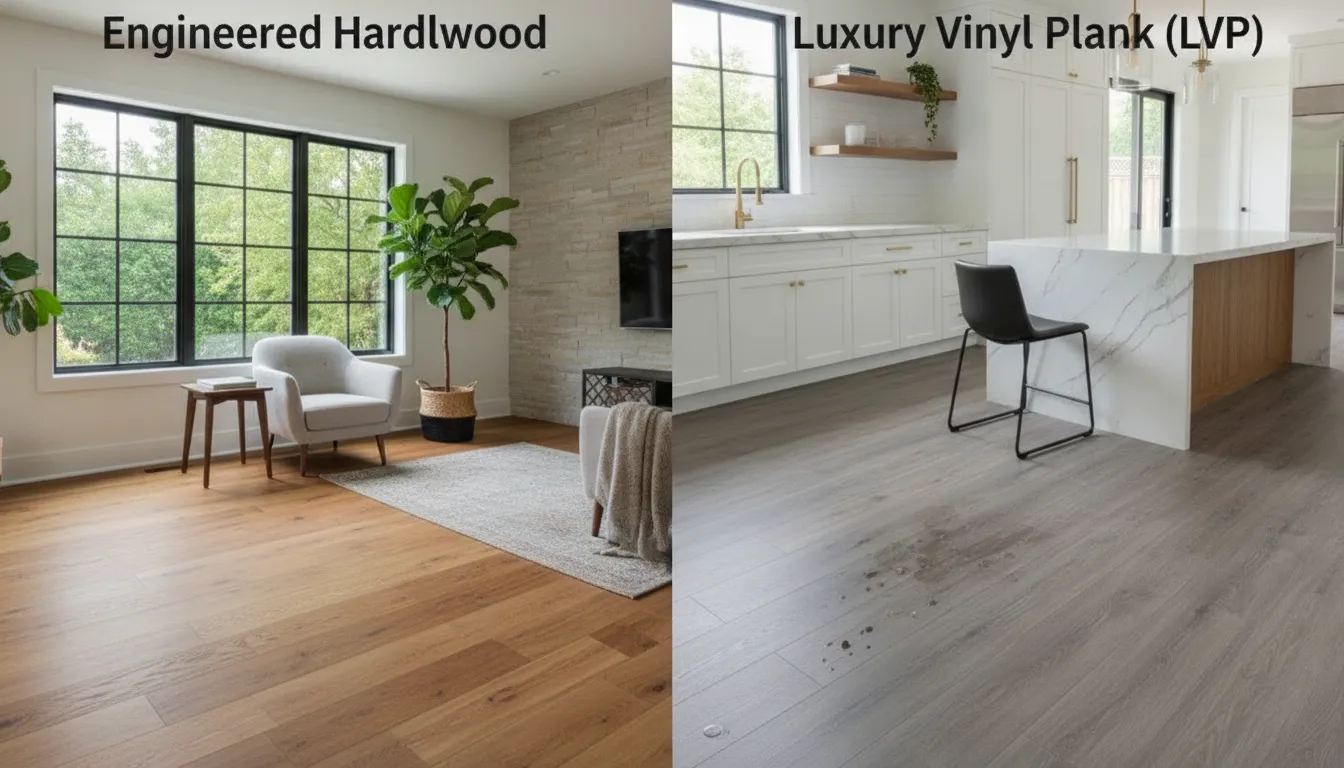
Engineered hardwood has a real wood surface, usually a veneer around 2 to 3 millimeters thick, bonded to a layered plywood or composite core. The veneer gives each plank the grain and natural variation of hardwood. The core can help the floor handle changes in moisture better than solid hardwood, but engineered hardwood is still a wood product and needs appropriate care.
Veneer thickness varies, so don’t assume every engineered floor can be sanded and refinished. Check the manufacturer’s specifications and ask how the product should be maintained. Robbins Flooring’s comparison of engineered hardwood and LVP explains how their construction differs. If you’re considering hardwood installation or refinishing in North Carolina, review ValorCraft Flooring’s services and ask which options suit your rooms.
LVP combines a printed design, wear layer, and vinyl core
Luxury vinyl plank, or LVP, is made from vinyl and designed to resemble wood or other materials. A typical plank has a printed design beneath a clear protective layer, supported by a vinyl core. Some rigid-core products include additional composite materials, so construction can vary by product.
Because the pattern is printed, LVP doesn’t have the natural grain variation of real wood. It does, however, come in a wide range of colors, textures, and plank styles. When comparing samples, look beyond appearance: check the wear-layer specifications, core construction, warranty, and care instructions. Robbins Flooring’s overview of LVP and engineered hardwood offers a useful explanation of the materials and their layered construction.
Compare veneer thickness, wear ratings, and product specifications
Start with the specifications for the exact products you’re considering. For engineered hardwood, check the veneer thickness and whether the manufacturer allows sanding and refinishing. A veneer of 2 millimeters or more may offer more potential for refinishing, but suitability depends on the product and its manufacturer’s guidance.
For LVP, review the wear-layer details, warranty terms, and recommended cleaning products. These specifications vary, so compare similar products rather than relying on one rating or a general label. Think about how each room is used, too. A busy entryway, a home with pets, and a low-traffic bedroom may call for different features. A flooring professional can help you weigh product details alongside your subfloor and installation requirements.
Check product details before relying on “waterproof” or “refinishable” claims
Treat labels like “waterproof” and “refinishable” as claims to verify. LVP may resist water, but moisture can still get through seams or around edges, and water trapped underneath may damage the subfloor. Follow the manufacturer’s installation instructions, and address leaks or dampness before the floor goes in.
Likewise, not every engineered hardwood floor can be refinished. The veneer may be too thin, or the manufacturer may not recommend sanding. If environmental impact matters to you, check documented sourcing, manufacturing details, maintenance needs, and repair options instead of assuming one flooring type is always the better choice. The USA Builders Depot guide to engineered hardwood and LVP discusses why these claims depend on the product. Ask your installer to review the specifications before you choose.
How Do Costs Compare?
Engineered hardwood generally costs more upfront than luxury vinyl plank (LVP), but material prices alone don’t show what a finished floor will cost. Product quality, installation method, room layout, and subfloor condition all affect the estimate. Compare the full project price, including preparation and finishing details, before choosing a floor.
Compare material prices with total installation costs
As a general guide, engineered hardwood materials may cost about $4 to $10 per square foot, with professional installation adding roughly $3 to $8 or more. LVP materials often range from $2.50 to $5 per square foot, with installation costing around $1 to $3 per square foot. These are broad estimates, not a quote. The specific product, project size, and local labor rates can change your total. Robbins Flooring’s cost comparison offers a helpful starting point. For a more accurate budget, request an itemized estimate based on your rooms, selected materials, and installation needs.
Consider product quality, plank style, and installation method
Prices vary within both flooring types. Engineered hardwood costs can depend on veneer thickness, wood species, finish, and plank width. LVP pricing may reflect its wear layer, core construction, texture, and design. Installation is another factor: some products click together, while others require glue. Room shape, transitions, and stairs can also affect labor. Compare the specifications and installation instructions for the exact products you’re considering, rather than relying on a broad price range. A flooring professional can help you select an option that suits both the room and your budget.
Budget for removal, subfloor prep, trim, transitions, and stairs
A flooring estimate may include more than the new material and installation. Removing old flooring, preparing or repairing the subfloor, installing trim, and fitting transitions can all affect the final price. Stairs often require additional materials and detailed work, particularly when you want custom treads or a consistent finish between levels. Ask which tasks are included and how any unexpected repairs will be priced. Review ValorCraft’s flooring services to see options such as subfloor preparation, trim work, and custom stair treads. Clear estimates make it easier to compare proposals and plan for the full project.
Weigh upfront costs against repairs, refinishing, and replacement
A lower purchase price doesn’t always mean lower costs over the floor’s lifetime. Some engineered hardwood can be refinished, depending on its real-wood veneer thickness and manufacturer guidance. LVP cannot be refinished, so a damaged plank may need repair or replacement. The best value depends on the product, room, traffic, and care it receives. Before deciding, ask about warranty terms, repair options, and maintenance requirements. Robbins Flooring’s product comparison explains how construction affects refinishing potential. Compare likely upkeep and repair needs alongside the initial estimate, rather than choosing on price per square foot alone.
Durability, Lifespan, and Repairs
Match flooring to traffic, pets, furniture, and room use
Start with how each room is used. A busy entryway, a home with pets, and a quiet bedroom place different demands on flooring. Engineered hardwood can be a good fit for living rooms, bedrooms, and dining areas where the character of real wood matters. LVP is often a practical option for kitchens, bathrooms, laundry rooms, and basements, where water resistance is useful.
Consider more than foot traffic. Pet claws, dropped objects, rolling chairs, and heavy furniture can affect a floor’s appearance over time. Use furniture pads and area rugs to limit wear, and place mats near exterior doors to catch grit. For advice tailored to your rooms, compare your household’s needs with ValorCraft’s flooring installation services.
Compare resistance to scratches, dents, stains, and wear
LVP has a protective wear layer over a printed design and vinyl core. Depending on the product, that layer can help resist everyday stains, scratches, and spills. But no flooring is damage-proof. Sharp objects, abrasive dirt, or furniture dragged across the floor may still leave marks. Check the manufacturer’s wear-layer specifications and warranty instead of relying on general claims about durability.
Engineered hardwood has a real wood surface, so its resistance to scratches and dents depends on factors such as the wood species, finish, and daily use. A textured finish may make minor marks less noticeable, but it will not prevent damage. Reviewing this guide to how LVP and engineered wood compare can help you assess which material better suits your household.
Check veneer thickness and finish to assess refinishing potential
Engineered hardwood has a real wood veneer over a layered core, but veneer thickness varies by product. Some floors may be suitable for refinishing, while others have a surface that is too thin to sand safely. Before you buy, ask for the veneer thickness and check the manufacturer’s instructions. The finish matters, too: a factory-applied coating can protect the surface, but it does not tell you by itself whether the floor can be refinished.
Refinishing may extend the life of some engineered hardwood floors, but it is not an option for every product. Robbins Flooring’s comparison explains how construction affects refinishing potential and lifespan. Keep product information and care instructions so you can refer to them when planning maintenance or repairs.
Review LVP wear layers, warranties, and repair limits
LVP cannot be sanded and refinished like wood. If a plank is badly damaged, repair may mean replacing that plank or a section of flooring. The process depends on the installation method and product design, and finding a close match later can be difficult. Save leftover planks after installation in case you need them for a future repair.
LVP lifespan varies with product quality, foot traffic, care, and installation. Review the wear-layer specifications, warranty coverage, and exclusions before choosing a floor. A warranty may not cover every scratch, dent, or water-related issue, and it may require specific installation and subfloor preparation. Ask what conditions apply and keep the product documentation. Robbins Flooring’s overview of LVP and engineered hardwood offers more context on lifespan and repair considerations.
Extend either floor’s lifespan with quality installation and care
Both flooring types need a properly prepared subfloor. It should be clean, dry, and level, and the installation should follow the manufacturer’s requirements for moisture testing, acclimation, and installation method. Skipping preparation can lead to problems such as gaps, movement, or lifted edges, even when the flooring itself is well made.
After installation, sweep or vacuum regularly to remove grit, use furniture pads, and choose cleaners approved for your floor. Wipe up spills promptly, including on LVP, and avoid excess water on engineered hardwood. A careful installation and consistent maintenance can help protect your flooring investment. ValorCraft’s licensed and insured in-house team can assess the subfloor and install flooring with attention to the details that support long-term performance.
Which Flooring Handles Moisture Better?
LVP resists water, but seams, edges, and the subfloor still matter
Luxury vinyl plank (LVP) is often a practical choice for rooms where spills are likely. Its vinyl surface resists water, and many products are labeled waterproof. That label usually describes the planks, however, not the entire installed floor. Water may still pass through seams, gaps around the edges, or areas near transitions and reach the subfloor. If moisture becomes trapped underneath, the subfloor may be damaged.
Before choosing LVP, check the product’s warranty and installation instructions for details about spills, standing water, and wet areas. Ask how the installer plans to handle edges and transitions, too. LVP’s water-resistant surface can work well in busy homes, but prompt cleanup and a properly prepared subfloor remain important.
Engineered hardwood handles humidity better than solid hardwood, but isn’t waterproof
Engineered hardwood has a real wood surface attached to a layered core. This construction generally makes it more stable than solid hardwood when indoor humidity changes, though the floor still contains natural wood and can be affected by moisture. Standing water, frequent spills, or damp conditions may damage the planks or finish.
The amount of real wood on top also matters. Some engineered products may be refinished, while others have a veneer too thin for sanding. Check the product specifications rather than assuming all engineered hardwood can be refinished. A comparison of engineered hardwood and LVP can help explain how the materials differ, but follow the care and moisture guidance for the specific product you plan to install.
Assess kitchens, bathrooms, laundry rooms, and below-grade spaces carefully
Consider how much water each room is likely to encounter. Either flooring type may suit a kitchen if spills are cleaned promptly and plumbing or appliance leaks are addressed. Bathrooms and laundry rooms face more splashes, humidity, and potential leaks, so LVP is often the more practical choice. Engineered hardwood may tolerate occasional splashes, but it is not designed for ongoing wet conditions.
Below-grade rooms need extra attention, especially when flooring will be installed over concrete. Moisture testing and any required moisture-control steps should happen before installation. Product warranties may also restrict where a floor can be used. Check the manufacturer’s guidance for the room you have in mind, and don’t rely on a “waterproof hardwood” label alone. This guidance on flooring for moisture-prone rooms offers useful questions to consider.
Plan for spills, leaks, humidity, and drying time in North Carolina homes
North Carolina’s humid summers and changing indoor conditions can affect flooring, particularly when ventilation is limited or moisture problems go unaddressed. Wipe up spills promptly, use bathroom exhaust fans, and repair plumbing or appliance leaks as soon as possible. Follow the product instructions for indoor humidity, cleaning, and any drying period required before installation.
The subfloor should be dry, clean, and properly prepared before new flooring goes down. That’s especially important over concrete or in a room with a history of dampness. An installer can check the surface and explain whether it needs leveling or other preparation. ValorCraft Flooring provides subfloor preparation as part of its flooring work. Ask your installer to review the room’s conditions and the manufacturer’s requirements before settling on a material.
Appearance, Feel, and Everyday Comfort
Compare natural wood grain with printed patterns and textures
Engineered hardwood has a surface layer of real wood, so each plank shows natural variations in grain, color, and knots. That variation gives the floor an individual character, though the installed floor may look a little different from a small sample.
LVP gets its wood-inspired appearance from a printed design beneath a protective wear layer. Some products reproduce wood grain and texture convincingly, but patterns can repeat and the surface won’t have the same natural variation as real wood. Look at several planks together to see how the pattern flows across a room. This comparison of LVP and engineered hardwood explains how printed designs differ from real wood veneer.
Consider warmth, firmness, sound, and underfoot comfort
Both flooring types feel firm underfoot, but the experience depends on the product, underlayment, and subfloor. LVP often feels warmer and slightly softer than tile. Engineered hardwood offers the familiar solid feel of a wood floor. Sound can vary, too: a level, well-prepared subfloor and suitable underlayment help reduce hollow or clicking noises.
Consider how you use each room. In a kitchen or play area, comfort while standing and easy cleanup may be priorities. In a bedroom or living room, you might care more about the feel and character of wood. Compare samples in person and check product details, since construction varies. This flooring guide covers comfort alongside the practical differences between LVP and engineered wood.
Review plank widths, finishes, textures, and edges in person
Flooring photos can make color and texture difficult to judge. Bring samples home and view them in different lighting, next to your cabinets, trim, and furniture. Notice how the finish reflects light, how the surface feels, and whether the edges create the look you want. Wider planks can make a room feel more open, while narrower boards may suit a traditional style.
Think about the details around the floor, too. Doorways, transitions to other materials, trim, and stairs all affect the finished look. A flooring professional can help you compare products and plan those details before installation. Explore ValorCraft’s flooring installation services to see the options available for your project.
Balance real-wood character with care needs and resale priorities
Engineered hardwood may suit you if you value authentic wood grain and want the option of refinishing. That depends on the thickness of the real-wood veneer, so check product specifications rather than assuming every engineered floor can be sanded. Hardwood also needs prompt spill cleanup and care products suited to its finish.
LVP may be a practical choice if you prefer a wood-inspired look, straightforward cleaning, and greater resistance to moisture. It can still wear or become damaged, and replacing a plank may leave a visible difference. Consider your household, room conditions, and how long you plan to stay. An installer can help you weigh those factors and compare specific products, rather than relying on broad assumptions about resale value.
What Does Installation Involve?
The installation method depends on the flooring product, the room, and the condition of the subfloor. Engineered hardwood and luxury vinyl plank (LVP) each have different requirements, so don’t assume one method or preparation plan works for every product. Start by checking the manufacturer’s instructions and asking your installer to assess the space.
Preparation matters as much as the flooring itself. A clean, level surface, accurate cuts, and careful planning around doors, transitions, and stairs all help create a neat, stable finish. Before work begins, ask what the estimate includes, which installation method the product requires, and whether any subfloor repairs are needed.
Choose a floating, glued, nailed, or stapled installation for engineered hardwood
Engineered hardwood can be installed as a floating floor or secured with adhesive, nails, or staples. The right method depends on the flooring’s construction, the subfloor, and the manufacturer’s requirements. Some products also need time to acclimate to the room before installation. Check the product instructions for recommended conditions and timing, since requirements can vary.
The installer will also plan the plank layout, leave the required expansion space, and account for transitions to other flooring. The installation method can affect how the floor performs and whether the work meets warranty requirements, so confirm that the approach is approved for your specific product. ValorCraft Flooring’s hardwood installation services include the preparation and fitting work needed for a finished result.
Select a product-specific method for LVP, such as click-lock or glue-down
LVP installation methods vary by product. Click-lock planks connect at the edges to form a floating floor, while glue-down planks are secured to the subfloor with adhesive. Other products may have different requirements, so review the installation guide rather than assuming all LVP goes in the same way. Robbins outlines common LVP installation methods.
A floating floor still needs a suitable surface and careful fitting around walls, cabinets, and doorways. Glue-down installation requires the correct adhesive and proper application. Before choosing a product, ask your installer which method it calls for, how the subfloor must be prepared, and what to expect at transitions. These details can affect the project’s timeline and total cost.
Prepare a clean, dry, level subfloor and fix moisture issues first
A good installation starts beneath the flooring. The subfloor should be clean, dry, stable, and level within the product’s stated tolerances. Dust or debris can affect adhesive, while uneven areas may put stress on plank joints. Movement or moisture can also contribute to problems after installation, so identify and address the source of any moisture before new flooring goes down.
Depending on the subfloor’s condition, preparation may include patching, leveling, or repairs. Ask your installer to assess the surface before work begins and include necessary prep in the estimate. Subfloor preparation is especially important when moisture or unevenness could affect the finished floor.
Plan for acclimation, underlayment, transitions, trim, doors, and stairs
The flooring is only one part of the installation plan. Depending on the product, engineered hardwood may need time to acclimate in the room. Underlayment requirements also vary: some floors need a specific type, while others have an attached layer or don’t allow additional underlayment. Check the manufacturer’s instructions before materials are ordered.
Think through the finishing details, too. Transitions connect flooring between rooms, trim covers the edges, and a change in floor height may affect door clearance. Stairs may need matching nosings or custom treads. Discuss these items with your installer ahead of time so they’re included in the project scope. Planning for transitions, trim, doors, and stairs helps ensure the floor looks considered throughout the home, not just in the center of each room.
Level the surface and make precise cuts, even with click-lock flooring
Click-lock planks join without adhesive, but the surface still needs to meet the product’s requirements. Uneven spots can place extra stress on the joints, and inaccurate cuts around door frames, vents, or cabinets can leave visible gaps. A careful installer checks the floor, plans the layout, and measures each cut before fitting the planks.
Layout matters, too. Following the product’s guidance for staggering joints and planning plank placement can help avoid narrow strips along walls. Precise fitting is especially important at stairs and transitions, where edges are easy to see and need to sit securely. Ask how the installer will address leveling, room edges, and changes between floors. Leveling the surface and making precise cuts remain important, even when the flooring uses a click-lock system.
How Do You Clean and Maintain Both Floors?
Both engineered hardwood and luxury vinyl plank (LVP) stay in good shape with regular cleaning and a few simple precautions. The key difference is moisture: engineered hardwood needs minimal water, while many LVP products can handle wet mopping. Since finishes and care requirements vary, check your flooring manufacturer’s instructions before choosing a cleaner or cleaning method.
Sweep or vacuum regularly to remove scratch-causing grit
Dust, sand, and small pieces of debris can scratch flooring when shoes, furniture, or pet paws move them across the surface. Sweep with a soft-bristle broom or vacuum using a hard-floor setting and an attachment suitable for your flooring. Avoid a beater bar unless the manufacturer confirms it is safe for your product.
Focus on entryways, kitchens, and other busy areas where grit tends to collect. Doormats can help catch dirt before it gets tracked inside. Both engineered hardwood and LVP benefit from regular sweeping or vacuuming, as Robbins Flooring explains.
Damp-mop engineered hardwood with an approved cleaner; avoid excess water
Use a microfiber mop that is damp, not dripping, on engineered hardwood. Choose a cleaner approved for your floor’s finish and follow the product directions. Excess water can seep between planks or affect the finish, so clean spills promptly and do not leave standing water on the floor.
Avoid steam mops and harsh household cleaners unless the manufacturer specifically approves them. A product made for tile or another surface may dull or damage a wood finish. If you are unsure which cleaner to use, check the flooring care guide or ask your installer before trying a new product.
Clean LVP with a mild product; avoid abrasives, wax, and harsh cleaners
Many LVP floors can be wet-mopped, but use a mild cleaner intended for vinyl flooring and follow the manufacturer’s instructions. Avoid abrasive scrubbers, wax, ammonia, and harsh cleaners, which may leave residue or affect the floor’s appearance.
For everyday messes, sweep or vacuum first, then mop with clean water or an approved solution. Rinse the mop as needed so you do not spread dirt or cleaner residue across the planks. LVP tolerates routine damp cleaning, but wipe up spills rather than letting liquid sit near seams or edges. Robbins Flooring’s comparison also advises against wax and abrasive scrubbers on LVP.
Follow manufacturer instructions and use furniture pads
Keep the flooring care instructions after installation. They can identify approved cleaners, explain how to handle spills, and outline practices that may affect your warranty. If you are uncertain about a product, test it in a discreet spot or contact the manufacturer first.
Place felt pads under chair and table legs, and lift furniture when moving it instead of dragging it across the floor. Check the pads periodically and replace them when they wear down or collect grit. These habits help reduce scratches and scuffs on both flooring types. If you need advice about installation or floor care, review ValorCraft’s flooring services.
Control indoor humidity to limit movement in engineered hardwood
Engineered hardwood is generally more stable than solid hardwood, but changes in indoor humidity can still affect its wood layer. Keeping indoor conditions consistent can help limit seasonal movement, including small gaps between planks. Follow the flooring manufacturer’s guidance for the appropriate humidity range in your home.
A humidifier or dehumidifier may help when indoor air becomes especially dry or damp. Also check for moisture problems such as plumbing leaks, damp crawl spaces, or wet subfloors, and address them promptly. If you notice persistent gaps, cupping, or other changes in the floor, ask a flooring professional to assess the cause before attempting repairs.
Check These Common Misconceptions Before You Buy
Product labels can make a floor sound like the right choice for every room, but performance depends on the flooring itself, the installation, and the conditions in your home. Before you decide between engineered hardwood and luxury vinyl plank (LVP), check the details behind claims about water resistance, refinishing, and durability.
Don’t assume every LVP product or installation prevents every leak
LVP can be a practical option for areas where spills are common, but a “waterproof” label does not mean every installation can prevent water damage. Moisture may pass through seams, edges, or gaps around fixtures and reach the subfloor. The risk depends on the product, how it is installed, and how quickly water is cleaned up.
Check the manufacturer’s guidance for the specific product, especially if you’re considering it for a bathroom, laundry room, or other wet area. Ask how the installer will address transitions and edges, and whether the subfloor needs moisture testing or preparation. Floor Freight’s LVP and engineered hardwood comparison explains why a product’s water-resistance claims should be weighed against the room and installation conditions.
Check veneer thickness before assuming engineered hardwood can be refinished
Engineered hardwood has a real-wood surface, but that does not mean every product can be sanded and refinished. The wood veneer, also called the wear layer, varies in thickness. A thicker veneer may allow refinishing, while a thinner one can limit the options or make sanding unsuitable.
Before buying, ask for the veneer thickness and check the manufacturer’s refinishing instructions. The finish and the floor’s condition also affect whether refinishing is possible. Randy’s Flooring explains how veneer thickness influences refinishing. If you’re considering refinishing flooring already in your home, ask a flooring professional to identify the product and assess its condition before treating refinishing as a future option.
Don’t rule out engineered hardwood for every moisture-prone room
Engineered hardwood generally handles humidity changes better than solid hardwood, but most products are not waterproof. That distinction matters in kitchens, laundry rooms, and other spaces where spills or dampness can occur. Some products have added moisture protection, so review the specifications instead of assuming every engineered floor performs the same way.
For a bathroom or a room with a history of leaks, consider how often moisture occurs, how well the room is ventilated, and how quickly spills can be addressed. A product designed for greater moisture exposure still may not suit every wet-room condition. Robbins Flooring’s overview of engineered hardwood and LVP describes the differences. A professional can help you compare the product’s limits with the room’s conditions before installation.
Expect quality LVP to offer durability, but a different feel and repair options
Quality LVP can work well in busy homes and high-traffic areas, but it won’t feel or age exactly like hardwood. Its surface, texture, and appearance vary by product. LVP also cannot be sanded and refinished like some engineered hardwood. Depending on the flooring and the damage, repairs may mean replacing individual planks or a larger section.
Compare the wear layer, warranty, and care instructions before choosing. Consider what matters most for the room: water resistance, a real-wood surface, refinishing potential, or straightforward daily cleaning. Build My Place’s comparison of engineered hardwood and LVP outlines key differences. North Carolina homeowners can also review ValorCraft Flooring’s installation and flooring services when planning for a specific room and subfloor.
Which Flooring Fits Your Home, Budget, and Lifestyle?
The right flooring depends on how you use each room, what you want it to look and feel like, and how much you plan to spend on installation and care. Use these considerations to compare engineered hardwood and luxury vinyl plank (LVP), then ask an experienced installer to review your home’s conditions before you decide.
Choose engineered hardwood for authentic wood character and possible refinishing
Engineered hardwood has a real wood surface, with natural grain and variation that can bring warmth and character to a room. It’s a popular choice for living rooms, bedrooms, and other spaces where you want the look and feel of wood. Some engineered products can be refinished, but that depends on the thickness of the wood veneer and the manufacturer’s specifications. Don’t assume every floor can be sanded.
Before choosing a product, ask about veneer thickness, finish, care instructions, and refinishing limits. Engineered hardwood may suit your home if you value natural wood character and are comfortable following its maintenance requirements.
Choose LVP for water resistance and simpler daily care
LVP can be a practical choice for busy households where spills, muddy shoes, or pet messes are part of daily life. Its wear layer protects the printed design from everyday use, and many products are made to resist water. That can make LVP a good option for kitchens, entryways, and laundry rooms. Still, product specifications and installation quality matter.
Check the care instructions and warranty for the specific flooring you’re considering. Water resistance doesn’t mean every product or installation can prevent damage from standing water or a leak. Compare LVP and engineered hardwood in light of your rooms, cleaning routine, and expectations for repairs.
Base your choice on room conditions, comfort, and household needs
Start by looking at how each room is used. Consider foot traffic, sunlight, pets, children, furniture, and the likelihood of spills or moisture. Then think about what you want underfoot: engineered hardwood has a real wood surface, while LVP offers a different feel and may be simpler to care for day to day.
You may not need to use the same flooring throughout your home. An installer can help you plan transitions between materials and account for subfloor conditions in each space. In North Carolina, discuss humidity and any history of leaks or moisture before selecting a product. Matching flooring to each room’s conditions can help you avoid choosing a material based on appearance alone.
Check sourcing, emissions information, and end-of-life options
If environmental impact matters to you, ask manufacturers for product-specific documentation rather than relying on broad claims. Look for details about material sourcing, emissions, maintenance needs, and disposal or recycling options. The information available varies by product, so compare specifications for the exact flooring you plan to buy.
It’s also worth asking how the floor can be repaired and what happens when it reaches the end of its service life. Can individual planks be replaced? Does the manufacturer provide care guidance or information about disposal? Reviewing sourcing and maintenance details can help you compare products more carefully and understand what you’re choosing beyond color and price.
Request an itemized estimate that covers prep and finishing work
The material price per square foot is only one part of your flooring budget. Ask for an itemized estimate that separates materials and labor and identifies additional work. Depending on your project, the total may include removing old flooring, repairing or leveling the subfloor, underlayment, trim, transitions, stairs, or moving furniture.
A detailed estimate makes it easier to compare bids based on the same work. Ask what conditions could change the price after the existing floor is removed, and whether the installer will get your approval before doing additional work. Review ValorCraft’s flooring installation and preparation services to see which types of work may apply to your project, then request a written estimate for your home.
Verify the installer’s license and insurance, and ask who will do the work
Before hiring a flooring company, ask about its licensing and insurance, and confirm the details that apply to your project. Find out who will be in your home, whether the work is completed by in-house employees or subcontractors, and who will supervise the installation. Knowing who is responsible helps set clear expectations before work begins.
Ask how the crew handles subfloor issues, protects nearby surfaces, and checks the finished installation. ValorCraft describes its licensed, insured, carpenter-run team and its use of professional in-house crews. When you request an estimate, confirm who will complete your particular job and who to contact if a question comes up during installation.
Discuss scheduling, financing, care instructions, and warranty requirements
Ask how long the installation is expected to take and what you’ll need to do beforehand, such as clearing furniture or keeping certain rooms available. If you’re considering financing, request details about available options and review the terms before making a decision. A clear schedule and preparation plan can make the work easier to manage.
Before installation begins, ask for care instructions for your chosen product and review the manufacturer’s warranty requirements. Coverage may depend on using approved cleaners, maintaining suitable indoor conditions, or following specific installation methods. Find out who to contact after the job if you have a question or concern. For project-specific information, contact ValorCraft Flooring to discuss your rooms, timing, and estimate.
Related Articles
- Luxury Vinyl Plank Installation | ValorCraft Flooring
- Hardwood Flooring | ValorCraft Flooring
- Laminate Flooring | ValorCraft Flooring
- Glue-Down Flooring | ValorCraft Flooring
- Subfloor Preparation | ValorCraft Flooring
Frequently Asked Questions
Is engineered hardwood or LVP better for a North Carolina home?
It depends on the room and your priorities. Engineered hardwood offers a real wood surface, while LVP may be a practical choice in rooms where spills are more likely. Consider moisture, household traffic, care needs, and the specific product requirements before deciding.
Can engineered hardwood be refinished?
Some products can, but refinishing depends on the thickness of the wood veneer, the floor’s condition, and the manufacturer’s guidance. Check the product specifications before counting on refinishing as a future option.
Is LVP completely waterproof once installed?
Not necessarily. The planks may resist water, but moisture can still pass through seams or around edges and affect the subfloor. Follow the product’s installation instructions and clean up spills promptly.
What should a flooring estimate include?
Ask whether the written estimate covers old-floor removal, subfloor repairs or leveling, installation, trim, transitions, and stairs. Also clarify how unexpected work will be priced and whether you’ll approve added costs first.
How can I tell if my subfloor is ready for new flooring?
It should meet the product’s requirements for cleanliness, dryness, stability, and levelness. A flooring professional can inspect it and identify preparation needs before installation begins.