Some floors quietly support a room’s design. Herringbone flooring does a little more: its repeating zigzag pattern adds movement and detail while still working with a range of colors and interior styles. You can find the look in hardwood, engineered wood, laminate, and luxury vinyl, but each material brings different costs, care needs, and performance. The pattern also takes careful planning, from choosing plank size and direction to preparing the subfloor and aligning the first rows. If you’re considering herringbone for your North Carolina home, it helps to understand both the design choices and the installation work involved. Here’s what to consider before you choose a floor.
Key Takeaways
- Match the flooring material to the room: Compare hardwood, engineered hardwood, laminate, and luxury vinyl based on moisture, traffic, maintenance, and budget.
- Plan the pattern and subfloor together: Plank direction, room dimensions, transitions, and a stable, level base all shape the finished result.
- Budget for precise installation and care: Herringbone often requires extra cuts and labor. Get a clear estimate and follow the manufacturer’s cleaning instructions.
What Is Herringbone Flooring?
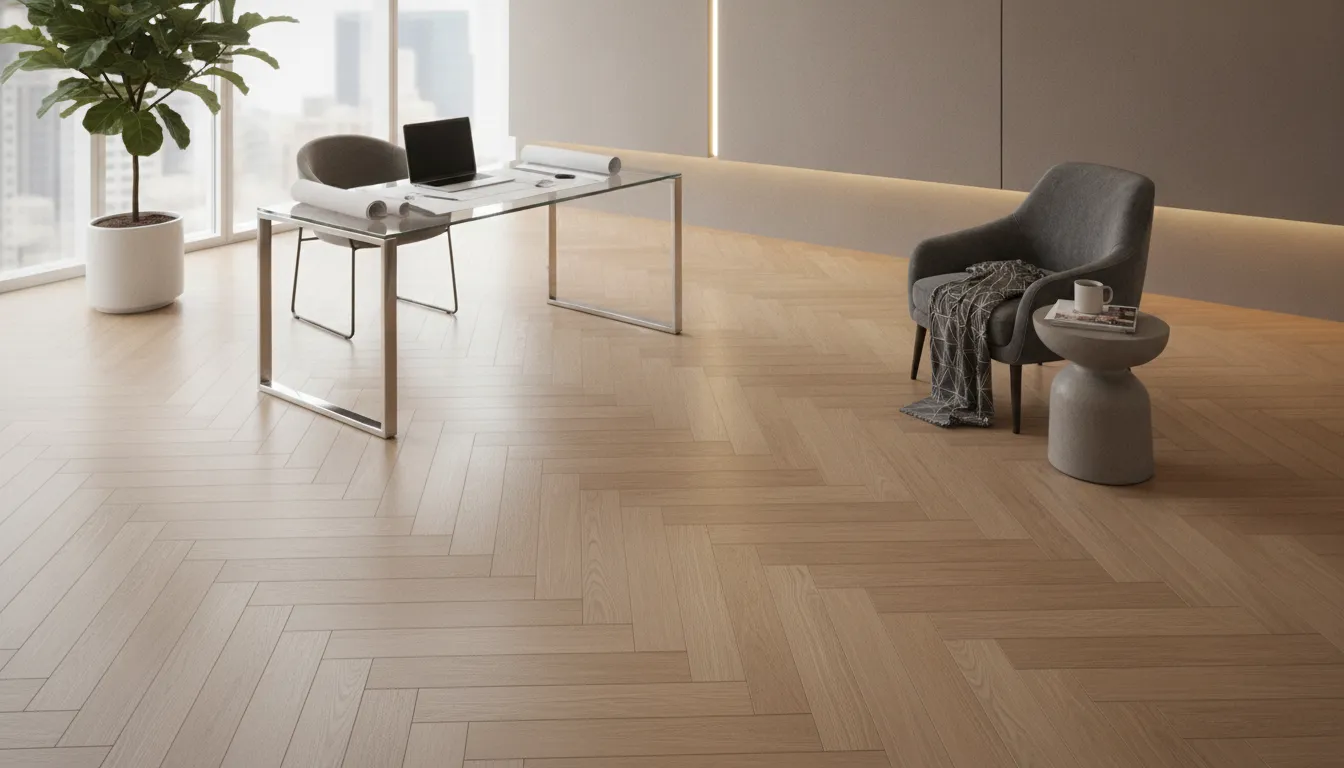
Herringbone flooring is a layout made from rectangular planks arranged in a repeating zigzag. Each piece meets the next at a right angle, creating a pattern that feels more detailed than straight-laid flooring without relying on intricate colors or materials. The look works with hardwood, engineered hardwood, laminate, and luxury vinyl, so you can choose a surface that fits your room, budget, and maintenance preferences.
The pattern naturally draws attention, which makes it a strong choice when you want the floor to help define a space. It can add character to an entryway, living room, or dining area, and it can complement both classic and contemporary interiors. The finished effect depends on more than the pattern alone: plank width, color, room dimensions, and the direction of the layout all influence how the floor looks.
Herringbone also calls for careful planning and precise installation. A clear layout helps keep the pattern aligned across the room and at transitions to adjoining floors. Before choosing a product, consider how the floor will handle the room’s daily use and any exposure to moisture. A professional can also assess the subfloor and discuss installation needs. ValorCraft Flooring’s flooring services include hardwood, laminate, and luxury vinyl installation across North Carolina.
How Planks Create the Pattern
In a herringbone layout, rectangular planks meet at right angles. The short end of one plank meets the long side of another, creating a broken zigzag that repeats across the floor. This arrangement adds visual movement and can give a room a more defined, architectural feel. Floor & Decor’s herringbone flooring guide shows how the pattern comes together and how plank choices affect its appearance.
A well-planned layout helps the rows stay even and the pattern look consistent from one side of the room to the other. Installers typically consider the room’s dimensions, starting point, doorways, and transitions before laying the first plank. These details matter especially in open spaces, where the pattern may continue through several connected areas.
Herringbone vs. Chevron
Herringbone and chevron both create a zigzag pattern, but the planks connect differently. Herringbone uses rectangular planks that meet at right angles, forming a staggered or broken zigzag. Chevron flooring uses planks with angled ends that meet in a point, creating a continuous V-shaped line. The distinction can be easy to miss in a small sample, so view several pieces together when comparing the two styles.
The patterns also create different impressions in a room. Herringbone has a more woven, layered look, while chevron’s continuous points feel crisp and directional. Neither option is right for every space, so consider the room’s scale and the style of nearby features, such as cabinetry, trim, and furniture. Seeing a larger sample or mock-up can help you decide which pattern feels balanced with the rest of the room.
How Plank Size, Direction, and Color Shape a Room
Plank dimensions and color can change how prominent the herringbone pattern feels. Wider planks and lighter wood tones may help a room feel more open, while narrow planks or darker finishes can create a busier, more dramatic look. In a compact room, compare samples in the actual space and lighting before settling on a finish. Floor & Decor’s herringbone guide offers examples of how color and plank size shape the overall effect.
Direction is another important choice. The pattern can lead the eye toward a doorway or focal point, and its alignment can affect how it connects to hallways and adjoining floors. Herringbone also requires more angled cuts than a standard plank layout, so the project may need additional material. Include that potential waste in your plans and budget, especially for large or open-concept rooms, as Edward Martin explains in its guide to herringbone flooring in open spaces.
Which Herringbone Material Fits Your Needs?
Herringbone describes the way flooring pieces are arranged, not what they’re made of. That gives you several ways to get the pattern, from natural hardwood to wood-look laminate or luxury vinyl plank (LVP). The best fit depends on the room, your budget, the amount of upkeep you’re comfortable with, and the appearance you want.
Start by thinking about how the space is used. A living room may call for the warmth and refinishing potential of hardwood, while a busy kitchen may lead you to consider a moisture-resistant product. Then compare the flooring’s construction, care instructions, and installation requirements. Not every plank is made to form a herringbone pattern, so confirm compatibility before buying.
It’s also worth looking beyond the material price. Herringbone takes careful layout work and precise cuts, which can affect labor and the amount of flooring needed. Subfloor condition, room shape, transitions, and trim can influence the project as well. If you’re weighing options for a home in North Carolina, ValorCraft Flooring’s flooring services include hardwood, laminate, and LVP installation, along with subfloor preparation. A professional assessment can help you match the material to the room and plan the installation.
Solid Hardwood: Natural Character and Refinishing
Solid hardwood brings real wood grain, color variation, and a warm feel to a herringbone floor. Common choices include oak, maple, ash, and walnut. Because each plank has natural character, the finished pattern has depth that printed wood-look designs may not replicate.
A key benefit is the potential to sand and refinish the floor over time. How often that’s possible depends on the wood’s thickness and condition, so ask about the specific product before choosing it. Solid hardwood can respond to changes in moisture and humidity, which makes room conditions and subfloor preparation important. It may not be the right option for every space, especially where moisture levels fluctuate. Explore herringbone hardwood species and styles as you compare the look, then check installation recommendations for your home.
Engineered Hardwood: Real Wood and Added Stability
Engineered hardwood has a real-wood surface layer attached to a layered core. It offers the natural look of wood, while its construction can provide added dimensional stability when indoor humidity changes. That can make it worth considering in rooms where solid hardwood may be more affected by seasonal conditions. The right choice still depends on the product, room, and subfloor.
Check the thickness of the wood surface layer if you want the option to refinish the floor later. Some engineered products can be refinished, but the number of times depends on that layer and the manufacturer’s guidance. Also confirm that the planks are designed for herringbone installation. Comparing solid and engineered herringbone flooring can help clarify which construction suits your priorities.
Laminate: An Affordable Wood Look
Laminate offers a wood-inspired appearance that can work well in a herringbone layout, often at a lower material cost than hardwood. Its design layer creates a consistent look across the planks, with options that resemble different wood species, colors, and finishes. It can be a practical choice if you want the pattern without investing in natural wood.
Laminate generally can’t be sanded and refinished like hardwood, so it’s important to choose a style and finish you’ll be happy with for the long term. Water resistance varies by product, too. Read the manufacturer’s instructions before installing it in a kitchen, entryway, or other area where spills may happen, and clean up moisture promptly. Make sure the specific product supports a herringbone layout. These herringbone flooring selection tips can help you compare laminate with other materials.
Luxury Vinyl: Moisture Resistance and Easy Care
Luxury vinyl plank can give you a wood-inspired herringbone look with a surface designed for everyday use and straightforward cleaning. Many LVP products resist moisture, making them a useful option for busy areas where spills or wet shoes are common. However, water resistance varies, so check the product’s specifications rather than assuming every vinyl floor is suitable for every room.
Not all LVP planks are made for herringbone installation. Before purchasing, confirm the product format, installation method, underlayment requirements, and subfloor preparation instructions. Vinyl may cost less per square foot than hardwood, but a herringbone layout can require more installation time than a standard plank pattern. Review the manufacturer’s care guidance and consider these herringbone vinyl options as you narrow down your choices.
Compare Appearance, Durability, Moisture Resistance, and Cost
For natural wood character, compare solid and engineered hardwood. Solid hardwood may offer more opportunities for refinishing, while engineered hardwood pairs a real-wood surface with a layered core. Laminate and LVP provide wood-inspired designs, but they don’t refinish like hardwood. LVP is often a strong option for areas where moisture is a concern, while laminate’s performance depends on the product and how it’s installed.
Prices vary by product, and the material cost is only one part of the project. Herringbone installation involves careful layout and cuts, and the final estimate may also reflect room shape, subfloor condition, trim, transitions, and material waste. Online listings, such as herringbone flooring products at Floor & Decor, can offer a starting point for comparing materials, but they aren’t a project quote. Ask your installer to assess the space and explain how each option fits your budget and needs.
Why Choose Herringbone Flooring?
Herringbone flooring brings movement and texture to a room through the way its planks fit together. The repeating pattern can make a floor feel like a design feature, even when you choose a simple wood tone and keep the rest of the room understated. Because it works with many interior styles, it can suit a traditional home as naturally as a modern renovation.
The pattern also gives you choices. Plank size, direction, color, and finish all affect how prominent the floor looks and how it relates to the room. A lighter, subtle finish can keep the overall feel calm, while darker or more varied tones create a stronger focal point. Herringbone is available in different flooring materials, too, so you can weigh its appearance against your household’s needs and budget.
There are practical considerations alongside the visual appeal. Angled cuts and careful alignment take planning, and the installation may require more material and labor than a straight-plank layout. Reviewing the room and subfloor before choosing a product helps set realistic expectations. ValorCraft Flooring provides flooring installation and refinishing services across North Carolina, with professional in-house crews and clear estimates to help you plan your project.
Use a Timeless Pattern in Traditional, Modern, or Scandinavian Interiors
Herringbone has appeared in interiors for centuries, but it continues to feel fresh because it adapts to different styles. In a traditional home, warm wood tones can complement classic trim, detailed furniture, and rich colors. For a modern interior, a natural or pale finish can make the pattern look clean and restrained. Scandinavian rooms often pair light wood, simple furnishings, and uncluttered décor, allowing the floor to add texture without overwhelming the space. Floer’s guide to choosing a herringbone floor offers examples of how color and finish shape the pattern’s appearance.
Think about the role you want the floor to play. If it should anchor the room, choose a more pronounced color or grain. If you want it to blend in, a subtle finish can add depth while keeping attention on other features.
Pair Herringbone with Industrial or Minimalist Design
Herringbone can add warmth to industrial spaces, where concrete, metal, and exposed details may create a cool or rugged feel. A natural wood tone softens those materials while preserving the room’s clean lines. In minimalist interiors, the pattern provides visual detail on its own, so simple furniture and a limited color palette can keep the space balanced.
Plank direction can also influence how a room reads. In a long or narrow area, angled lines may draw the eye across the space and emphasize its width. The effect depends on the room’s proportions, openings, and sightlines, so consider the full layout before choosing an orientation. Edward Martin’s guide to herringbone in open-concept living areas discusses how pattern direction can affect visual flow.
See How Color and Finish Affect Wear
Color and sheen affect how noticeable everyday dust, marks, and scratches are on a floor. Very dark, glossy surfaces can make fine scratches and dust easier to spot. Mid-tone colors and lower-sheen finishes may be more forgiving in busy homes, although the result also depends on the flooring material, finish, and level of use.
Herringbone’s detailed appearance does not mean it needs a special cleaning routine. In most cases, you can care for it much like straight-laid flooring: use products recommended for the material and avoid excess water, especially on wood. Wood and Beyond compares maintenance for herringbone and straight flooring. Ask your installer for care instructions that match the specific product and finish you select.
Weigh Visual Impact, Material, Waste, and Labor Costs
Herringbone creates a distinctive floor, but its installation requires precise layout and cuts. Because planks meet at angles, the work can generate more offcuts than a straight-plank installation. Material needs and labor costs may therefore be higher, particularly in large rooms or spaces with unusual shapes. Edward Martin’s article on herringbone in open-concept spaces explains why it’s important to account for additional material.
Before deciding, consider the flooring product, room dimensions, subfloor preparation, trim, and the pattern’s visual impact. A detailed estimate can clarify what the project includes and help you compare options. ValorCraft Flooring uses professional in-house crews rather than subcontractors and provides clear project estimates, so you can discuss the work and costs before installation begins.
Where Does Herringbone Flooring Work Best?
Choose Living Rooms, Bedrooms, and Entryways
Herringbone adds visual interest without requiring bold colors or elaborate décor. In a living room, its angled lines can bring movement to the floor beneath simple furnishings. In a bedroom, the pattern adds warmth and a tailored feel. Entryways are also a natural choice: herringbone makes a strong first impression and can create a visual connection to nearby rooms.
The pattern can suit both compact and spacious areas, but plank size and color affect the result. A lighter finish may help a smaller room feel open, while a larger space can make room for a more pronounced pattern. Browse this herringbone wood flooring guide for examples in bedrooms, kitchens, and other rooms. Before choosing a layout, consider how the floor will meet adjoining spaces and doorways.
Consider Kitchens and Other Moisture-Prone Areas
Herringbone can work well in kitchens, but choose a flooring material based on the room’s moisture exposure and everyday use. Luxury vinyl plank is a practical option for many kitchens because it handles moisture better than wood. Hardwood can also be used, but spills should be cleaned promptly and the floor cared for according to its manufacturer’s instructions. Check product specifications rather than assuming any flooring is waterproof.
The pattern requires more angled cuts than a straight-plank layout, which can increase material waste and affect the project budget. Cabinets, corners, and transitions may add to the planning. This overview of herringbone in open-concept spaces discusses factors to consider when the pattern continues across connected areas. Ask your installer to account for the layout and material needs before work begins.
Match the Pattern to Room Size, Traffic, and Décor
Herringbone’s V-shaped lines draw the eye across the floor and give a room a sense of direction. In a smaller space, lighter colors or wider planks may keep the pattern from feeling too busy. In a larger room, narrower planks or deeper tones can make the design more prominent. Consider the rest of the room, too: bold rugs, strong colors, and detailed furnishings can compete with an intricate floor.
Traffic also matters when you select a material and finish. Entryways and family rooms often see frequent foot traffic, so choose a surface suited to regular use and straightforward cleaning. This comparison of herringbone and straight flooring explains how each layout affects a room’s appearance. An experienced installer can help position the pattern around focal points such as a fireplace, doorway, or kitchen island.
Check Subfloor Condition and Moisture Levels
A precise herringbone installation starts with a stable, properly prepared subfloor. Before the flooring goes down, the surface should be assessed for flatness, damage, and moisture. An uneven or damp base can contribute to movement and other flooring problems over time. Depending on the material and site conditions, preparation may involve repairs, leveling, or moisture control.
Ask your installer how they will check the subfloor and what preparation the project may require. This guide to common herringbone installation mistakes explains why the surface beneath the floor matters. ValorCraft Flooring includes subfloor preparation among its services, helping North Carolina homeowners address the foundation before installation. Clear planning at this stage supports a more reliable result and a clean, consistent pattern.
What Do Installation and Maintenance Involve?
Herringbone flooring needs more planning than a straight-laid floor. Each plank must meet the next at a consistent angle, so a layout that starts off-center or a subfloor that is uneven can affect the finished pattern across the room. Before installation, check that your chosen flooring product is approved for herringbone and follow its instructions for acclimation, subfloor preparation, adhesive, and expansion gaps.
Installation also involves careful measuring, frequent alignment checks, and more cuts than many standard layouts require. The room’s shape, doorways, transitions, and focal points all influence where the pattern should begin. A dry layout can help you see how the design will sit before the planks are secured.
Maintenance varies by flooring material and finish. In general, remove grit regularly, clean spills promptly, and use products recommended by the manufacturer. Furniture pads and entryway mats can help limit everyday wear. Hardwood may need refinishing over time, depending on its construction and condition.
If you’d like professional help, ValorCraft Flooring provides flooring installation and refinishing services across North Carolina. Its in-house crews can assess the subfloor, plan the layout, and provide a clear estimate before work begins.
Acclimate Flooring, Prepare the Subfloor, and Plan the Layout
Begin with the flooring manufacturer’s instructions. Some products need time to acclimate to the home’s conditions; others have different requirements. Before installation, make sure the subfloor is clean, dry, structurally sound, and flat enough for the product. Check moisture levels, especially when installing wood flooring. An uneven or moisture-compromised base can affect the finished floor, regardless of how carefully the pattern is installed. Review common herringbone installation mistakes before work begins.
Then measure the room and plan the pattern’s starting point. Centering the design may create a balanced look, but doorways, adjoining rooms, and focal points can affect the best layout. A dry layout helps you preview how the pattern meets the walls and transitions before installation.
Make Precise Cuts, Align the Centerline, and Allow for Waste
Herringbone relies on consistent angles and tight joints. Establish a centerline to guide the first rows, then check alignment as you work. If the starting point shifts, the pattern can drift, creating uneven edges or awkward cuts along the walls.
Measure each piece carefully and use tools suited to the flooring product. Planks should fit snugly without being forced into place. Plan to order extra material for cuts and potential mistakes, as well as to select pieces with a consistent color or grain. The amount of extra flooring you’ll need depends on the room and layout, so ask your supplier or installer to calculate it. These herringbone cutting and alignment tips explain why careful setup matters.
Avoid Measurement and Material Selection Mistakes
Measure the room in several places because walls may not be perfectly square. Note doorways, closets, floor vents, and transitions to other surfaces. Each can affect the layout and the cuts along the room’s edges. Before ordering, confirm the plank dimensions and check that the product is designed for herringbone installation.
Choose a material that suits the room’s conditions as well as its appearance. Solid hardwood offers natural character, while engineered hardwood and luxury vinyl may be better suited to some areas with changing humidity or moisture concerns. The right choice depends on the specific product and installation method, so check its specifications rather than relying on appearance alone. Compare material considerations for herringbone flooring before making your selection.
Compare Installation Costs and Decide When to Hire a Pro
Herringbone typically involves more layout planning and labor than a straight pattern. Your estimate may depend on the flooring material, room shape, subfloor condition, preparation, trim, transitions, and the number of detailed cuts. You may also need extra material to account for cutting and layout waste. Ask for an itemized estimate that explains whether it includes removing old flooring, subfloor work, furniture moving, and new trim.
DIY installation may suit someone with flooring experience, the right tools, and time to work carefully. If the subfloor needs repair, the room has several doorways, or you’re installing hardwood, a professional can help you plan the job and complete the pattern consistently. ValorCraft Flooring uses licensed and insured in-house crews, not subcontractors. Request a flooring estimate to discuss your project and its specific requirements.
Clean Each Material with Suitable Products and Minimal Water
Choose cleaning products approved for your flooring material and finish. For routine care, sweep or vacuum using a hard-floor setting to remove grit. If the manufacturer allows it, use a lightly damp mop, but avoid soaking the floor. Excess water can affect wood and seep into joints, while harsh cleaners may leave residue or damage some finishes. Check material-specific cleaning guidance before choosing a product.
For hardwood, use a cleaner suited to its finish and wipe up spills promptly. Laminate and luxury vinyl also have product-specific care instructions. Check the manufacturer’s guidance before using polish, steam, or abrasive tools. A mat near an entryway can catch dirt and moisture before they reach the floor.
Prevent Scratches and Moisture Damage; Refinish Hardwood as Needed
Use felt pads under furniture legs, lift heavy items rather than dragging them, and place rugs in busy areas. Keep pet nails trimmed and clean up spills quickly. In kitchens and entryways, mats can help limit tracked-in grit and moisture. Choose mats approved for your flooring, since some may trap moisture or affect the finish.
Hardwood may be a candidate for refinishing when its surface looks worn, but that depends on its construction, wear layer, and condition. Herringbone repairs can take extra care because the surrounding planks follow the same pattern. A flooring professional can assess the damage and recommend a repair or refinishing approach. Read about repair considerations for herringbone floors as you plan for long-term care.
Frequently Asked Questions
Can herringbone flooring make a small room feel crowded?
It can, especially if the planks are narrow or the color contrast is strong. Compare larger samples in the room and consider lighter tones or wider planks for a calmer look. The layout and room lighting also affect the final impression.
Is herringbone flooring a good choice for kitchens or entryways?
It can be, provided the flooring material suits the area. Luxury vinyl may be worth considering where spills or wet shoes are common, but check the specific product’s moisture guidance. Clean up spills promptly and use mats approved for your floor.
Does herringbone flooring cost more to install than straight-laid flooring?
It often requires more layout planning, cutting, and labor. The estimate can also depend on the room’s shape, subfloor condition, transitions, trim, and extra material needed for cuts. Ask for a project-specific estimate that explains what is included.
Can any flooring plank be installed in a herringbone pattern?
No. Confirm that the product is designed for herringbone and that its installation instructions support the layout. Plank dimensions, fastening or adhesive requirements, and subfloor preparation can all affect whether a product is suitable.
How should I choose a herringbone flooring installer in North Carolina?
Ask about licensing and insurance, who will complete the work, subfloor preparation, and how the installer plans the pattern and transitions. ValorCraft Flooring uses professional in-house crews and provides clear estimates for flooring projects across North Carolina.