
A flooring estimate can feel confusing when every installer lists different materials and services. One quote may cover removal and disposal, while another may charge for those tasks separately. To understand the laminate floor installation cost, look at the full project scope: the flooring product, room measurements, labor, subfloor condition, and finishing work. You’ll also want to account for extra planks to cover cuts and keep a few for future repairs. Whether you’re updating one room or several, clear details make it easier to plan and compare options. Use this guide to build a realistic budget and ask useful questions before work begins.
Key Takeaways
- Use the per-square-foot range as a starting point: Laminate installation often costs $3 to $13 per square foot, but product choice, room layout, and floor preparation shape your final estimate.
- Match the product to the space: Compare durability, water resistance, warranty, and care requirements to choose features that fit the room and its daily use.
- Compare complete written estimates: Check whether removal, subfloor preparation, underlayment, trim, transitions, and disposal are included, and ask how additional work will be approved.
What Does Laminate Floor Installation Cost?
Typical installed price: about $3–$13 per square foot
Professional laminate flooring installation typically costs about $3 to $13 per square foot, including materials and labor, according to NerdWallet’s cost guide. That wide range is a starting point, not a set price for every home. A simple room with an entry-level product may land near the lower end. Premium flooring, a complex layout, or extra preparation can raise the total.
To sketch out a budget, multiply the room’s square footage by a few points in the range. Then get a quote based on the actual space. An installer can check the floor’s condition and identify work that a basic calculation might miss, such as transitions or subfloor preparation.
How materials and labor shape the estimate
Laminate materials generally cost $1 to $5 per square foot, while labor often runs $2 to $7 per square foot. These ranges, outlined in Right Step Flooring’s cost breakdown, help explain why quotes for similar rooms can vary. Product quality, installation details, and the amount of preparation all influence the final price.
When reviewing an estimate, check which flooring product it covers and whether underlayment, old-floor removal, and subfloor work are included. One quote may include these services while another lists them separately. Ask for an itemized estimate so you can compare the same materials and scope of work, rather than judging by the total alone.
How room size and project scope affect the total
A 200-square-foot room might cost roughly $800 to $2,400 to complete, while a 1,000-square-foot project could range from $3,000 to $10,000. These examples from TheBestLaminateFlooring.com’s pricing guide are broad estimates, not guaranteed quotes. The final amount depends on the flooring and labor required.
Room size is only one part of the calculation. Closets, alcoves, doorways, stairs, and unusual angles can mean more measuring and cutting. Measure each room separately and share the layout with your installer. Include connected areas, too, if you want continuous flooring. Clear project details help an installer prepare a more accurate estimate and make it easier to compare options.
Why local quotes vary from national price ranges
National figures provide a useful reference, but a local quote reflects the specific product, labor, and conditions at your property. Flooring thickness, finish, texture, and water- or scratch-resistant features can affect material costs. The state of the subfloor and any removal or trim work can also change the labor required. Even projects with similar square footage may have different needs.
Ask local installers to clarify what their estimates include, especially subfloor preparation, transitions, and disposal of old flooring. This makes it easier to understand differences between quotes. If your project is in the Triad or elsewhere in North Carolina, contact ValorCraft Flooring to discuss your space and request a clear estimate.
Which Laminate Flooring Offers the Best Value?
The best-value laminate is the one that fits the room and holds up to how you use it. Rather than choosing by price or appearance alone, compare construction, durability, water resistance, warranty, and installation needs.
How the core, wear layer, decorative layer, and backing affect performance
Laminate flooring is built in layers. The core gives the plank structure, while the decorative layer creates its wood- or stone-inspired look. A clear wear layer sits on top to help protect against everyday scuffs and scratches. The backing supports the plank and can help with stability.
These layers work together, but no single feature tells the whole story. A thicker plank may feel more substantial, yet thickness alone doesn’t guarantee better performance. Check the product’s wear layer and abrasion class, or AC rating, as well. Higher AC ratings are designed to handle heavier use, but they generally cost more. Match the product to the room’s traffic rather than paying extra for a rating you may not need.
Compare brands and product lines by price, thickness, AC rating, and warranty
Compare individual product lines instead of relying on brand names. Note each option’s price per square foot, thickness, AC rating, water-resistance claims, and warranty. Laminate materials often cost about $1 to $5 or more per square foot, while professional installation commonly adds $2 to $5 per square foot. Your final estimate will depend on the product and the work required.
AC1 and AC2 are generally suited to lighter residential use, AC3 to busy homes or light commercial settings, and AC4 or AC5 to very heavy residential or commercial traffic. Check the warranty’s terms and exclusions, too. For example, coverage may depend on where the product is installed and how it’s maintained. You can compare available flooring and installation options through ValorCraft Flooring’s services.
Match water resistance to the room’s needs
Think about spills, humidity, and moisture beneath the floor before choosing a product. “Water-resistant” does not necessarily mean waterproof, or suitable for standing water. Check the manufacturer’s instructions for approved rooms, cleanup requirements, and any limits on exposure.
Bathrooms and basements need particular care. Choose a product specifically approved for the conditions in the room, and ask whether a moisture barrier or other preparation is recommended. The subfloor matters, too: moisture underneath the planks can create problems even when the laminate has water-resistant features. If you’re unsure what the space needs, ask an installer to assess the subfloor and explain the preparation included in the estimate.
Choose flooring for your household, traffic, and budget
Start with how the room is used. Entryways, kitchens, and family rooms typically see more foot traffic than guest rooms, so they may call for a more durable wear layer. If you have kids or pets, consider a color or pattern that makes small marks less noticeable. Check care instructions before buying so you know what everyday maintenance involves.
Then weigh the product price against installation requirements. A simple rectangular room may be more straightforward than one with stairs, several doorways, heating registers, or detailed cuts. Those features can add labor. Compare complete estimates that account for preparation, trim, and transitions, not just the cost of the planks. A clear recommendation should explain why a product suits your space and budget.
What Can Change Your Installation Quote?
A laminate installation quote depends on more than the size of the room. The flooring you choose, the condition of the subfloor, and the work needed to prepare the space can all affect the total. When requesting an estimate, share details about the rooms and ask which tasks are included. ValorCraft Flooring offers flooring installation and preparation services, so you can discuss the project scope before work begins.
Room layout, cuts, transitions, and installation pattern
A large, open room may be relatively straightforward to cover. A smaller space with closets, alcoves, several doorways, or unusual angles can take more measuring and careful cutting, even if it has less square footage. Transitions between rooms, flooring types, or different floor heights may also require additional materials and fitting. The installation pattern can affect labor, too, especially if the layout calls for precise alignment. Room size and layout are among the details that can shape an installation estimate. To help your installer assess the work, provide room measurements, a floor plan, or photos, and mention any areas where the flooring will meet another surface.
Subfloor condition, leveling, and moisture preparation
Laminate needs a stable, properly prepared base. If the subfloor is uneven, damaged, or damp, it may need repairs, leveling, or moisture protection before installation. That preparation can add materials and labor, but addressing problems first helps create a suitable surface for the new flooring. A laminate flooring cost guide identifies subfloor preparation as a possible added expense. Ask whether the installer has inspected the existing floor and what preparation the estimate includes. Sometimes the subfloor’s full condition becomes clear only after the old flooring is removed. In that case, ask how additional work will be documented, priced, and approved before it begins.
Flooring quality, site access, and project complexity
Laminate products differ in thickness, durability, and water resistance, and those features can affect material costs. Choose a product based on where it will be installed, how much traffic the room gets, and the needs of your household. NerdWallet’s laminate flooring guide explains how product features can influence the price. Site conditions may also affect the work involved. Stairs, limited parking, or a long distance between the delivery point and the rooms can make moving materials more challenging. Tell the installer about access restrictions and other site details when requesting a quote, so the estimate reflects the conditions of your project.
Furniture moving, door adjustments, and other labor
Clarify whether the estimate includes moving furniture, removing and disposing of existing flooring, and installing trim or transition pieces. These tasks may be priced separately, so check what you’ll need to arrange before installation day. New flooring can also change the floor height, which may mean a door needs adjustment to open and close properly. Ask whether that work is included or would be an additional charge. Before approving the estimate, review the services ValorCraft Flooring provides and request a clear list of included tasks, potential extra costs, and any responsibilities that remain yours. This makes it easier to compare quotes and plan for the full project.
What Extra Costs Should You Budget For?
The price of the laminate itself is only part of your project budget. Finishing materials, old-floor removal, and subfloor preparation can all add to the total. Ask your installer to spell out these items in the estimate so you know what’s included and can plan for additional work if needed.
Underlayment, moisture barriers, trim, and transitions
Some laminate planks have underlayment attached; others require a separate layer. Separate underlayment may cost about $0.25 to $1 per square foot, depending on the product. A moisture barrier may also be needed, based on the manufacturer’s instructions and conditions in the room.
Trim and transitions finish the edges and cover places where laminate meets walls, doorways, or other flooring. Trim may cost about $2 to $8 per linear foot, depending on the material and style. Ask whether your quote includes underlayment, moisture protection, baseboards or shoe molding, and transition pieces. This laminate flooring cost guide offers general material price ranges, but your estimate will depend on the products and layout you choose.
Existing flooring removal and disposal
Removing carpet, vinyl, laminate, or another existing floor can add labor and disposal costs. A general estimate is about $1 to $2 per square foot, though the price depends on the flooring type, how it was installed, and whether multiple layers need to be removed.
Taking up the old floor may also reveal damage or other issues that weren’t visible during the initial assessment. Ask whether your estimate includes removal, hauling, and disposal, and how any newly discovered work will be priced and approved. This makes it easier to compare quotes fairly, since one installer may include disposal while another lists it separately. A local laminate installation cost guide can offer a regional reference, but a site-specific estimate is the best way to understand your project’s cost.
Subfloor repair, leveling, and preparation
Laminate needs a stable, properly prepared surface. If the subfloor has dips, high spots, damage, or moisture concerns, it may need repair or leveling before installation. General estimates for preparation work range from about $1 to $3 per square foot, though the cost depends on the condition of the subfloor and the work required.
Ask your installer to inspect the surface and explain what preparation the quote covers. If the subfloor can’t be fully assessed until the existing flooring is removed, ask how additional work will be documented and approved before it begins. Proper preparation helps the new floor sit as intended. ValorCraft Flooring provides subfloor preparation and flooring services for homeowners, builders, and commercial clients across North Carolina.
Add 5–10% for cuts, waste, and future repairs
Plan to purchase about 5% to 10% more flooring than your measured room area. This extra material allows for cuts, damaged planks, and offcuts that can’t be reused. Rooms with closets, alcoves, angled walls, or several doorways may require more material than a simple rectangular space.
Keeping a few unopened planks after installation can also help if a board needs replacing later. The same product may not always be available, and colors or patterns can vary between production runs. Ask your installer how much extra material suits your floor plan. This laminate flooring cost guide also recommends accounting for waste, while your installer can help estimate the amount needed for your specific rooms.
How Can You Estimate and Control Costs?
A realistic laminate flooring budget includes more than the price of the planks. Measurements, installation labor, waste, floor preparation, and finishing materials can all affect the total. Use these steps to plan your budget and compare estimates on equal terms.
Measure each room and calculate its square footage
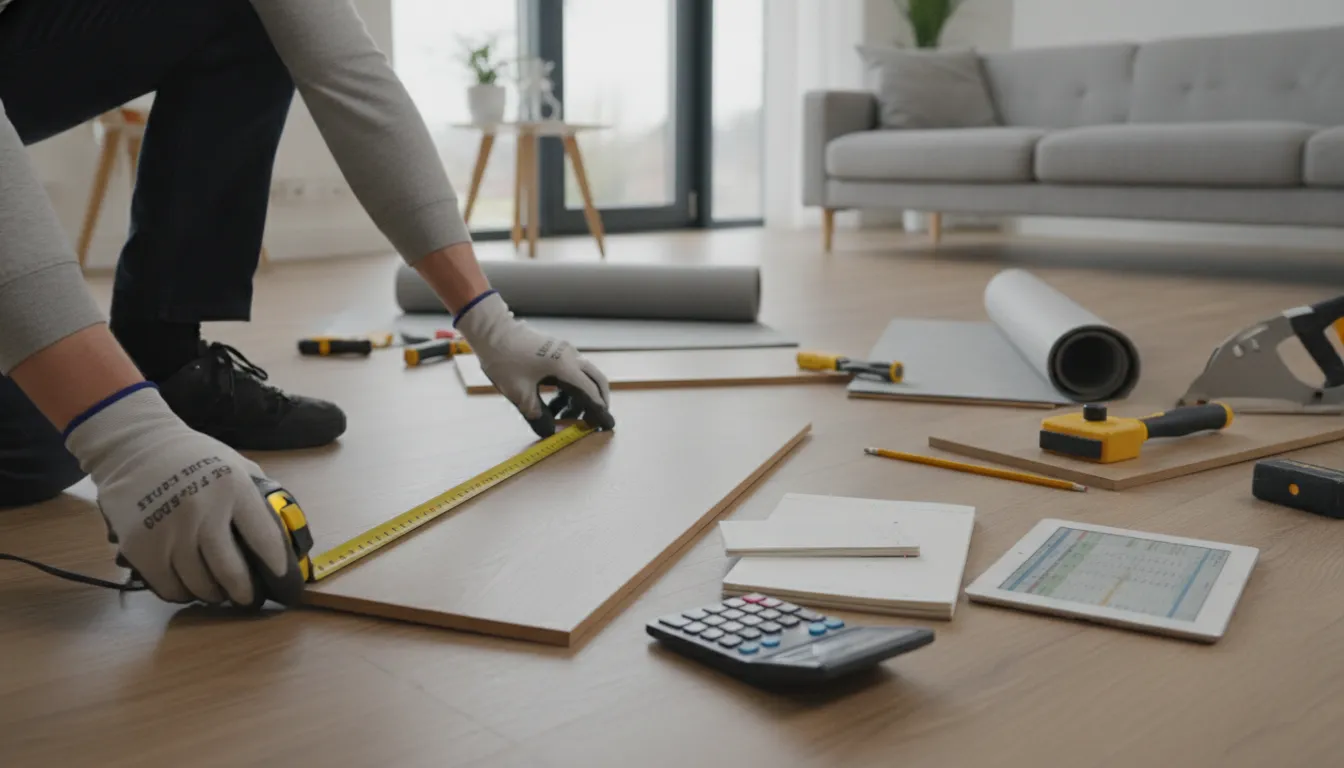
Measure the length and width of each room in feet, then multiply them to find the square footage. For example, a room that’s 12 feet long and 10 feet wide has 120 square feet of floor space. Measure each room separately and add the totals together.
For an L-shaped room or an irregular layout, divide the space into smaller rectangles. Calculate each area, then add them up. Include closets or alcoves if they’ll receive flooring, and note doorways or unusual corners that may affect the installation.
Your measurements are a useful starting point, but an installer should confirm them before ordering materials. A site visit can also help identify details that affect the work, such as room transitions or areas that need extra preparation.
Calculate flooring needs, including waste
Add 5% to 10% to your measured square footage to allow for cuts, waste, and a few spare planks. A simple rectangular room may need less extra material than a space with many corners or angled cuts. The laminate flooring cost guide from TheBestLaminateFlooring.com recommends a 10% allowance for cuts and waste.
For a 300-square-foot project, adding 10% means planning for about 330 square feet of flooring. Since laminate is typically sold by the box, you may need to round up to the next full box. Keep any leftover planks in case you need to replace a damaged section later.
Ask your installer how the material allowance was calculated and whether the estimate includes the full quantity needed. The waste allowance applies to flooring, but it doesn’t automatically cover underlayment, trim, or other materials.
Compare full installation costs, not just material prices
A low price per square foot for laminate doesn’t tell you what the completed project will cost. Compare material, labor, underlayment, removal, floor preparation, trim, and transitions. Ask each installer to quote the same product and scope of work so you can make a fair comparison.
As a general reference, NerdWallet’s laminate flooring cost guide reports material prices of about $1 to $5 per square foot and installed costs of about $3 to $13 per square foot. Your actual cost will depend on the product, room conditions, and work involved.
For example, 300 square feet of material at $2.50 per square foot plus installation at $3 per square foot comes to about $1,650. That estimate doesn’t include waste, underlayment, trim, or repairs, so treat it as a starting point rather than a final price.
Check the written estimate for included and excluded work
Review the estimate line by line before approving it. Confirm the flooring product and quantity, labor, and preparation work. Then check whether delivery, old-floor removal and disposal, furniture moving, underlayment, trim, transitions, and door adjustments are included or billed separately.
Ask the installer to explain broad terms such as “floor prep” or “standard installation.” Find out whether preparation covers minor patching, leveling, or more extensive repairs. The NerdWallet guide notes that services such as removal, delivery, and subfloor preparation may not be included in every quote.
A clear, itemized estimate makes it easier to compare installers and understand what you’re paying for. If extra work could change the price, ask how the installer will explain the issue and get your approval before proceeding.
Set aside a contingency for unexpected subfloor issues
Problems beneath the existing floor may not be visible until removal begins. The subfloor could be uneven, damaged, or affected by moisture, and it may need repairs before laminate can be installed. Set aside part of your budget for possible work rather than using the full amount on flooring and labor.
Ask whether the installer can assess the subfloor before the project starts and how additional repairs will be priced if a problem appears during removal. Agree on a process for discussing and approving extra work before it begins.
ValorCraft Flooring provides subfloor preparation as part of its flooring services. An installer can explain which conditions may affect your project and help you plan for them, so you can make informed decisions about any necessary repairs.
How Should You Compare Local Flooring Installers?
A useful comparison starts with more than the bottom-line price. Ask each installer to quote the same laminate, rooms, and scope of work, then check what’s included and who will handle each part of the job. A clear, written estimate makes it easier to compare costs and catch missing work before installation starts.
Request itemized quotes based on the same product and project details
Give each installer the same information: room measurements, the laminate product or product specifications, the condition of the existing floor, and any removal or preparation you expect. Ask for an itemized written quote that separates materials, labor, flooring removal, subfloor preparation, trim, transitions, and disposal. If one estimate is higher, you can then see whether it includes work that another quote leaves out.
Check that the estimates use the same assumptions about the installation pattern, underlayment, and waste. If a quote is unclear, ask for an updated version before comparing prices. A detailed flooring estimate should spell out the planned work, possible extra charges, and how changes to the project will be priced.
Check laminate experience, licensing, insurance, reviews, and workmanship warranties
Ask how much experience the installer has with laminate and whether they’ve handled projects with similar rooms, layouts, or subfloor conditions. Laminate needs the right preparation and careful installation, so ask how the crew checks the surface and follows the flooring manufacturer’s requirements. Confirm that the company carries insurance, and ask about any licensing or credentials relevant to the work.
Read recent reviews with an eye toward communication, punctuality, and cleanup, not just the finished photos. You can also ask for references from customers who had laminate installed. Before hiring, request the workmanship warranty in writing and clarify what it covers, how long it lasts, and how to report a concern. These checks help you compare the service behind the quote, not just the price. Installer qualifications and references are useful points to include in your questions.
Ask whether in-house crews or subcontractors will do the work
Ask who will complete the installation and who will supervise the job. Some flooring companies use in-house employees, while others hire subcontractors. Find out who your main point of contact will be, how the work will be checked, and whom to call if a question or issue comes up during or after installation.
Clarify which tasks the crew will handle. Furniture moving, existing-floor removal, disposal, door adjustments, specialty trim, and transitions may be priced separately. These details can affect both the estimate and the project schedule, so get the answers in writing. A laminate flooring cost guide can help you spot common add-on costs to ask about when reviewing a quote.
Confirm the schedule, cleanup, payment terms, and responsibilities
Before you commit, ask when the project can begin and how long installation is expected to take. Confirm whether the schedule includes removing the old flooring, preparing the subfloor, and installing trim and transitions. Ask who needs to move furniture or appliances, whether the crew will dispose of debris, and how the work area will be cleaned when the job is complete.
Review the payment schedule, deposit requirements, and accepted payment methods before signing. It’s also worth asking how the installer will handle unexpected issues, such as damaged or uneven subflooring, and whether work will pause while you approve any added cost. For unusual layouts or complicated projects, request an on-site assessment so the installer can review the space before finalizing the estimate.
Request a clear estimate from ValorCraft Flooring
When you contact ValorCraft Flooring, share the rooms you want done, your preferred laminate, and any known concerns, such as existing-floor removal or uneven areas. Ask for a written estimate that explains the materials, labor, preparation, and any work that could add to the price. That gives you a practical way to compare the proposal with other local quotes.
ValorCraft is a veteran-owned flooring company with licensed and insured, professional in-house crews. Review its flooring services and approach to craftsmanship, then contact the team to discuss your project. Before scheduling, confirm the timeline, payment terms, cleanup plan, and workmanship coverage directly with the company.
How Can You Avoid Budget Surprises?
A little preparation can make laminate flooring costs easier to manage. Compare complete project estimates, ask what each quote includes, and leave room in your budget for work that may only become clear after the existing floor is removed.
Ask about promotions and financing options
Before choosing laminate, ask whether promotions apply to the product or installation. A seasonal sale may make a particular option more affordable, but check the full project price rather than focusing on the discount alone. Confirm which products qualify and whether the offer affects delivery, installation, or warranty terms. Get the details in writing so you can compare them with other quotes.
If you’d prefer to spread out the cost, ask about financing and review the terms, including any fees or interest, before signing. ValorCraft Flooring works with homeowners and other clients across North Carolina. You can contact the team to discuss your project and ask about available options. Having clear pricing and payment details up front can help you plan with confidence.
Choose durable features without paying for unnecessary extras
Choose laminate based on the room’s traffic and daily demands. A busy household, rental property, or commercial space may benefit from a more durable wear layer and a higher Abrasion Class (AC) rating. A low-traffic room may not need the most heavy-duty option. Higher AC-rated products are designed for heavier use, but they can cost more.
Compare thickness, water resistance, warranty coverage, and care requirements along with the price. Consider the specific needs of the space: for example, a kitchen or entryway may call for different water protection than a bedroom. Ask your installer to explain what you gain from each upgrade and whether it suits your home. That way, you can spend on features that matter without paying extra for ones you’re unlikely to use.
Compare DIY costs, preparation, tools, and repair risks with professional installation
Installing laminate yourself may reduce labor costs, but include more than the flooring price in your estimate. Factor in tools, underlayment, floor preparation, extra material, and the time required to do the work. Follow the manufacturer’s installation instructions, especially around expansion gaps and transitions. Uneven subfloors, stairs, doorways, or moisture concerns can make the job more challenging, and mistakes may lead to repair costs.
Professional installation usually costs more upfront, but it can be worth considering for complex layouts or floors that need preparation. Compare the complete DIY budget with an itemized quote, including the work needed before installation. Installation cost guidance outlines how project conditions can affect the choice between DIY and professional work. Ask what preparation, installation, and cleanup the quote covers.
Budget for often-missed costs like trim, removal, and labor fees
A quote may not include every task needed to finish the room. Ask whether it covers old-floor removal and disposal, underlayment, moisture protection, transitions, baseboards, and trim. These additions can affect the total: laminate flooring cost estimates list underlayment, trim, and removal as potential separate expenses. Your actual costs will depend on the product, room, and condition of the existing floor.
Also confirm whether furniture moving, door adjustments, subfloor repairs, and cleanup are included. Have the installer review the space before finalizing the estimate, then request a written breakdown of included and excluded work. If you’re buying materials, plan for an extra 5% to 10% to account for cuts, waste, and future repairs. A clear scope helps you compare quotes and reserve funds for issues uncovered once old flooring comes up.
Related Articles
- Laminate Flooring | ValorCraft Flooring
- Flooring Removal & Disposal | ValorCraft Flooring
- Subfloor Preparation | ValorCraft Flooring
- Quarter Round & Trim Installation | ValorCraft Flooring
- New Residential Flooring | ValorCraft Flooring
Frequently Asked Questions
How much does it cost to install laminate flooring?
Professional installation typically costs about $3 to $13 per square foot for materials and labor. Your final price depends on the flooring you choose, the room layout, and any preparation or removal work. Request an itemized estimate for a more accurate project budget.
What should a laminate flooring estimate include?
Check whether the estimate covers the flooring, labor, underlayment, old-floor removal, disposal, subfloor preparation, trim, and transitions. Ask the installer to list excluded work and explain how any unexpected repairs will be priced and approved.
Is water-resistant laminate suitable for kitchens or bathrooms?
It depends on the product and the room. Water-resistant does not always mean waterproof, so check the manufacturer’s guidance on spills, standing water, and approved installation areas. Moisture beneath the flooring can also cause problems, so ask whether the subfloor needs assessment or protection.
How much extra laminate should I buy?
Plan for about 5% to 10% more than the measured floor area to account for cuts and waste. Rooms with many corners, closets, or angled walls may need more. Your installer can help calculate the amount and account for full-box quantities.
How can I compare laminate flooring installers in North Carolina?
Ask each installer to quote the same product and project scope, then compare materials, labor, preparation, removal, and finishing work. Confirm who will complete the installation, whether the company is insured, and what workmanship coverage it provides. North Carolina homeowners can contact ValorCraft Flooring to discuss their project and request a clear estimate.