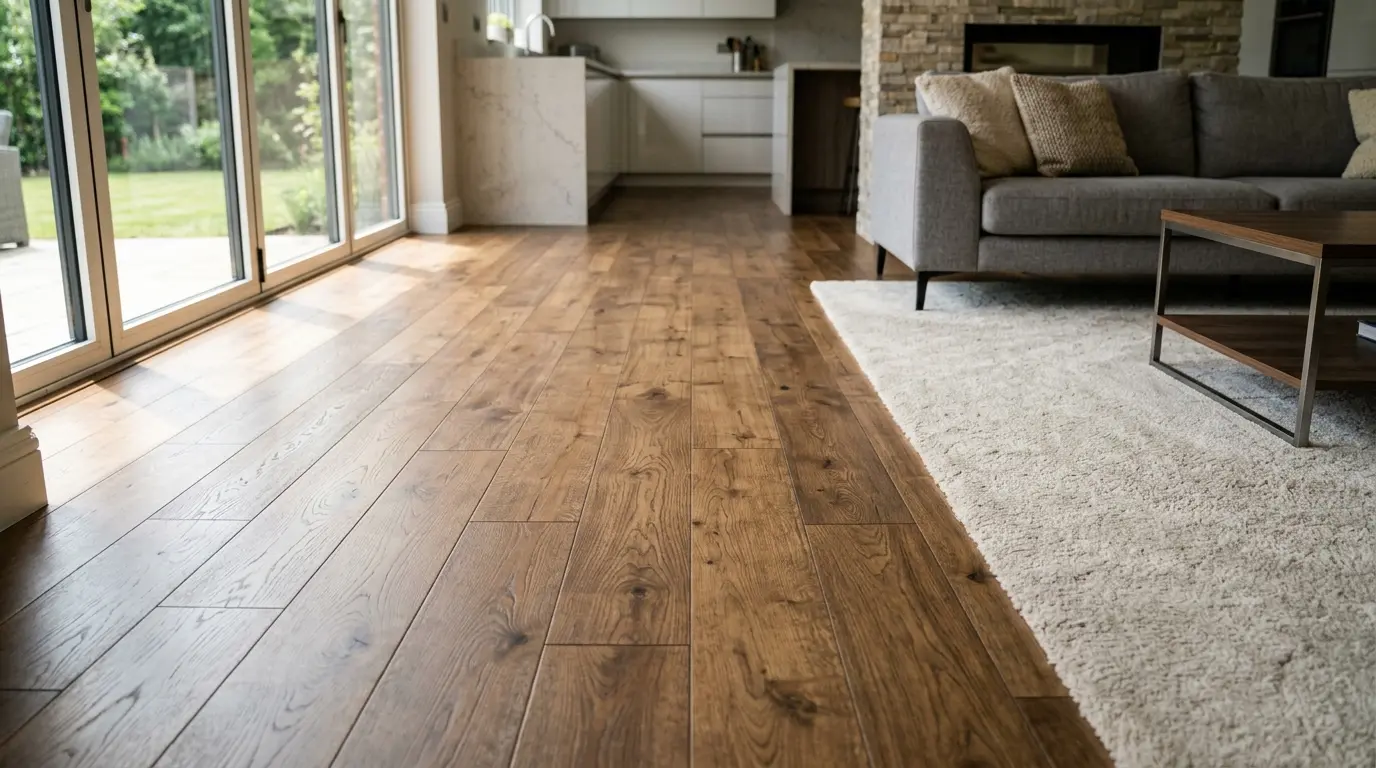

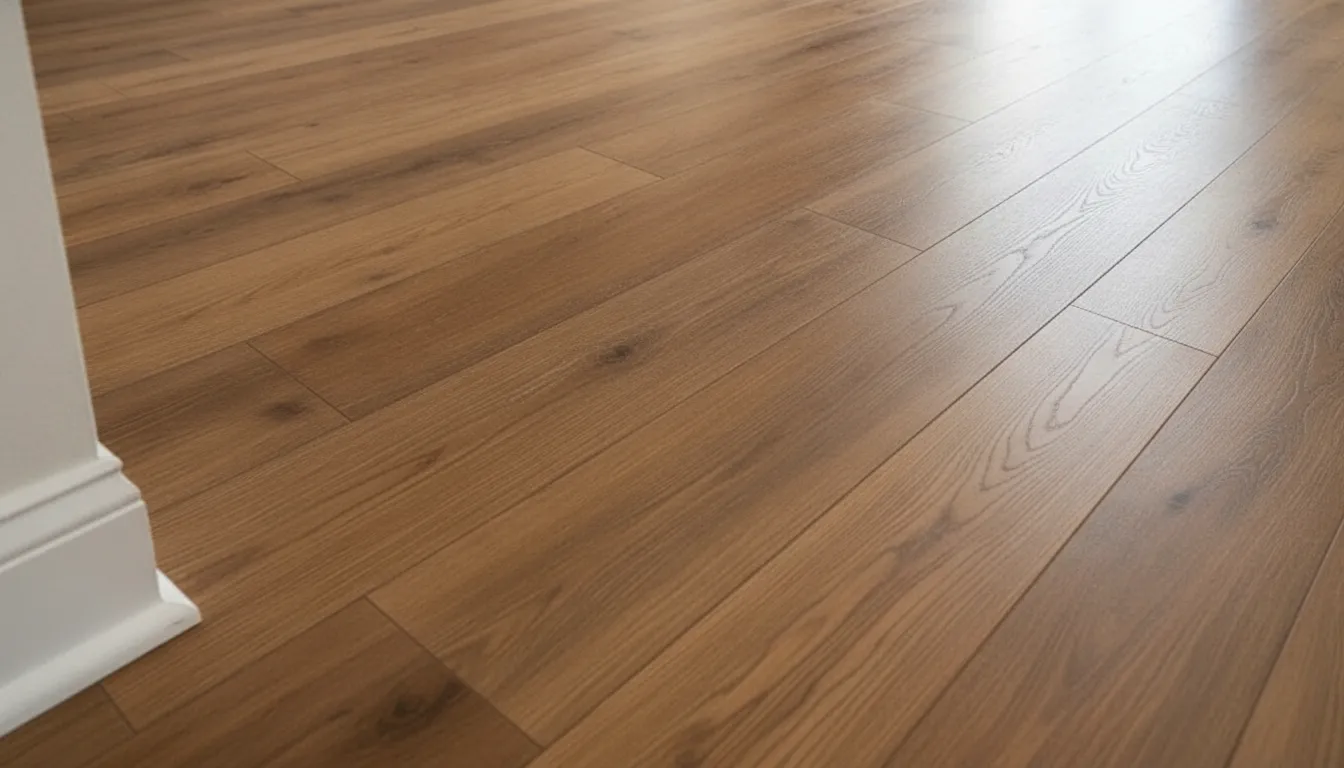
Screen and recoat vs sand and refinish is a scope choice, not a style preference. A screen and recoat lightly abrades the existing finish and adds a new topcoat over the current color. A sand and refinish cuts back to bare wood, then applies stain if you want it and new finish coats. Pick the lighter job when the finish is dull but the wood is sound. Pick the full sand when scratches, stains, or a color change reach the wood itself.
Request a free in-home consultation
The written estimate is what sets the method. Furniture moves, board repair, moisture work, and stair extras are not bundled unless that estimate says so. An on-site look at the wear layer is what decides which method the floor can actually take.
What screen and recoat vs sand and refinish changes
Both jobs renew protection. They do not renew the same layer of the floor. Knowing which layer is tired keeps you from paying for a full sand the wood does not need, or from coating over damage a new topcoat cannot hide.
What a screen and recoat leaves in place
A screen and recoat, sometimes called a buff and coat, scuffs the existing finish so a new coat can grip. The color underneath stays. The crew cleans, abrades, removes dust, and applies finish over the current stain. ValorCraft describes this as light abrasion of the existing finish, dust removal, and a fresh topcoat for floors that have lost their sheen but still have a solid wear layer.
It is a good fit when traffic has dulled the shine and fine scratches sit in the finish, not in the wood. You keep the color you already have. You also keep any stain, pet mark, or gray path that has already reached the fiber. A new coat can make those marks look slightly softer, but it will not erase them.
What a full sand removes
A sand and refinish uses drum or orbital sanding in the field and an edger at the walls. Corners and closets are finished by hand. The goal is bare wood, then stain if you chose one, then new finish coats. Light screening between those coats helps each layer bond flat. That is a different job from the light pass used only to accept a new topcoat.
Because sanding removes wood, it can clear surface scratches and open the floor for a new color. It can also use up part of a limited wear layer. Solid hardwood often has more thickness to give than a thin engineered wear layer. Prior sanding is what matters, not the label on the box. The National Wood Flooring Association notes that a full sand is not required just to restore a sound finish. A screen and recoat may be enough unless the floor has dents, wear patterns, permanent cupping, or you want a new color.
| Question | Screen and recoat | Sand and refinish |
|---|---|---|
| What is removed. | A thin scuff of the existing finish. | Finish and a layer of wood, back to bare grain. |
| Color. | Stays the current color. | Can stay natural or take a new stain. |
| Best starting point. | Dull sheen, light finish scratches, and sound boards. | Deep scratches, worn paths, stains in the wood, or a color change. |
| What it cannot fix. | Color, deep dents, cupped boards, or a failing wear layer. | A floor with too little wood left, or a moisture problem still active. |
| Adhesion risk. | Higher if the old finish is unknown, flaking, or waxed. | Lower, because new finish goes on bare, clean wood. |
When a screen and recoat is the right scope
Choose a screen and recoat when the wood is still flat and the complaint is the finish. Walk the room in raking light. If you see haze, light scuffs, and a tired sheen, but you cannot catch a fingernail in the scratch, the damage is likely still in the coating.
- The color is still the color you want in every room that will be coated.
- Boards are tight, flat, and free of cupping, splits, and soft spots.
- There is no flaking, peeling, or cloudy failure in the current film.
- You are not trying to hide a pet stain, a sun-faded path, or a water ring that has darkened the wood.
- The existing finish is a compatible polyurethane, not wax, oil soap buildup, or an unknown factory coating that will not take a new coat.
Factory finishes with aluminum oxide can be harder to abrade evenly. NWFA sanding guidance says those high-abrasion films may need a fine grit, often 80-grit or finer, just to cut the surface. Test adhesion on the actual floor before promising a recoat across the house. A small test patch that crawls, fisheyes, or peels is a stop sign, not a spot to coat over.
A recoat also fails when the old film is dirty in a way soap will not fix. Wax, silicone furniture spray, and some older maintenance products leave a film that rejects new finish. If that history is unknown, the safer reading is often a full sand, because new finish then bonds to wood instead of to a mystery coat.
When the floor needs a sand and refinish
Move to a full sand when the damage is in the wood, or when the color has to change. A topcoat cannot lift a gray traffic lane out of oak, and it cannot make a cherry stain look like a lighter natural floor.
- Scratches or dents catch a fingernail or show raw wood.
- Finish has worn through in doorways, in front of the sink, or along a common path.
- Pet stains, water marks, or sun fade have changed the wood color, not just the sheen.
- You want a different stain, a lighter floor, or one consistent color between an old room and an addition.
- The current coating is peeling, alligatoring, or contaminated so a new coat will not stick.
- Boards need replacement first, and the repair has to disappear under a new stain and finish.
Color is the cleanest dividing line. ValorCraft applies stain samples on a corner of the actual floor, not on a loose sample board, and only after the sand has opened the grain. That step does not exist on a recoat, because a recoat never reaches bare wood. If matching an addition or shifting a dated orange tone is the goal, the job is a sand.
Depth has a limit. Surface scratches usually sand out. Urine stains and water marks that have traveled into the fiber may not. During assessment, those dark areas get called out with the real options: a wood-bleach treatment when it is appropriate, a board replacement, or an honest note that some character will remain. A full sand is not a promise of a blank slate.
If the wear layer is already thin, or the floor is cupped from moisture that has not stabilized, sanding is the wrong next step. The NWFA says cupped floors should not be sanded until the wood and the subfloor have reached a stable moisture content. Sanding a wet cup locks the dish shape into a thinner board. Fix the moisture story first, then decide whether any sand is still wise.
How wear layer and finish type narrow the choice
The method has to fit the floor that is already down. Two floors can look equally dull and need opposite work.
Solid versus engineered thickness
On the service walk-through, the crew checks finish depth and board thickness before pricing. Solid hardwood often allows more than one full sand over its life. People often hear three to five refinishes, and only if earlier sanding left enough wood. That range is a planning idea, not a quota. Engineered hardwood depends on the wear layer, which is measured on site. A thin wear layer may still accept a screen and recoat. It may not survive a drum sand.
Solid hardwood flooring is the product most people picture for repeat sanding, but only when the remaining thickness supports it. If the gauge says the layer is too thin, the honest recommendation is to stop, not to "just take a light pass" and hope.
What the current coating will accept
Oil-modified polyurethane, water-based polyurethane, and aluminum-oxide factory finishes do not behave the same under a screen. Most finish makers want the new coat and the old system to be compatible. The NWFA also points crews toward products from one manufacturer when adhesion is the goal. Mixing an unknown site finish with a new water-based coat is a common way to see peeling months later.
Between full-sand coats, screening is normal. That intercoat scuff is not the same decision as a screen and recoat of an old floor. One prepares fresh coats that were planned together. The other asks a years-old film to accept a stranger.
Hardwax oil and penetrating oils are a third path. They can be repaired in a worn spot without sanding the whole room back to bare wood, but they are not a polyurethane recoat. If the floor already has that type of finish, the next coat has to follow that system. Switching families usually means sanding back so the new film has clean wood to hold.
What the on-site assessment should decide
Do not choose the method from a photo. A walk-through is where the scope gets honest, and it is what the written estimate should reflect.
- Read the surface in raking light and mark finish-only scratches versus cuts into wood.
- Check for peel, wax, or a factory aluminum-oxide film, and test adhesion before a whole-house recoat.
- Measure remaining thickness or wear layer, and say so if another full sand would cut through.
- Look for cupping, movement, and stains, and test moisture before any sanding if the floor is not flat and stable.
- Note boards that need replacement, and whether that repair is included or priced only after you approve it.
- Confirm color. If the color stays, a recoat may hold. If the color changes, the job is a sand and a sample on your floor.
- Separate add-ons. Furniture moving, shoe-mold removal, haul-off, and stairs belong in the estimate only when they are in the scope.
Repairs come before sanding, not after the sheen looks good. A split or cupped board that is coated over will still read as a patch, and it may move again. When the damage is big enough that sanding cannot save the floor, the better comparison is hardwood floor sanding versus replacement. That is a different decision from the one on this page.
Dust and cure time also belong in the plan. A full sand needs an empty work area and covered returns. You also need a stated window before furniture goes back. ValorCraft's page gives oil-based polyurethane a longer window than water-based finish. Trust the written timeline for your house. A screen and recoat is usually the smaller disruption. It still needs a clean floor and a cure window. Neither job is a same-day furniture reset.
Stairs deserve their own line. Landings and treads can be screened or sanded on the same schedule so sheen and color meet the field. They are not automatically included. If the stairs stay old while the floor is renewed, the contrast will show at the first step.
How to read the estimate line by line
Two proposals can use the same words and mean different work. Ask which method is specified, room by room. A "refinish" line that only screens the finish is a recoat. A line that sands to bare wood, stains, and coats is the full job. If one estimate sands and the other coats, they are not the same scope, even before you look at anything else.
Then check the edges. Field sanding that stops short of the baseboard leaves a picture frame of old finish. ValorCraft hand-cuts edges so the wall line matches the field. Ask who does corners, closets, and the areas a big machine cannot reach. Ask how many finish coats are planned and whether coats are screened between passes.
Confirm what sits outside the scope. The estimate controls demo, furniture moves, board repair, moisture mitigation, shoe mold, and stair work. A pet-stained board might show itself only after the sand. The estimate should say that any add is approved before it happens. For what changes a sanding quote, the guide to hardwood floor sanding cost covers the variables. This article stays on the method.
Finally, ask what would make the crew refuse the lighter job. A company that will screen any floor is not doing you a favor. A useful answer has three parts. Recoat if the film is sound and the color stays. Sand if the wood is damaged or the color has to change. Stop if the wear layer or the moisture is not ready.
FAQ: screen and recoat vs sand and refinish
Can a screen and recoat change my floor color?
No. A screen and recoat adds finish over the color you already have. Oil-based polyurethane can add a little amber over time, and water-based polyurethane stays clearer, but neither one is a stain. A new color, or a correction of sun fade and pet stains, starts with sanding to bare wood and a sample on your floor.
How do I tell finish scratches from wood damage?
Look across the boards toward a window or a lamp set on the floor. Finish scratches look like white or dull lines in the coating. Wood damage looks like a groove, a dent with crushed grain, or a spot where color is gone and bare fiber shows. If your nail catches, or the mark is dark below the shine, assume it needs a sand and an in-person look.
Will a recoat stick to a factory aluminum-oxide finish?
Sometimes, after the right abrasion and a test. Those factory films are built to resist wear, so they also resist a casual scuff. The safe sequence is to identify the finish, abrade it as the finish maker requires, and coat a test area before the rest of the house. If the test does not hold, the floor needs a different prep or a full sand.
What if the floor is cupped or has a soft, musty area?
Do not sand it yet. Cupping and soft spots point to moisture in the boards or the subfloor. Sanding before that moisture is stable can leave a permanent washboard and a thinner floor. The assessment should include moisture readings and a plan to correct the cause. Only then does screen versus sand become the right question.
Are stairs included when the floors are recoated or sanded?
Only if the estimate says so. Treads, landings, and risers can be brought along so color and sheen match, but they are a separate scope with their own access and cure limits. Ask for them as a line item if you want one continuous result from the hallway onto the stairs.
If the finish is dull and the wood is sound, a screen and recoat may be enough. If the color, the stains, or the scratches go deeper, the floor needs a sand and refinish. Request a free in-home consultation so the wear layer can be measured and the current finish tested. The method goes in a written estimate. The visit is a quote for homeowners planning roughly 250 square feet or more who hope to start within about three months. It is not free installation, and it is not a promised start date.