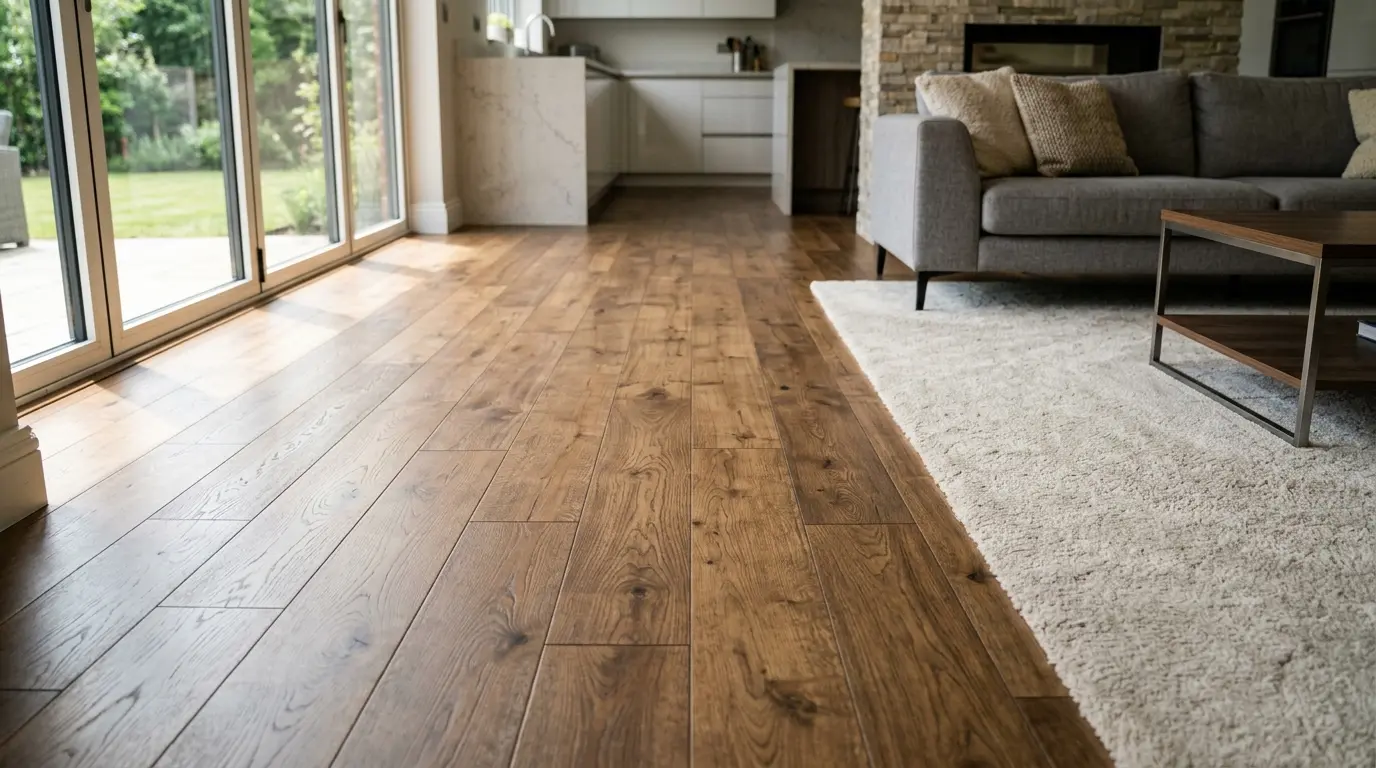

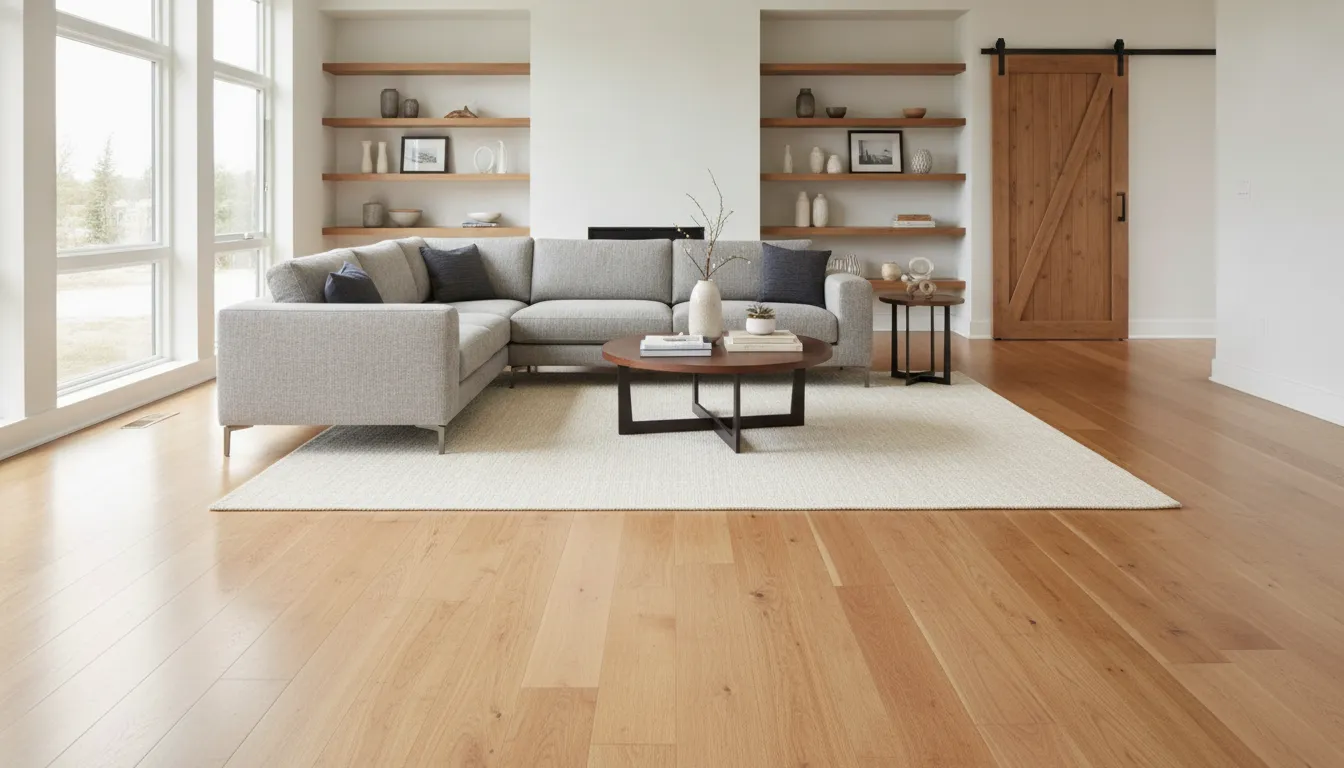
The right hardwood floor starts with the right questions. Is the room dry enough? Will the subfloor support the installation? Which species, finish, and plank width suit your home and routine? Solid hardwood flooring can be a lasting choice, but its natural response to humidity means the product and installation need to match the space. This guide walks through the essentials, including hardwood construction, room suitability, species and style options, project costs, and installation steps. You’ll also learn how to compare estimates, choose a qualified flooring crew, and care for the surface after installation. With a clear plan, you can make a choice that fits your home.
Key Takeaways
- Check the room and subfloor first: Solid hardwood is generally best for above-grade spaces with stable moisture levels and a suitable wood subfloor.
- Compare the complete project scope: Wood species, finish, preparation, trim, stairs, and installation all affect your budget and the finished look.
- Plan for careful installation and upkeep: Confirm moisture testing and manufacturer requirements with your installer, then protect the floor with hardwood-safe cleaning and prompt spill cleanup.
What Is Solid Hardwood Flooring?
Solid hardwood flooring is made from planks milled from a single piece of real wood. Most boards are about three-quarters of an inch thick and have tongue-and-groove edges that fit together during installation. Since each plank is wood throughout, the floor shows the species’ natural grain and color, and it may be sanded and refinished as it wears.
That construction also means solid hardwood responds to moisture and indoor humidity. It’s usually installed over a wood subfloor, where installers can fasten the planks securely. Basements, concrete subfloors, and rooms with frequent moisture may call for a different flooring option. The right choice depends on the room, subfloor, and conditions in your home.
When comparing products, look beyond color. Construction, finish, wood grade, cut, and plank width all affect the floor’s appearance and care needs. A professional can check your subfloor and help you weigh these details before you choose. ValorCraft Flooring’s hardwood installation and refinishing services also include subfloor preparation, an important step in planning a durable installation.
How manufacturers make solid hardwood planks
Manufacturers mill solid hardwood planks from individual pieces of wood, then shape their edges so the boards can fit together. Many products have tongue-and-groove edges, which help align neighboring planks during installation. The thickness gives the floor material that can be sanded and refinished, though the number of times depends on the plank and how much usable wood remains. Wood Floors Plus explains solid hardwood construction and its potential for long-term use.
Milling and finishing choices shape the floor’s look. A smooth surface highlights the wood grain, while hand-scraped planks have a more textured appearance. Finishes vary too, from natural, low-gloss looks to deeper colors. Review product samples in your home’s lighting before deciding, since wood tones can look different from room to room.
Compare solid and engineered hardwood for durability, stability, and maintenance
Solid and engineered hardwood both have a real-wood surface, but they’re built differently. Solid hardwood is milled from one piece of wood. Engineered hardwood has a real-wood top layer attached to layers beneath it, often arranged in a cross-grain pattern. That layered construction can make engineered flooring more stable when humidity and temperature change. This solid versus engineered hardwood comparison offers a visual overview of the differences.
Solid hardwood is typically nailed or stapled to a wood subfloor and isn’t generally recommended below ground level, where moisture can cause excessive movement. Both flooring types need routine care, including regular sweeping and prompt cleanup of spills. Consider the room’s moisture conditions and subfloor before selecting a product, and ask your installer which option suits those conditions.
Compare prefinished and unfinished floors, grades, cuts, and plank widths
Prefinished hardwood arrives with a factory-applied finish, which can reduce the finishing work required in your home. Unfinished planks are sanded and finished after installation, giving you more control over stain color and sheen. Ask your installer what the on-site finishing process involves and how long the surface needs to dry before you can use the room.
Grade describes a plank’s visual character, including features such as knots and color variation. It doesn’t tell you how durable the wood is. The way a log is cut also affects the grain pattern. Plank widths commonly range from about 2¼ to 5 inches, and wider boards create a different look from narrower ones. Browse solid hardwood styles and widths, then discuss how your selections will work with the room’s size, traffic, and décor.
Is Solid Hardwood Right for Your Home?
Solid hardwood may be a good fit if you value natural wood character and want flooring that can be renewed over time. It performs best in rooms with stable moisture conditions, so the right choice depends on where you plan to install it and how you’ll care for it. Consider these factors before deciding.
Weigh its longevity, natural character, and resale appeal
Solid hardwood can last for decades, and well-maintained floors may serve a home for generations. Its natural grain, knots, and color variation give each floor a distinct look. If you appreciate that variation and want a material that can be refinished, hardwood may be worth considering. You can read more about solid hardwood’s potential lifespan as you compare flooring options.
Hardwood is also a desirable feature for many homebuyers, though it does not guarantee a higher resale price. The floor’s condition, style, and local preferences all play a role. Think about how the wood will work with your home’s design and daily routine. If you prefer a more uniform look or need flooring for a moisture-prone area, ask a flooring professional about alternatives.
Learn how often you can refinish it and what affects its lifespan
One advantage of solid hardwood is that it can typically be sanded and refinished more than once. The number of times depends on the plank’s thickness, the wood remaining above its tongue and groove, and the floor’s condition. A flooring professional can inspect your floor and tell you whether it can be refinished safely.
Daily care and indoor conditions also affect how long hardwood lasts. Foot traffic, pets, spills, and humidity can wear the finish or affect the wood. Sweep or vacuum regularly, use hardwood-safe cleaning products, and wipe up spills promptly. When the finish looks worn, ask whether the floor needs a light screen-and-recoat or a full refinish. ValorCraft provides hardwood sanding and refinishing as part of its flooring services.
Check moisture limits in bathrooms, basements, and damp spaces
Solid hardwood is generally best suited to above-grade rooms where moisture levels stay relatively stable, such as bedrooms, living rooms, dining rooms, and hallways. Wood responds to moisture, and ongoing dampness can cause planks to swell, cup, or buckle. Many flooring guides recommend avoiding solid hardwood in basements and other areas prone to high moisture. Check typical placement recommendations for solid hardwood before choosing a room.
Bathrooms can also pose challenges because splashes, leaks, and humidity changes are common. If you’re considering flooring for a basement, bathroom, or other damp space, have an installer assess the room and check moisture conditions first. A moisture-tolerant product may be a better choice. ValorCraft installs luxury vinyl plank, an option to discuss when solid hardwood may not suit the space.
See how seasonal humidity can make wood gap, expand, or buckle
Solid hardwood naturally responds to changes in indoor humidity. During drier winter months, planks may shrink and small gaps can appear. When conditions become more humid, the wood can expand. Some seasonal movement is normal, though wide planks may make gaps easier to notice. Ask your installer what movement to expect with your chosen species and plank width, and review guidance on seasonal changes in solid hardwood.
Large gaps, buckling, or persistent cupping should be checked, particularly if they appear suddenly or remain after the seasons change. Follow the manufacturer’s recommendations for indoor humidity, and use heating or air conditioning consistently when possible. Before installation, ask your contractor how they’ll assess moisture and prepare the subfloor. A thorough site check can help identify potential issues before the work begins.
Which Solid Hardwood Species and Styles Fit Your Space?
Consider oak’s versatile grain, durability, and finish options
Oak is a versatile choice for solid hardwood flooring, with a distinct grain and the durability to suit many busy areas of the home. Red oak often has warmer, pinkish undertones, while white oak tends to look more neutral or slightly cooler. Both offer a classic wood appearance that works with a range of interior styles.
Oak also accepts many stain colors, so you can keep a natural look or choose a lighter or deeper finish. Compare solid hardwood flooring options to see how species and finishes differ. Before you decide, view samples alongside your cabinets, trim, and furnishings. Colors can look different under your home’s lighting, so it helps to check samples in the room where the floor will be installed.
Compare maple and hickory’s lighter tones and distinctive grain
Maple has a light appearance and a subtle, fairly uniform grain, which can suit contemporary rooms or spaces where you want a quieter floor. Its even pattern can make dents and scratches easier to notice, so consider the room’s activity and ask about finish options that fit your household.
Hickory offers more contrast, with pronounced grain and natural variation in color from board to board. That character can bring warmth to rustic or traditional interiors, though it may draw more attention than a subtler species. Look at several planks together before choosing, since one small sample may not show the full range of variation. Reviewing maple and hickory flooring can help you compare their tones and grain patterns.
Explore walnut and cherry’s rich color and varied character
Walnut is valued for its rich brown color and refined look. Its warm tones can complement a dining room, office, or bedroom, especially when balanced with lighter walls or furnishings. Walnut is softer than several commonly used flooring species, including oak and hickory, so consider how much foot traffic the room gets. Furniture pads and area rugs can help protect the surface.
Cherry has a smooth grain and warm color that can deepen with light exposure. This change is a natural part of the wood’s appearance, but it’s worth considering if the room receives strong sunlight. Compare walnut and cherry flooring samples in your home before choosing a shade. Natural color differences between boards are also normal, so review a group of planks rather than relying on one sample.
Match species, grade, finish, and plank width to traffic and décor
The species is only one part of the floor’s look and performance. Grade describes the amount of natural variation in the boards, such as knots and color changes. A more consistent grade creates a uniform appearance, while a character grade has a more varied, rustic feel. Grading terms can differ by manufacturer, so check the product details before ordering.
Finish and plank width also shape the result. A low-gloss finish has a softer appearance, while wider planks show more of the wood’s grain and color variation. Narrow boards can create a more traditional look. Compare solid hardwood styles with your room’s décor and expected foot traffic. For help choosing a floor and planning the installation, explore ValorCraft’s hardwood flooring services.
How Much Does Solid Hardwood Flooring Cost?
Solid hardwood costs vary with the wood, room, and work required to install it. Your budget may include materials, labor, subfloor preparation, trim, stairs, delivery, and extra flooring for cuts. Compare estimates by the work they include, not just the price per square foot. ValorCraft Flooring offers hardwood installation and refinishing across North Carolina, with clear estimates based on each project.
Compare material prices by species, grade, finish, and plank size
Species and grade can make a major difference in material cost. As a reference, listed prices for unfinished red oak can start around $0.99 per square foot, while some mid-range options fall between $3.25 and $5.69. Premium and exotic woods may range from $7.64 to $25 per square foot. These are examples of material prices, not installed costs. Explore solid hardwood options to see how products compare.
Finish and plank size also affect price. Wider boards may cost more, while grade influences the amount of visible knots and color variation. Ask whether the flooring is prefinished or unfinished, then compare samples in your home’s lighting.
Include installation, subfloor prep, trim, and stairs
Professional installation is an important part of the total cost. Solid hardwood is typically fastened to a suitable wood subfloor, so the condition of the existing surface matters. Repairs, leveling, or replacement can add labor and materials to the estimate. Check the product’s installation requirements, and review solid hardwood options before choosing a flooring type.
Ask whether the estimate includes trim, transitions, and stair work. Stairs can require custom treads and precise cuts, while baseboards may need to be removed, replaced, or reinstalled. Also clarify whether old flooring removal, furniture moving, and disposal are included. A clear scope helps you understand which costs are part of the quoted price and which may be added.
Budget for delivery, waste, and other project costs
Include delivery and extra flooring in your budget. Installers cut planks to fit the room, and the amount of usable material can depend on the layout, board length, and installation pattern. A common planning guideline is to order about 10% extra, but the right amount varies by project. Browse solid hardwood flooring listings for product details, then ask your installer to calculate the quantity needed.
Other expenses may include removing and disposing of existing flooring, repairing the subfloor, and fitting transitions at doorways. For connected rooms, discuss how trim and thresholds will meet between spaces. Before work begins, confirm which costs are included and how additional repairs will be priced and approved.
Compare itemized estimates and check promotions for exclusions
Ask contractors for itemized estimates that separate materials, labor, subfloor preparation, trim, stairs, removal, and delivery. This makes it easier to compare the same scope of work. If the quote includes an allowance or an unspecified repair, ask what it covers and what could change the final amount. ValorCraft Flooring’s contact page is a place to request a project estimate.
Promotions may reduce the listed material price, but check the terms before purchasing. Discounts can exclude certain species, finishes, or quantities, and the advertised price may not include delivery or installation. Compare hardwood offers, then confirm availability and the complete project cost with your supplier and installer.
What Does Solid Hardwood Flooring Installation Require?
Installing solid hardwood involves more than fastening planks in place. The installer needs to confirm that the subfloor is suitable, check moisture levels, prepare the room, and follow the flooring manufacturer’s instructions. Skipping these steps can increase the risk of gaps, cupping, or buckling after installation.
Solid hardwood is usually nailed or stapled to a wood subfloor. The right approach depends on the product, the condition of the home, and the manufacturer’s requirements. Before work begins, ask what the estimate includes, how the crew will prepare the floor, and which installation method they plan to use. ValorCraft Flooring’s services include hardwood installation, subfloor preparation, and trim work, which can all be part of a solid hardwood project.
Check the subfloor, moisture levels, and site conditions
The subfloor should be structurally sound, clean, dry, and sufficiently flat for the flooring. An installer may need to secure loose areas, repair damage, or correct uneven spots before laying planks. These checks help create a stable base and prevent problems that may show up after installation.
Moisture testing is also important. A professional can measure moisture in the subfloor and hardwood, then compare the results with the product’s requirements. They should also ask about recent leaks, construction, and indoor humidity. Before accepting an estimate, clarify whether it includes testing and necessary subfloor preparation. Hardwoods4Less recommends professional installation and acclimating solid hardwood before installation.
Acclimate planks as the manufacturer directs
Acclimation allows hardwood to adjust to the conditions in the home before installation. The process varies by product, so follow the manufacturer’s instructions instead of relying on a set number of days. The directions may specify how long to store the planks, whether to open the packaging, and how to stack the boards.
The home should meet the product’s temperature and humidity requirements during acclimation and installation. Acclimation does not replace moisture testing, and it cannot solve an active leak or persistent humidity problem. Ask your installer when the flooring should be delivered, where it should be stored, and how they will determine that it is ready. Review the product’s installation guidance before delivery so you know what conditions the manufacturer requires.
Compare nailing, stapling, and approved glue-down methods
Nailing and stapling are common ways to attach solid hardwood to a suitable wood subfloor. The right fastener and spacing depend on the flooring’s thickness, the subfloor, and the manufacturer’s instructions. Using the wrong equipment or fastening pattern can damage planks or leave them less secure.
Some products and site conditions may allow glue-down installation, but it is not suitable for every solid hardwood floor. The adhesive and method must be approved for the specific flooring and substrate. Ask your installer which method they recommend and why, and confirm that it follows the product instructions. If you’re planning a project, contact ValorCraft Flooring to discuss the space, subfloor, and installation options.
Learn why solid hardwood rarely suits concrete or below-grade spaces
Traditional solid hardwood is generally installed over a wood subfloor rather than directly over concrete. Concrete can transmit moisture into the flooring, causing planks to expand, cup, or buckle. For the same reason, solid hardwood is usually not recommended for below-grade rooms such as basements, where moisture can be more difficult to control.
Check the flooring documentation before considering solid hardwood over a concrete slab or in a basement. A moisture barrier does not automatically make the installation suitable; the product and installation system must be approved for those conditions. If your room has a concrete subfloor or sits below ground level, ask a flooring professional to assess it and discuss alternatives designed for that space. Solid hardwood product guidance explains why moisture and installation location matter.
Decide whether to install it yourself or hire a professional crew
A solid hardwood project requires careful measuring, subfloor preparation, moisture checks, precise cuts, and the correct fastening method. Mistakes can leave boards uneven or insecure, or contribute to gaps and movement. If repairs are needed later, the added labor and materials can outweigh the savings from doing the work yourself.
A professional installer can assess the site, explain what preparation is needed, and coordinate details such as transitions, trim, and stairs. Ask whether the work will be completed by an in-house crew, whether the company is licensed and insured, and whether the estimate clearly lists preparation and installation tasks. ValorCraft Flooring is a veteran-owned company with licensed, insured, in-house crews. Its team can help North Carolina homeowners understand the project requirements and plan the work.
How Do You Choose and Care for Solid Hardwood Flooring?
Choosing solid hardwood means weighing the product, your home’s conditions, the installation plan, and the care the floor will need. Before you order, check the manufacturer’s specifications for plank thickness, finish, installation requirements, and suitable room conditions. Read the warranty carefully so you understand what it covers and which installation or maintenance steps are required. Ask about product certifications and what they verify, as well as how to contact the manufacturer if questions come up later. Comparing solid hardwood products can help you see which details to review.
Plan for installation just as carefully as you plan for the flooring itself. Moisture testing, subfloor preparation, and acclimation can all affect how the planks perform. Ask the installer to explain the recommended installation method and how the estimate covers stairs, trim, and preparation work. ValorCraft Flooring serves North Carolina with licensed, insured, in-house crews. You can review ValorCraft’s flooring services to see the work available for your project.
After installation, a straightforward care routine helps protect the surface. Follow the manufacturer’s cleaning guidance, address spills promptly, and reduce scratches and moisture exposure. The recommendations below can help you make informed choices before installation and care for your floor afterward.
Check product specifications, warranties, certifications, and manufacturer support
Start with the product details. Confirm the wood species, plank thickness and width, grade, finish, and any installation requirements. Check whether the manufacturer recommends the floor for the rooms you have in mind, and review warranty terms before buying. Pay attention to required installation and care practices, since failing to follow them may affect coverage.
Ask what any listed certifications mean and whether the manufacturer provides support after purchase. Find out how to get maintenance advice and whether matching planks or trim are available if you need them later. These questions are especially useful when comparing products that look similar but have different specifications. Hardwoods4Less’ solid hardwood collection is one place to review product details as you compare options.
Ask installers about moisture testing, subfloor prep, and installation methods
Solid hardwood reacts to moisture, so ask how the installer will check the wood and subfloor before work begins. Find out whether the subfloor needs repairs, how the crew will confirm it is ready, and whether site conditions could delay installation. Ask how long the planks should acclimate, then follow the manufacturer’s instructions, since the right timing depends on the product and the home.
Discuss how the flooring will be secured. Solid hardwood is commonly nailed or stapled to a suitable wood subfloor, but the approved method depends on the product and site. Ask whether glue-down installation is allowed for the flooring you selected, and why the installer recommends a particular approach. Reviewing solid hardwood installation guidance can help you prepare specific questions for your installer.
Choose licensed, insured crews with clear estimates and stair and trim experience
Before hiring an installer, confirm that the company is licensed and insured, and ask who will perform the work. Experience with solid hardwood, stairs, custom treads, transitions, and trim can make a difference in the finished details. Ask to see examples of similar projects or speak with past clients, especially if your home has complicated layouts or older floors.
Request a written estimate that identifies the work included, materials, subfloor preparation, removal and disposal, and any exclusions. Clarify how the installer will handle unexpected repairs before the project starts. ValorCraft Flooring is a veteran-owned company with licensed, insured, professional in-house crews. To discuss your flooring plans and request an estimate, contact ValorCraft Flooring.
Sweep or vacuum often, use hardwood-safe cleaners, and wipe up spills promptly
Dust, grit, and small debris can scratch the finish when they collect under shoes or furniture. Sweep regularly or vacuum with an attachment suitable for hardwood. Use a cleaner recommended for your floor’s finish, and follow the product instructions rather than applying more than directed. The manufacturer’s care guide is the best reference if you are unsure which tools or cleaners are appropriate.
Wipe up spills as soon as you notice them, including water around sinks, entryways, and pet bowls. Don’t leave liquid sitting on the boards or let it seep between planks. If a cleaning product is not listed in the care instructions, check with the flooring manufacturer before using it. A consistent routine and quick spill cleanup help limit avoidable wear and moisture exposure.
Skip steam cleaners and wet mopping; manage indoor humidity
Avoid steam cleaners and wet mopping unless the flooring manufacturer specifically approves a method for your product. Heat and excess water can damage the finish or cause wood to swell, warp, or gap. Use only the cleaning approach recommended for the floor, and don’t leave standing moisture on the boards. Learning about how moisture affects wood flooring can help explain why a cautious cleaning routine matters.
Indoor humidity often changes with the seasons, and solid wood can expand or contract as conditions shift. Keep humidity as steady as practical and ask your installer or manufacturer what range they recommend. If you see unusual gaps, cupping, or buckling, take photos and contact a flooring professional. Avoid trying to correct the issue with water or heat, which may make the damage worse.
Protect the finish with felt pads and area rugs, and refinish as needed
Place felt pads under chair legs, tables, and other furniture that moves across the floor. Lift heavy items when you need to reposition them, rather than dragging them. Area rugs can help reduce wear in high-traffic spots such as entryways and hallways. Choose rug pads that are safe for hardwood finishes, and keep rugs dry, particularly near exterior doors.
A floor’s finish will show wear over time, even with regular care. Whether the floor can be refinished, and how often, depends on its thickness, condition, and any previous sanding. Have a flooring professional assess the boards before scheduling the work. ValorCraft provides hardwood sanding and refinishing as well as installation, so you can ask about the best option for your floor.
Related Articles
- Solid vs. Engineered Hardwood Flooring: What’s the Difference?
- How to Care for Hardwood Floors: Cleaning and Maintenance Tips
- Hardwood Flooring Installation: What to Expect
- Choosing the Right Hardwood Flooring Species for Your Home
- Hardwood Flooring Cost Guide: Materials, Installation, and More
Frequently Asked Questions
Can solid hardwood flooring be installed in a basement?
It’s usually not the best choice for a basement because moisture can affect the wood and lead to movement or damage. Have a flooring professional check the room and subfloor, then compare options made for below-grade spaces.
How is solid hardwood different from engineered hardwood?
Solid hardwood is made from one piece of wood, while engineered hardwood has a real-wood surface over layered material. That layered construction can make engineered flooring more stable when humidity changes. The right option depends on the room, subfloor, and product specifications.
How do I know if my hardwood floor needs refinishing?
Worn finish, persistent scratches, or dull areas may mean it’s time to have the floor assessed. A professional can check the boards’ condition and determine whether a screen-and-recoat or full sanding and refinishing is appropriate.
What should a solid hardwood flooring estimate include?
Ask for a written breakdown of materials, installation, subfloor preparation, trim, stairs, and removal or disposal of old flooring. Confirm what is excluded and how the contractor will handle additional repairs if they’re needed.
How should I care for solid hardwood flooring?
Sweep or vacuum regularly, clean with a product approved for your finish, and wipe up spills promptly. Use felt pads under furniture, avoid excess water and steam cleaners, and follow the manufacturer’s guidance for indoor humidity.