A flooring project can seem simple until you uncover uneven subfloors, old adhesive, moisture concerns, tricky transitions, or stairs that need custom work. Vinyl flooring may be easier to maintain than many traditional materials, but it still depends on careful preparation and correct installation. The product must suit the room, and the subfloor must provide a clean, dry, stable surface. That matters whether you are updating a family home, preparing a rental unit, renovating an office, or managing a larger commercial project. Here, you will learn what to look for before purchasing materials and when professional flooring support makes sense.
Key Takeaways
- Match vinyl to the space: Compare wear layers, core construction, moisture ratings, traffic classifications, and installation formats based on how the room will be used.
- Prioritize proper preparation: A clean, dry, stable, and level subfloor helps prevent shifting, visible imperfections, adhesive issues, and premature damage.
- Evaluate the full installation plan: Choose a licensed and insured contractor that provides clear estimates covering materials, removal, repairs, trim, transitions, stairs, warranty terms, and installation by experienced in-house crews.
What Is Vinyl Flooring?
Vinyl flooring is a manufactured floor covering made from layered materials that create a durable, attractive surface. Modern vinyl is available in wood, stone, marble, slate, concrete, and tile designs, giving homeowners and businesses plenty of options without the upkeep associated with some natural materials.
You can use vinyl in many areas, including kitchens, bathrooms, bedrooms, offices, retail spaces, and rental properties. The right product depends on several factors: the amount of foot traffic, moisture exposure, subfloor condition, comfort preferences, installation method, and budget.
Vinyl flooring does not require sanding, refinishing, or sealing like hardwood. It is also relatively easy to clean when maintained according to the manufacturer’s instructions. However, vinyl is not a solution for every subfloor problem. Uneven surfaces, moisture beneath the floor, or incorrect adhesive can lead to visible defects and premature wear.
Professional vinyl flooring installation includes more than placing planks or tiles. The installer evaluates the subfloor, prepares the surface, accounts for room conditions, and completes transitions, trim, stairs, and other details. Understanding how vinyl products are built will help you compare options and choose flooring that suits your space.
Wear layers, cores, backing, and thickness
Luxury vinyl flooring typically includes four layers: backing, core, printed design, and wear layer. The backing supports the product and may provide added stability or sound control. The core gives the plank or tile its structure, while the printed design layer creates the wood, stone, or tile appearance.
The wear layer sits on top and protects the design from daily scuffs, stains, and scratches. It is usually measured in mils, with thicker wear layers generally offering better protection in busy spaces. Still, thickness alone does not determine quality. Core construction, finish, texture, backing, overall plank thickness, and installation requirements also affect performance.
For example, a rigid core may provide more stability over minor subfloor variations, while a flexible product may require a very smooth installation surface. Review the manufacturer’s specifications for each product before purchasing. Comparing vinyl flooring construction can help you identify the features that fit your project.
LVP, LVT, and sheet vinyl
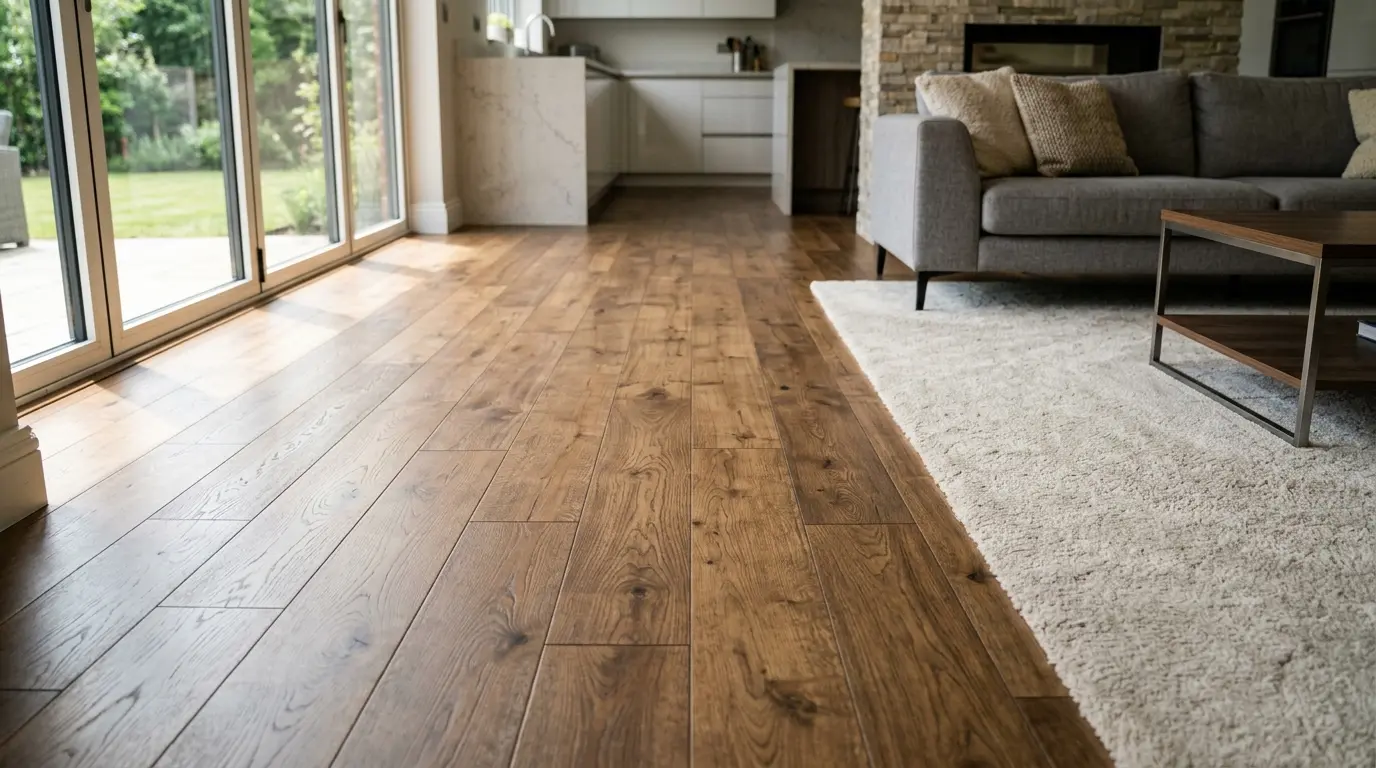
Luxury vinyl plank, or LVP, is designed to resemble hardwood. Planks come in different widths, lengths, colors, grain patterns, and surface textures. Some include beveled edges or embossed details that create a more realistic appearance. LVP works well in bedrooms, living rooms, hallways, offices, and open-concept areas.
Luxury vinyl tile, or LVT, imitates materials such as ceramic tile, marble, slate, and concrete. It can suit kitchens, bathrooms, entryways, retail spaces, and other areas where you prefer a tile-style design without installing traditional tile.
Sheet vinyl is manufactured in large rolls, which means it can have fewer seams than plank or tile products. That makes it useful in some kitchens, bathrooms, laundry rooms, and other moisture-prone areas. However, sheet vinyl still needs a properly prepared subfloor, accurate measurements, and careful seam and edge work. Browse different vinyl flooring formats before deciding which product best matches your room.
Water-resistant vs. waterproof vinyl
Water-resistant vinyl can handle everyday spills, damp cleaning, and normal household moisture. It may not prevent water from reaching the subfloor if liquid remains on the surface, enters through seams, or collects around edges and transitions.
Waterproof vinyl is designed to offer a higher level of moisture protection. It can be a practical choice for kitchens, bathrooms, laundry rooms, basements, entryways, and spaces exposed to wet shoes. Even so, the word “waterproof” does not mean the entire floor system can withstand flooding, plumbing leaks, or moisture rising from below.
The finished installation depends on more than the plank or tile itself. Seams, perimeter gaps, transitions, adhesives, thresholds, and subfloor conditions all affect moisture performance. Some products also require specific installation methods or approved sealants. Before choosing a product, check where the manufacturer allows it to be installed and follow the care requirements. You can compare waterproof vinyl flooring options by construction and intended use.
Commercial vs. residential vinyl
Residential vinyl is designed for the activity found in homes, including foot traffic from family members, children, pets, and guests. Homeowners often compare appearance, comfort, cleaning requirements, water resistance, and price. Many residential products work well in kitchens, bathrooms, entryways, basements, and other busy rooms.
Commercial vinyl must often handle heavier and more consistent use. Retail stores, offices, restaurants, healthcare facilities, and multifamily properties may have frequent foot traffic, rolling carts, furniture movement, spills, and regular cleaning with stronger products. Commercial flooring may include a thicker wear layer, a more durable finish, specialized adhesive, or ratings for specific traffic conditions.
Commercial and residential products can look similar, but their approved uses and warranty terms may differ. Always confirm that the flooring is rated for your environment. ValorCraft Flooring provides commercial flooring services for North Carolina businesses, builders, and property managers who need flooring selected and installed for demanding spaces.
Common vinyl flooring myths
One common myth is that all vinyl flooring is the same. Products can differ in wear-layer thickness, core construction, backing, finish, texture, warranty, moisture rating, and installation method. Comparing those details is more useful than choosing based only on color or price.
Another misconception is that vinyl always looks cheap or artificial. High-quality LVP and LVT can feature realistic grain patterns, stone visuals, embossed textures, and varied tones. Viewing full-size samples in your space can help you judge the design more accurately than looking at a small online image.
It is also incorrect to assume vinyl requires refinishing or sealing like hardwood. Most vinyl floors need regular sweeping or vacuuming and cleaning products approved by the manufacturer. Indoor air quality depends on the specific product, adhesive, ventilation, and installation practices. Review product documentation and certifications, and ask your installer which materials are suitable for the room. Proper preparation remains essential, even with an easy-care floor.
Which Vinyl Flooring Fits Your Project?
Vinyl flooring comes in several formats, and each one suits a different combination of traffic, moisture, comfort, appearance, and maintenance needs. Before choosing a color or wood-look pattern, consider how the room will be used and what the subfloor can support.
A busy retail space may need commercial glue-down flooring, while a bedroom renovation may be a good fit for floating luxury vinyl plank. Kitchens, bathrooms, entryways, offices, rental units, and commercial spaces can all use vinyl, but the best product is not always the same for each application. An experienced flooring installation professional can help you compare product specifications, installation methods, and site conditions.
Luxury vinyl plank (LVP)
Luxury vinyl plank, or LVP, is designed to resemble wood flooring. Its layered construction generally includes a backing or core, a printed design layer, a protective film, and a wear layer. These layers create realistic wood visuals while helping the floor handle everyday scuffs, spills, and foot traffic. Review this guide to luxury vinyl flooring construction before comparing products.
LVP works well in living rooms, bedrooms, hallways, kitchens, offices, and other areas where you want a wood appearance without the maintenance demands of natural hardwood. Products vary in plank width, texture, thickness, color variation, and installation method. For busy homes or commercial spaces, check the wear-layer thickness and traffic rating rather than choosing based only on appearance.
Luxury vinyl tile (LVT)
Luxury vinyl tile, or LVT, recreates the appearance of stone, ceramic tile, concrete, and other hard surfaces. It can be a practical choice when you want a slate, marble, or stone-inspired design without the cost and rigid feel of some traditional materials. LVT is often used in kitchens, bathrooms, entryways, offices, healthcare areas, and retail spaces.
Many LVT products include a durable protective wear layer, but performance varies from one product to another. Check the manufacturer’s specifications for water resistance, stain resistance, slip performance, cleaning requirements, and commercial use. Tile-style layouts also require careful planning around walls, cabinets, doorways, and transitions. Professional installation can help maintain consistent spacing and clean edges around fixed features.
Vinyl sheet
Vinyl sheet is produced in broad rolls, often about 6 to 12 feet wide. Since it can cover a large area with fewer seams, it may work well in kitchens, bathrooms, laundry rooms, mudrooms, and other spaces where spills are common. Fewer seams can limit opportunities for moisture to reach the subfloor, although accurate installation and proper seam treatment remain essential.
Sheet vinyl is available in wood, stone, tile, and patterned designs. It is also easy to clean and can provide a comfortable surface for residential or commercial use. The subfloor must be smooth, flat, and properly prepared because bumps, cracks, and raised fasteners can show through the finished material. Accurate cutting, adhesive selection, and seam placement are especially important with sheet flooring.
Rigid-core SPC and WPC
Rigid-core vinyl has a firm central layer that helps the flooring hold its shape. SPC, or stone plastic composite, generally has a dense, stable core and a solid feel underfoot. WPC, or wood plastic composite, typically has a softer core and may feel more comfortable in rooms where people stand for long periods. SPC and WPC flooring can both offer useful options, depending on the space.
SPC may suit high-traffic areas where dimensional stability and a firm surface matter. WPC may be worth considering in homes, offices, or retail spaces where comfort is a higher priority. Compare each product’s thickness, wear layer, attached backing, warranty, and approved applications. Rigid vinyl does not hide major subfloor problems, so the surface still needs to be properly prepared before installation.
Floating, glue-down, and loose-lay formats
Floating vinyl uses click-lock edges and rests over the prepared subfloor without being fully bonded to it. This format can be efficient for some residential renovations, but the subfloor must still be clean, dry, flat, and structurally sound. Existing flooring should remain in place only when the manufacturer allows it and the surface meets the product’s requirements. Review installation guidance for floating vinyl flooring before selecting this method.
Glue-down vinyl is bonded directly to the subfloor with an approved adhesive. It is often selected for commercial spaces, rooms with rolling loads, and areas where a firmly secured surface is important. Loose-lay vinyl relies on its weight, backing, and a carefully prepared installation area rather than full-spread adhesive. Each format has different subfloor and maintenance requirements, so professional subfloor preparation may be needed.
Match flooring to traffic, moisture, comfort, and repairs
Traffic should guide the wear layer, product rating, and installation method you choose. High-traffic homes, offices, retail areas, and commercial spaces need flooring designed for their expected use. Glue-down vinyl may be a better fit where carts, equipment, rolling loads, or frequent furniture movement are expected. Floating vinyl can work well in many residential rooms when the product and subfloor are compatible.
Moisture exposure matters just as much. Vinyl is commonly used in kitchens, bathrooms, basements, entryways, and other areas exposed to spills or wet footwear. However, a waterproof product cannot correct leaks, rising moisture, or poorly sealed transitions. Also consider comfort and future repairs. Planks and tiles may be easier to replace individually, while sheet vinyl can create fewer seams across a moisture-prone room. A flooring professional can assess the space and recommend a format that fits its daily demands.
What Are the Benefits of Commercial Vinyl Flooring?
Commercial vinyl flooring offers a practical balance of durability, design flexibility, comfort, and manageable maintenance. It can suit retail stores, offices, restaurants, multifamily properties, clinics, schools, and other environments where floors face frequent foot traffic. Luxury vinyl plank and tile can also create a polished appearance without the upkeep associated with some natural materials.
The right product still depends on the space. A quiet office may need different flooring than a restaurant, medical facility, or busy retail store. Traffic levels, rolling equipment, moisture, cleaning chemicals, sunlight, and installation conditions all affect product selection. A professional assessment can help you compare these factors before materials are ordered. ValorCraft Flooring provides commercial flooring services for businesses and property owners across North Carolina.
Handle heavy foot traffic
Commercial vinyl flooring is made for spaces that see steady daily use. Retail stores, offices, apartment buildings, schools, and business lobbies can place significant demands on a floor, especially near entrances, checkout areas, hallways, and elevators. A commercial-grade product with a suitable wear layer can help the surface retain its appearance longer than a light-duty residential option.
Before choosing a product, consider more than the number of people who walk across it. Carts, rolling chairs, equipment, furniture, and frequent cleaning can create additional stress. Ask the manufacturer for traffic classifications and recommendations for your specific setting. Proper subfloor preparation and installation also matter, since a durable product may still perform poorly over an uneven or unstable surface.
Resist wear, stains, spills, and scratches
Commercial vinyl flooring includes a protective wear layer designed to help guard the printed surface from everyday damage. Depending on the product, this layer can help reduce visible effects from scuffs, tracked-in grit, spills, and light scratches. That makes vinyl a practical choice for businesses that need a clean, consistent appearance without replacing flooring after every minor accident.
Performance varies by product, so do not compare vinyl based on appearance alone. Review the wear-layer thickness, finish, warranty terms, and approved cleaning methods. Heavy furniture, sharp edges, sand, and dragging equipment can still damage the surface. Entry mats, furniture pads, routine sweeping, and prompt spill cleanup can help preserve the floor. For more demanding spaces, a flooring professional can recommend commercial products designed for the expected use.
Clean and maintain floors easily
Vinyl flooring is generally straightforward to maintain, which can reduce the time staff spend caring for the floor. Regular dust mopping or vacuuming removes grit that can act like sandpaper under shoes. Damp mopping with a manufacturer-approved cleaner can address most routine dirt and spills. Many products do not require waxing, refinishing, or sealing, although the exact care plan depends on the flooring system.
Cleaning instructions should come from the manufacturer, not a generic product list. Some harsh chemicals, abrasive pads, steam cleaners, or excessive water can damage the finish or affect adhesives. Establish a written maintenance routine for staff, including entrance cleaning, spill response, scheduled deep cleaning, and furniture protection. The Resilient Floor Covering Institute provides industry information that can help businesses understand resilient flooring care and performance.
Protect moisture-prone spaces
Commercial vinyl can work well in areas exposed to spills, wet shoes, or routine mopping. This includes restaurant dining areas, break rooms, kitchens, bathrooms, laundry rooms, and building entrances. Many luxury vinyl products resist water on the surface, while some are marketed as waterproof when installed according to the manufacturer’s instructions.
Water resistance does not mean every vinyl floor creates a completely watertight building system. Water can still move through seams, edges, transitions, damaged areas, or gaps around fixed features. Excess moisture below the flooring can also lead to adhesive problems, odor, or subfloor damage. Before installation, the crew should evaluate moisture conditions, repair the subfloor, and use the specified adhesive and installation method. This planning is especially important for North Carolina properties exposed to humidity and frequent rain.
Choose wood- and stone-look designs
Commercial vinyl flooring gives businesses many ways to create a finished, coordinated interior. Luxury vinyl plank can resemble oak, maple, hickory, or other wood species, while luxury vinyl tile can imitate stone, concrete, ceramic tile, or marble. These patterns allow a property owner to match a brand’s colors and style without using natural materials in every area.
The best design choice should support the space, not compete with it. Subtle patterns can help hide small amounts of daily dirt in busy corridors, while larger visual planks may make an open room feel more spacious. Ask to see full-size samples when possible, since a small sample may not show the complete pattern or color variation. Review multiple cartons too, because repeating plank graphics can be noticeable across a large commercial installation.
Improve comfort and acoustics
Vinyl flooring can provide a more comfortable surface than some hard materials, particularly when paired with an appropriate backing or underlayment. This can be useful in workplaces, retail shops, and multifamily buildings where people stand or walk for long periods. Softer flooring may also feel more inviting in customer-facing spaces.
Acoustic performance depends on the entire floor assembly, not only the vinyl surface. The product, underlayment, subfloor, room layout, and installation method all affect sound. A rigid floating floor may have different footfall characteristics than a glue-down product. In multifamily properties, sound control may be especially important between units and shared hallways. Discuss acoustic goals with the flooring contractor before selecting a product, since not every underlayment is approved for every vinyl system.
Meet slip-resistance and safety needs
Safety requirements should guide flooring selection in any commercial setting. Businesses may need a surface that provides appropriate traction in entrances, restrooms, kitchens, healthcare areas, or other locations where moisture and spills are possible. Textured finishes and products tested for slip resistance can support a safer environment, but no floor can eliminate every fall risk.
Ask for product test results and confirm that the flooring is suitable for the intended use. Cleaning also affects traction. Grease, soap residue, polish, and excess water can make a properly selected floor slippery. A complete safety plan should include entrance mats, prompt spill cleanup, suitable cleaning products, proper lighting, and routine inspections. Where regulations or industry standards apply, review the requirements with the project team before installation.
Install quickly with less disruption
Vinyl flooring can often be installed faster than some traditional flooring systems, particularly when the subfloor is ready and the layout is straightforward. Click-lock products may allow a floating installation, while glue-down plank and tile can provide a stable solution for many commercial environments. Sheet vinyl can limit the number of seams when it is installed correctly.
The actual schedule depends on demolition, floor preparation, adhesive requirements, acclimation, room access, furniture moves, and cure times. A business may need to work in phases so customers, tenants, or employees can continue using part of the building. A professional installer can divide the project into manageable areas and identify when each space can safely reopen. ValorCraft’s commercial flooring team can help coordinate installation details around the needs of your property.
Compare warranties, maintenance, and long-term value
The lowest material price does not always represent the best value. Compare the product’s expected service conditions, wear layer, warranty, cleaning requirements, repair options, and installation costs. A slightly higher-quality floor may make more sense if it handles traffic better, reduces visible wear, or remains easier to maintain over time.
Read the warranty before making a decision. Check whether it covers commercial use, what exclusions apply, and whether professional installation is required. Some warranties may not cover damage from rolling loads, standing water, improper cleaning, subfloor moisture, or unapproved adhesives. Keep product information and maintenance records after installation. Working with a licensed and insured flooring contractor can also provide clearer expectations for workmanship, scheduling, and project support. Learn more about ValorCraft’s approach and in-house crews before requesting an estimate.
What Are Vinyl Flooring’s Drawbacks?
Vinyl flooring is practical, versatile, and available in styles that resemble hardwood or tile. Still, it is not the ideal choice for every room or property. Its performance depends on the product’s construction, the condition of the subfloor, the installation method, and the amount of traffic the floor receives.
A residential plank selected for a bedroom may not withstand the same demands as flooring in a retail store, medical office, rental property, or commercial corridor. Scratches, dents, sunlight, rolling equipment, uneven subfloors, and poorly fitted seams can affect the floor’s appearance and service life.
Before choosing vinyl, review the manufacturer’s specifications and consider how the space will be used. A professional vinyl flooring installation can also address subfloor preparation, moisture concerns, transitions, trim, and other details that affect the finished result.
Manage scratches, dents, gouges, and fading
Vinyl flooring resists everyday wear, but it is not indestructible. Furniture legs, pet claws, grit, dropped objects, and sharp edges can scratch or gouge the surface. Heavy furniture may also leave dents, particularly in thinner or softer products. A thicker wear layer generally offers better protection in busy homes and high-traffic areas, as Carpet One explains in its vinyl flooring guide.
Direct sunlight can cause certain vinyl colors to fade or change over time. Use window coverings where practical, place protective pads beneath furniture, and sweep regularly to remove abrasive dirt. Do not drag appliances or heavy furnishings across the floor. These steps help protect the finish, but they cannot prevent every type of damage.
Prevent subfloor imperfections from showing
Vinyl can reflect the condition of the surface beneath it. Ridges, seams, nail heads, cracks, and dips may eventually show through, especially beneath flexible plank, tile, or sheet vinyl. Rigid-core products can conceal minor imperfections better than flexible vinyl, but they still need a reasonably sound and level base.
Subfloor preparation may include removing residue, filling low areas, sanding high spots, repairing damaged sections, and checking for moisture. The correct underlayment depends on the product, installation method, and subfloor, according to Carpet One’s vinyl flooring guidance. Skipping this work can result in visible flaws, loose edges, hollow spots, or premature movement. An installer should inspect the existing floor before preparing a final estimate.
Understand seams and waterproofing limits
Water-resistant and waterproof vinyl products can handle spills, wet shoes, and humidity, but the full flooring system still matters. Water may reach the subfloor through open seams, gaps at walls, poorly fitted transitions, or unsealed areas around plumbing. Sheet vinyl has fewer seams, while plank and tile installations include joints that must fit correctly.
Waterproof flooring also cannot correct a leaking appliance, plumbing problem, or damp concrete slab. In wet rooms, the installer should plan seam placement, transitions, and perimeter details carefully. Floor & Decor’s vinyl flooring information explains why waterproof products work well in areas exposed to spills, wet feet, and humidity. Always review the product’s installation requirements before assuming it is suitable for a particular space.
Control temperature and moisture during installation
Vinyl can expand, contract, or change shape when installed in unsuitable temperature or moisture conditions. Placing planks over a cold slab, damp subfloor, or poorly conditioned room may lead to gaps, buckling, adhesive failure, or movement after installation.
The room should meet the manufacturer’s temperature and humidity requirements before work begins. Concrete may also require moisture testing, and the results can determine whether additional preparation or vapor control is needed. Click-lock products need appropriate expansion gaps, while glue-down flooring depends on compatible adhesive and a properly prepared surface. Tile Mart’s vinyl flooring guidance emphasizes properly fitted seams, expansion gaps, and suitable transitions in kitchens, bathrooms, basements, and laundry rooms.
Repair floors and match replacement planks
Plank and tile formats allow installers to replace individual damaged pieces instead of removing the entire floor. However, repairs are much easier when spare material from the original installation is available. Manufacturers may discontinue colors, change surface textures, or produce later batches with slight shade differences.
A replacement plank may also look different because the surrounding floor has been exposed to sunlight, cleaning, and normal wear. Click-lock repairs may require removing flooring back to the damaged piece. Glue-down repairs require careful cutting and adhesive removal. Store extra cartons in a dry, temperature-controlled location for future use. For more extensive damage, a flooring professional can determine whether a local repair is practical or whether a larger section needs replacement. ValorCraft Flooring’s flooring services include installation and related finish work for properties across North Carolina.
Account for rolling loads, sunlight, and expansion
Vinyl is not suitable for every type of rolling equipment. Office chairs, carts, pallet jacks, medical equipment, and other rolling loads can place repeated pressure on seams and edges. Select a product rated for the expected traffic and load. Protective mats or appropriate casters may also be necessary.
Sunlight and heat can affect the floor, particularly near large windows or glass doors. Expansion gaps and transitions help manage movement, but they must be planned around the room’s layout. Irregular rooms, multiple corners, fireplaces, stairs, and built-ins can increase labor time and material waste. Revive Real Estate’s cost guidance notes that complex layouts and obstacles can affect installation pricing.
Compare service life with hardwood, laminate, and tile
Vinyl can provide many years of service, but its lifespan varies based on product quality, traffic, maintenance, installation, sunlight, and moisture exposure. Some vinyl plank flooring lasts up to 20 years with proper care, according to Floor & Decor’s vinyl flooring overview. That may suit a rental unit, family room, or commercial renovation, but it is different from selecting a floor designed for repeated refinishing.
Hardwood can often be sanded and refinished several times. Tile may last for decades when the installation and substrate remain sound. Laminate can offer a realistic wood appearance at a competitive price, though its moisture resistance varies by product. Vinyl may have lower initial costs and simpler piece replacement, but compare expected lifespan, repair options, maintenance requirements, and future renovation plans before making a decision.
Consider PVC, adhesives, disposal, and air quality
Vinyl flooring is made from synthetic materials, commonly including PVC. Some vinyl products and adhesives may release VOCs after installation, particularly while new materials cure. Air quality considerations vary by product, adhesive, ventilation, and certification. Review manufacturer documentation before selecting flooring for a home, healthcare space, classroom, or occupied business.
Ask about low-emitting products, adhesive requirements, ventilation, and the recommended time before regular occupancy. Disposal also deserves attention because removed vinyl and adhesive residue may not belong in ordinary recycling programs. Include removal and disposal details in the project estimate so there are no surprises. ValorCraft Flooring is a licensed and insured, veteran-owned flooring company serving North Carolina with professional in-house crews that handle preparation, installation, and finish details.
How Much Does Vinyl Flooring Cost?
Vinyl flooring can work with a wide range of project budgets, but the final price depends on more than the product you choose. Material quality, room size, installation method, subfloor condition, layout, and finishing details all affect the total. A straightforward installation over a clean, level surface will typically cost less than a project that includes demolition, repairs, stairs, or commercial-grade materials.
When comparing estimates, look beyond the price per square foot. A lower quote may not include floor removal, disposal, leveling, trim, transitions, or furniture moving. Ask each installer for a detailed scope of work so you can compare similar services. ValorCraft Flooring provides professional flooring services for residential and commercial projects across North Carolina, including LVP installation, subfloor preparation, trim work, and stairs.
Your location can also affect labor rates and scheduling. Projects in the Triad and throughout North Carolina may have different access requirements, building conditions, or local disposal costs. The most useful estimate accounts for the entire job, from preparing the existing surface to completing the final trim.
Compare material and installation costs per square foot
Vinyl flooring material is commonly priced by the square foot. Basic products typically cost less, while premium luxury vinyl products cost more because of their construction, finish, and warranty. The material price can depend on the brand, design, thickness, wear layer, core, backing, and installation format. Plan for extra flooring to cover cuts, defects, and future repairs.
Professional labor often runs between $1.50 and $3 per square foot, although local rates and project conditions can change that range. A vinyl flooring installation cost breakdown can help you understand how material and labor charges are usually separated.
Ask whether the quoted square footage includes waste. A room with several corners or a directional pattern may require more extra material than a large, open space. Your estimate should list the product, installation labor, waste allowance, and additional services separately.
See how flooring features affect price
The type of vinyl plank or tile you select is one of the biggest factors affecting your budget. A thicker product with a durable wear layer, detailed surface texture, attached underlayment, and rigid core usually costs more than a thinner, basic option. Premium products may provide better resistance to scratches, dents, moisture, and heavy traffic.
The product’s appearance can affect labor as well. A standard wood-look plank installed in a simple layout is usually faster to install than a product that requires careful alignment, borders, inlays, or a herringbone pattern. Tile shapes and repeating designs can also increase cutting and layout time.
Compare the product specifications instead of choosing based only on appearance. This luxury vinyl flooring cost guide explains how quality, thickness, and brand influence pricing. For a busy home, rental property, or commercial space, paying more for a suitable wear layer may make sense, even if the initial material cost is higher.
Budget for professional installation
Professional installation adds labor to the material cost, but it also helps protect the flooring investment. An experienced installer can identify subfloor problems, plan the layout, follow product requirements, and complete details around walls, cabinets, doorways, stairs, and transitions. These steps matter when the floor needs to withstand heavy use or moisture.
Installation costs also vary by format. Click-lock and loose-lay products may require less labor than glue-down plank, tile, or sheet vinyl. Glue-down flooring requires careful adhesive application and placement, while sheet vinyl requires accurate measuring and seam planning. The best method depends on the product, room conditions, and expected traffic.
Ask whether the quote includes installation materials, cleanup, furniture moving, and final inspection. A professional estimate should also explain who is responsible for moving appliances or disconnecting fixtures before installation begins.
Add removal, disposal, leveling, and subfloor work
Existing flooring removal can add a meaningful amount to the project. Tear-out may involve removing carpet, laminate, tile, or old vinyl, along with tack strips, staples, adhesive, and damaged underlayment. Disposal fees may appear separately, so confirm whether hauling and disposal are included before work begins.
The subfloor must be clean, dry, stable, and sufficiently flat before vinyl is installed. Floor preparation commonly costs about $1 to $3 per square foot, while old flooring removal may add roughly $1 to $2 per square foot, depending on the material and site conditions. Repairs may include filling low spots, securing loose panels, replacing damaged sections, or applying a leveling compound.
Vinyl can show imperfections beneath its surface, so preparation should not be treated as an optional extra. ValorCraft’s flooring services include subfloor preparation for projects that need more than a basic surface installation.
Include moisture testing, adhesives, trim, and transitions
Some project costs are easy to overlook because they are not part of the flooring itself. Moisture testing helps determine whether the subfloor is suitable, especially over concrete or in areas with a history of leaks. If moisture levels are too high, the installer may recommend additional preparation or a moisture-control product before installation.
Glue-down flooring also requires the correct adhesive, applied according to the manufacturer’s instructions. Using the wrong adhesive or applying it incorrectly can affect adhesion, appearance, and future repairs. Sheet vinyl may require additional seam materials, while some rigid products need a specific underlayment or vapor barrier.
Trim, baseboards, reducers, thresholds, stair nosings, and transitions add material and labor costs. One industry cost breakdown estimates trim and transitions at about $2 to $5 per square foot when measured across a project, although the actual amount depends on the number of edges and doorways. Request an itemized estimate that lists these details instead of grouping them into one installation charge.
Account for complex layouts, stairs, and access
A large, open room is usually easier to price than a home or business with multiple small rooms. Irregular walls, alcoves, fireplaces, kitchen islands, built-ins, and frequent doorways require more measuring and cutting. They may also create more material waste, particularly when the design has a directional pattern.
Stairs require additional planning and skilled labor. Each tread and riser must be measured, cut, secured, and finished properly. Custom stair treads, nosings, and trim may appear as a separate line item because they require different materials and techniques than a standard floor installation.
Access can affect the schedule and labor as well. Long hallways, upper floors, limited parking, occupied spaces, and restricted work hours may add time to a project. Share these details during the estimate so the installer can plan accurately rather than revising the price later.
Compare vinyl with hardwood, laminate, and tile
Vinyl is often less expensive to purchase and install than hardwood or tile, and it generally requires simpler routine maintenance. It can provide wood and stone looks without the same moisture concerns associated with some natural materials. However, the least expensive vinyl product is not automatically the best choice for every space.
Hardwood may offer a longer service life and can often be sanded and refinished. Tile can provide excellent durability in wet or high-traffic areas, although installation may require more subfloor preparation and labor. Laminate may have a lower material cost, but its moisture performance depends on the product and installation.
Vinyl’s return on investment can also differ from hardwood or other premium flooring. Compare the advantages and limitations of vinyl flooring alongside installation costs, expected use, appearance, repair options, and maintenance needs. The right choice depends on how the room will be used, not just on the initial price.
Estimate maintenance and lifetime costs
The purchase price is only one part of the flooring budget. Consider the cost of regular cleaning, repairs, refinishing, and eventual replacement. Vinyl usually needs routine sweeping or vacuuming and damp mopping with a cleaner approved by the manufacturer. Avoid harsh chemicals, abrasive tools, and excessive water unless the flooring instructions specifically allow them.
Many vinyl plank products can last up to 20 years with proper care, although service life depends on product quality, traffic, sunlight, moisture, and maintenance. Commercial spaces may need more frequent cleaning or earlier replacement in entryways and heavy-use paths. Furniture pads and entry mats can help reduce wear.
Keep a few spare planks after installation so matching repairs are possible later. Review the manufacturer’s warranty and maintenance instructions, then compare those requirements with the expected life of hardwood, laminate, or tile. A product with a higher initial price may be a practical choice if it performs better under the conditions in your space.
Review clear estimates, financing, and phased budgets
A clear estimate should identify the flooring product, square footage, waste allowance, installation method, preparation work, removal, disposal, trim, transitions, stairs, taxes, and payment schedule. It should also explain what happens if the installer finds hidden damage after removing the existing floor. This level of detail makes it easier to compare quotes and avoid unexpected charges.
Ask whether the estimate includes furniture moving, cleanup, adhesive, underlayment, moisture testing, and final walkthroughs. You can also request more than one quote, but make sure each company is pricing the same materials and services. A lower total may reflect fewer included tasks rather than a better value.
If the full project does not fit your budget, ask whether the work can be completed in phases. You might begin with high-traffic rooms, schedule occupied commercial areas separately, or complete preparation before installing flooring in stages. Ask about financing options and whether the estimate remains valid for a set period.
ValorCraft Flooring is a veteran-owned flooring company serving homeowners, builders, property managers, and commercial clients across North Carolina. Its licensed and insured, in-house crews can help coordinate flooring, subfloor, trim, and stair work as part of a clear project plan.
Where Does Vinyl Flooring Work Best?
Vinyl flooring works well in spaces that need dependable performance, simple maintenance, and a polished appearance. It comes in wood, stone, and tile-inspired designs, with options for residential rooms, commercial buildings, and high-traffic properties. Many products also offer water resistance, scratch protection, and durable wear layers.
The right choice depends on how the space will be used. Before selecting a product, consider foot traffic, rolling loads, moisture, cleaning chemicals, comfort, noise, repair needs, and subfloor condition. Installation plays an important role, too. An uneven or damp subfloor can affect the finished floor, even when the vinyl itself is well made.
ValorCraft Flooring provides professional flooring services across North Carolina, including luxury vinyl plank, glue-down flooring, subfloor preparation, trim work, and commercial installations.
Offices, retail stores, and showrooms
Offices, retail stores, and showrooms need flooring that can handle regular foot traffic while maintaining a clean, professional appearance. Luxury vinyl plank and luxury vinyl tile offer a practical combination of durability and design. Wood-look plank can add warmth to an office or boutique, while stone-look tile can create a modern finish in a showroom or reception area.
Consider how people move through the building. Entryways may collect grit and moisture, while checkout counters, display aisles, and corridors often receive repeated traffic. A commercial-rated product with a durable wear layer can help protect these high-use areas. Floor & Decor recommends vinyl flooring for commercial areas, including spaces with heavy foot traffic.
The installation method also affects scheduling and future repairs. Glue-down vinyl can provide a stable surface for busy commercial settings, while click-lock products may simplify plank replacement when individual sections become damaged.
Restaurants, kitchens, and wet areas
Restaurants, kitchens, bathrooms, laundry rooms, and utility spaces regularly face spills, tracked-in moisture, and frequent cleaning. Vinyl is often a practical choice because it is easy to clean and available in products designed for moisture-prone areas. Floor & Decor lists vinyl flooring for kitchens and bathrooms, as well as basements and other areas where spills are common.
“Waterproof” does not mean every installation is protected from water damage. Seams, edges, transitions, damaged planks, and moisture beneath the flooring can still cause problems. The subfloor should be clean, dry, and properly prepared, and the product should be installed according to the manufacturer’s requirements.
Restaurants also need to account for grease, dropped utensils, rolling carts, and heavy equipment. A commercial product with the right wear layer and slip-resistance characteristics may be more suitable than residential-grade flooring. Ask how the product will perform under the space’s cleaning routine and daily traffic.
Healthcare and disinfectant-heavy spaces
Healthcare facilities, dental offices, veterinary clinics, assisted-living communities, and similar spaces need flooring that supports regular cleaning. Vinyl can be a practical option because many products resist water and can be maintained with manufacturer-approved cleaning solutions. Carpet One describes vinyl as a water-resistant or waterproof flooring option for busy environments.
Product selection should go beyond color and price. Review care instructions, chemical-resistance information, seam requirements, warranty terms, and any facility standards. A product that looks suitable may not be designed for repeated exposure to disinfectants, concentrated cleaners, or medical equipment.
Sheet vinyl can reduce the number of seams in some applications, while glue-down plank and tile can make individual repairs more manageable. The best option depends on the cleaning protocol, room layout, infection-control requirements, and expected traffic. Professional installation matters because gaps, lifted edges, and poorly finished seams can make cleaning more difficult.
Multifamily properties and rental units
Luxury vinyl is popular in apartments, condos, student housing, and rental homes because it offers an attractive surface that is relatively easy to maintain. It can create a consistent finish across multiple units, and wood-look designs can give older interiors a refreshed appearance. Carpet One describes luxury vinyl as an affordable, durable option for high-traffic areas.
Property owners should consider more than the initial material cost. The flooring should support unit turnover, routine repairs, tenant expectations, and future replacement planning. Click-lock planks may allow individual boards to be replaced, while glue-down products can provide a firm installation in areas that receive heavy use.
Sound control is another concern in multifamily buildings. Underlayment, product construction, and installation quality can affect how footsteps and impact noise travel between units. Review acoustic information and building requirements before installation. Keeping extra planks from the same product and dye lot can also simplify future repairs.
Builder, property manager, and phased renovation projects
Vinyl flooring can work well for builders and property managers who need a consistent finish across several rooms, units, or buildings. It is available at different price points and in many styles, making it easier to match a project’s design plan and budget. Using one product throughout a project can also simplify ordering, cleaning, and future replacement.
For phased renovations, plan around occupancy, deliveries, furniture moves, and business hours. Click-lock and loose-lay products may reduce installation time in some settings, while glue-down vinyl may suit areas that need a firm, permanent bond. The best format depends on the subfloor, traffic, moisture conditions, and schedule. Installation method can affect labor costs, so compare the complete project scope instead of the plank price alone.
A detailed estimate should include removal, disposal, subfloor repairs, transitions, trim, stairs, and access limitations. Property managers should also confirm who handles warranty concerns and whether the crew works in-house. ValorCraft serves builders, property managers, and commercial clients across North Carolina with professional crews rather than subcontractors.
Homes, kitchens, bathrooms, and busy rooms
Vinyl flooring fits many areas of a home, including kitchens, bathrooms, basements, hallways, laundry rooms, entryways, and family rooms. It is especially useful where floors face muddy shoes, pet accidents, spilled drinks, or frequent activity. Wood-look LVP can create a continuous appearance between connected rooms, while LVT can provide a tile-inspired look in kitchens and bathrooms.
Think about each room’s daily demands before choosing a product. A hallway may need stronger wear protection than a guest room, while a bathroom requires careful attention to edges and transitions. Homes with pets, children, or frequent gatherings may benefit from a textured finish that helps disguise small marks and everyday debris.
Vinyl cannot correct an uneven or damp subfloor. Flexible products may show imperfections beneath them, and moisture from below can affect the installation. A professional installer can assess the existing surface and explain whether floating, glue-down, or another format makes sense. ValorCraft’s residential flooring services include vinyl installation, subfloor preparation, trim work, and related finish details.
Know when hardwood, laminate, or tile fits better
Vinyl is versatile, but it is not automatically the right choice for every project. Hardwood may fit better when you want a natural material that can be sanded and refinished over time. It can also make sense when matching existing hardwood throughout a home is important. Hardwood does require more care around moisture, scratches, and indoor humidity.
Laminate can offer a wood-look finish at a competitive price and may suit dry areas with moderate to heavy household traffic. Its moisture protection depends on the product’s construction, seams, and installation. Tile may be a better choice for areas that need a hard mineral surface, extensive water exposure, or strong resistance to heat and abrasion.
Compare materials based on the room, not just the sample. Consider moisture, comfort, noise, cleaning, repair options, expected service life, and installation requirements. Carpet One notes that vinyl and laminate share several performance benefits, but their construction and moisture handling can differ. A flooring professional can help you weigh those tradeoffs before you choose materials or schedule installation.
How Do You Compare Vinyl Flooring Products?
Choosing vinyl flooring involves more than matching a plank to your cabinets. Products that look similar in a showroom can perform very differently when exposed to pets, rolling chairs, wet shoes, furniture, sunlight, or heavy foot traffic. The right choice depends on the room, the subfloor, the installation method, and how much wear the flooring needs to handle.
Start by identifying your priorities. A busy retail space may need a durable glue-down product, while a bedroom may benefit from a comfortable floating floor. A rental property may require easy repairs and dependable replacement stock. Before purchasing, compare the product specifications, installation instructions, warranty terms, and maintenance requirements. A professional installer can also evaluate moisture, floor height, transitions, and subfloor conditions before recommending a product.
Use the following checklist to compare vinyl flooring with greater confidence.
Check commercial traffic and wear ratings
Look for flooring rated for the amount and type of traffic your space receives. A family room may need to withstand pets, furniture, and daily walking, while a retail store or office may also have carts, rolling chairs, grit, and concentrated foot traffic. Vinyl products designed for high-traffic areas are often made to handle spills, wet footwear, and frequent cleaning.
Do not rely on the word “commercial” alone. Ask whether the product suits your specific setting, such as retail, healthcare, multifamily housing, hospitality, or light industrial use. Review the manufacturer’s technical data for traffic classifications, stain resistance, scratch resistance, and rolling-load limits. Vinyl flooring listings from Floor & Decor can help you compare product specifications before speaking with an installer.
Choose the right wear-layer thickness
The wear layer is the transparent protective surface above the printed design. It helps the flooring resist scuffs, stains, and everyday wear, but thickness is only one part of product performance.
A 12-mil wear layer may suit a standard residential room with moderate use. Homes with children or pets, rental properties, busy hallways, and light commercial spaces may be better candidates for a 20-mil or thicker wear layer. Review the full product specification rather than comparing this number alone. Core construction, surface finish, subfloor preparation, cleaning habits, and traffic patterns also affect durability. Tile Mart’s vinyl plank collection shows how manufacturers present wear-layer information across different products.
Compare rigid and flexible cores
The core affects how vinyl flooring feels underfoot, responds to the subfloor, and handles everyday impact. Rigid-core flooring provides added stability and may offer better resistance to dents. SPC, or stone plastic composite, typically has a dense, firm core. WPC, or wood plastic composite, generally feels softer and more comfortable underfoot.
Flexible vinyl can work well over a smooth, properly prepared subfloor. Rigid planks may be a better fit when you want a firmer feel or added dimensional stability, but they still require a level, suitable surface. Neither core type should conceal major dips, humps, moisture issues, or structural concerns. An installer should inspect the site before recommending a product. Tile Mart explains the differences between SPC and WPC flooring, including how each core affects stability and comfort.
Review backing, finish, texture, and thickness
Look beyond the printed image when comparing vinyl flooring. The backing can affect sound, comfort, stability, and installation requirements. Some products include an attached pad, while others require a separate underlayment or direct installation over an approved surface.
Finish and texture influence both appearance and daily use. A textured surface can create a more realistic wood or stone look while disguising minor marks. Plank width, overall thickness, edge profile, and surface sheen also affect the finished design. Wide planks can make an open room feel more spacious, but they require thoughtful planning around cabinets, doorways, stairs, and transitions. Confirm that the product’s thickness works with adjoining floors, doors, baseboards, and trim before ordering materials.
Research brands and customer reviews
Brand research can reveal differences in product consistency, warranty support, replacement availability, and installation guidance. Compare technical documents from several manufacturers instead of judging a product by its display sample. Look for clear details about approved subfloors, moisture limits, cleaning products, installation methods, and commercial applications.
Customer reviews can point to recurring concerns, such as chipped locking edges, visible color variation, difficult warranty claims, or limited replacement stock. Read reviews with your project type in mind. A product that performs well in a lightly used bedroom may not suit a busy restaurant or rental property. Your flooring contractor may also have practical experience with brands used in North Carolina. Product lines such as DuraLux, NuCore, OptiMax Performance, and everENDURE are examples of brands you may encounter during your research. Floor & Decor’s vinyl selection provides one place to compare available product lines.
Check warranties, certifications, and air-quality documents
Review the warranty before purchasing flooring. Pay attention to the coverage period, residential or commercial limitations, moisture exclusions, rolling-load restrictions, required installation methods, and whether labor is included. A warranty may not apply if the product is installed over an unsuitable subfloor or maintained with an unapproved cleaner.
Ask for indoor air quality documentation when it matters for your household, tenants, employees, or customers. Certifications can provide information about emissions from flooring and related materials, but they do not replace proper ventilation or correct installation. Request documentation for adhesives, primers, patching compounds, and underlayments as well. Carpet One’s vinyl flooring guidance recommends reviewing warranty coverage before you purchase, which can help prevent surprises later.
Compare samples, color variation, and dye lots
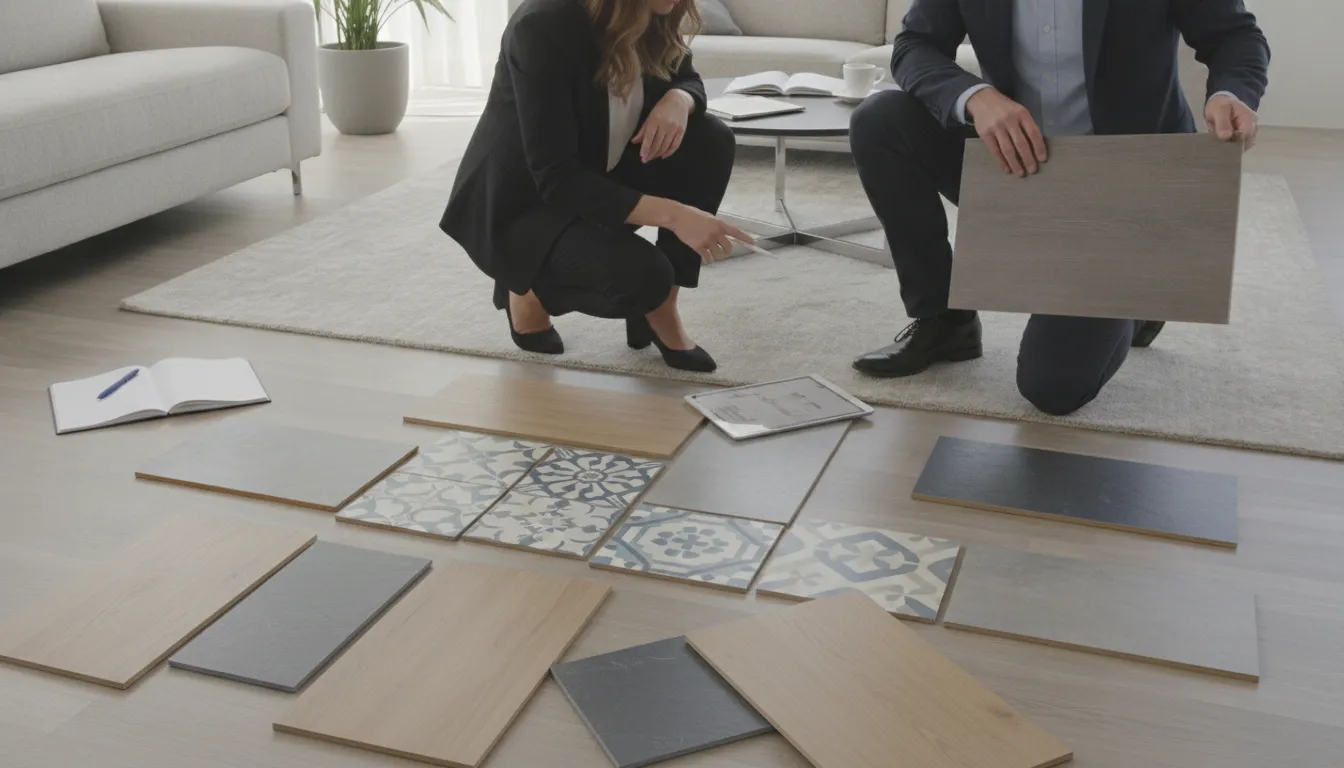
A small sample helps you assess color, grain, texture, and sheen, but it may not show the full variation across an entire floor. Place samples in the actual room and view them in morning, afternoon, and evening light. Compare each option with cabinets, paint, countertops, trim, and nearby flooring.
If material will be ordered in stages, ask whether all cartons come from the same dye lot. Different production runs can have noticeable color or pattern changes. Order enough material for the complete installation, including the manufacturer’s recommended waste allowance, and save a few unopened planks for future repairs. Carpet One offers home sample options, which can make it easier to evaluate flooring under your own lighting and furnishings.
Confirm replacement availability and manufacturer support
Ask how easily you can obtain replacement planks or tiles if a section becomes damaged. This is especially important in rental units, commercial spaces, kitchens, and entryways, where a localized repair may be more practical than replacing the entire room.
Keep the product name, color, style number, lot information, installation instructions, and purchase records after the project is complete. Flooring can be discontinued, and a similar-looking replacement may not match the original material. Confirm that the manufacturer provides clear guidance for repairs, cleaning, transitions, and warranty claims. Your installer should follow the product’s written instructions instead of applying a general vinyl installation method.
Match adhesives to the product and installer
Installation methods vary by product. Click-lock flooring may float over an approved surface, while glue-down plank and tile require the correct adhesive, trowel, open time, and rolling procedure. Loose-lay products may use limited adhesive or perimeter treatments, depending on the manufacturer’s instructions and the conditions in the room.
Do not substitute an adhesive because it costs less or is already available on site. An incompatible adhesive can weaken the bond, discolor the flooring, create unwanted odors, or complicate repairs. Confirm who supplies the adhesive and who is responsible for following the technical data sheet. A professional flooring installation service can coordinate the product, adhesive, subfloor preparation, and finish details as one installation plan.
Follow product-specific maintenance instructions
Vinyl flooring is generally easy to maintain, but each product may have its own cleaning requirements. Sweep or vacuum regularly to remove grit that can scratch the surface, then use a damp mop for everyday spills and soil. Choose cleaners approved by the manufacturer, and avoid abrasive tools, harsh chemicals, and excessive water.
Place protective pads beneath furniture and use suitable mats at exterior entrances. For commercial spaces, follow the manufacturer’s recommendations for office chairs, carts, floor machines, and disinfectants. Good maintenance cannot correct poor installation, but it can help preserve the floor’s finish and appearance. Before work begins, ask your installer for written care instructions and confirm which products are safe for the specific vinyl you selected.
How Do You Install Vinyl Flooring?
Vinyl flooring installation starts before the first plank, tile, or sheet is placed. A professional installer evaluates the room, existing floor, subfloor condition, moisture levels, product requirements, and daily traffic. These details help determine whether the space needs floating click-lock flooring, glue-down plank, sheet vinyl, or a loose-lay product.
The installation method also affects the project schedule, preparation work, repair options, and final cost. Click-lock flooring may install faster than glue-down products, while sheet vinyl can reduce the number of seams in moisture-prone areas. Product instructions should always guide the process because temperature, adhesive, acclimation, and subfloor requirements vary by manufacturer. Carpet One explains the main vinyl installation methods, including click, floating, and glue-down systems, in its vinyl flooring guide.
Assess the site, traffic, and schedule
Before installation begins, inspect the space and identify how it will be used. A quiet bedroom, busy kitchen, retail store, and commercial hallway will not place the same demands on a floor. Consider foot traffic, rolling carts, furniture, pets, moisture, sunlight, and the type of cleaning the space receives.
The site assessment should also cover room measurements, door clearances, transitions, stairs, baseboards, furniture, and access points. Commercial projects may require work to happen in phases so employees, tenants, or customers can continue using part of the building. Homeowners may need to plan around appliances, bedrooms, or household routines.
Scheduling should include time for material delivery, product acclimation, floor preparation, installation, and curing if adhesive is used. A clear site plan helps prevent delays and gives the installer a better understanding of the labor involved. This is also when you should discuss flooring services such as subfloor preparation, trim work, and custom stair treads.
Remove and dispose of existing flooring
Existing flooring may need to be removed before vinyl can be installed. Depending on the material, this can include pulling up carpet, removing tack strips, scraping adhesive, taking out old vinyl, or removing damaged laminate and hardwood. The installer must also determine whether the underlying surface is suitable for the new floor.
Removal can reveal issues hidden beneath the old flooring, such as water damage, uneven areas, loose underlayment, or a deteriorated subfloor. These conditions should be addressed before new vinyl is installed. Covering a damaged surface may lead to movement, visible imperfections, adhesive failure, or premature wear.
Disposal is another part of the project. Old flooring, padding, tack strips, debris, and packaging need to be removed safely and handled according to local requirements. Some older flooring materials may require additional caution during removal. Your estimate should clearly state whether tear-out, hauling, and disposal are included. For general budgeting, removal and disposal are often listed separately from new flooring installation, as shown in this vinyl installation cost breakdown.
Clean, level, and repair the subfloor
A clean, stable, and sufficiently level subfloor is one of the most important parts of a successful vinyl installation. After removal, the installer should vacuum dust, scrape away residue, remove loose materials, and inspect the surface for movement or damage. The subfloor may be concrete, plywood, or another approved surface, depending on the product and location.
Low spots may need patching or leveling compound, while high spots may require grinding or sanding. Damaged plywood, loose boards, protruding fasteners, and soft areas should be repaired or replaced. Vinyl can follow the shape of the surface beneath it, so small ridges, seams, and debris may become visible after installation, especially with thinner or flexible products.
Underlayment requirements vary by flooring type. Some luxury vinyl planks include an attached pad, while others require a separate approved underlayment. Adding an unapproved pad beneath a product can create too much movement and may affect the warranty. The product specifications should determine what belongs beneath the flooring, not a general rule about every vinyl product.
Test moisture and control vapor
Moisture testing is especially important over concrete slabs, below-grade rooms, kitchens, bathrooms, laundry areas, and commercial spaces that receive frequent cleaning. A floor can look dry on the surface while moisture moves through the slab or collects beneath the flooring. That moisture may contribute to adhesive failure, bubbling, staining, odors, or damage to the subfloor.
The correct test depends on the flooring system and manufacturer requirements. An installer may assess concrete moisture, relative humidity, pH, or the condition of the existing surface. If readings exceed the product’s limits, the project may require additional drying time, a moisture mitigation system, or a different flooring approach.
Vapor control is not the same for every vinyl product. Floating floors may have different requirements from glue-down flooring, and sheet vinyl may need specific seam and perimeter details. Do not assume that a waterproof plank makes the entire floor assembly waterproof. Water can still reach the subfloor through seams, edges, penetrations, or an underlying moisture problem. LX Hausys explains how site conditions and additional preparation can affect a vinyl flooring project.
Meet acclimation, temperature, and humidity requirements
Vinyl flooring needs the right environment before, during, and after installation. Store boxes flat in a clean, dry area, and follow the manufacturer’s instructions for acclimation. The required time and conditions can vary by product, so the installer should check the technical documentation rather than rely on a standard schedule.
The room may need to stay within a specific temperature and humidity range. These conditions affect plank movement, adhesive performance, seam formation, and the way materials respond after installation. Heating and cooling systems should usually be operating as they will during normal use, unless the product instructions say otherwise.
Do not deliver materials to an unconditioned space and install them immediately. Extreme heat, cold, or humidity can create problems that do not appear until later. The subfloor and room conditions should be verified before work begins, particularly in new construction, seasonal properties, garages, and buildings without active climate control.
Install floating click-lock vinyl
Floating click-lock vinyl is installed without permanently bonding each plank to the subfloor. Instead, the planks connect at their edges and rest over an approved surface. The installer typically begins by planning the layout, checking the starting wall, measuring the final row, and placing the first course as straight as possible.
Planks are cut around walls, cabinets, door jambs, and other fixed objects. The installer leaves the expansion space required by the product and covers it later with baseboards, shoe molding, or another approved trim. Rows should be staggered according to the manufacturer’s instructions to create a stable, balanced appearance.
Click-lock joints must fit fully without damaged edges or excessive force. A poor connection can cause gaps, movement, or separation. Floating floors may be faster to install than glue-down systems, but they still require careful subfloor preparation. Unevenness can transfer movement into the floor and may cause clicking sounds or joint stress. Select the method based on the room, product specifications, traffic, and repair needs, not speed alone.
Install glue-down plank and tile
Glue-down vinyl plank and tile are secured directly to the prepared subfloor with an adhesive approved for that product. This method can provide a stable feel and works well in many commercial spaces, open floor plans, and areas where rolling loads or heavy traffic are a concern.
The installer first establishes the layout and identifies the required starting point. Adhesive is spread with the correct trowel, coverage, and working time. Planks or tiles are then placed carefully, keeping seams tight and following the design. The installer may use a roller to create proper contact between the flooring and adhesive.
Subfloor preparation is particularly important because glue-down products can reveal cracks, ridges, adhesive marks, or other imperfections. Moisture and temperature requirements must also be met before adhesive is applied. The room may need to remain closed to traffic while the adhesive sets, and heavy furniture should not be placed too soon. Product-specific instructions should determine adhesive selection, open time, rolling requirements, and curing time. You can compare examples of glue-down vinyl products, but the adhesive manufacturer’s instructions should take priority for each project.
Plan sheet-vinyl seams
Sheet vinyl can cover a large area with fewer seams than plank or tile flooring. That makes it useful in some kitchens, bathrooms, laundry rooms, healthcare settings, and other spaces where reducing seam exposure is a priority. However, fewer seams do not remove the need for precise installation.
The installer measures the room, plans the direction of the sheet, and accounts for cabinets, doorways, corners, floor registers, and built-in fixtures. Large sheets must be moved and positioned carefully to prevent creasing or damage. Seams, when necessary, should be located where they are less visible and installed using the product’s approved method.
The subfloor must be smooth because irregularities can show through flexible sheet material. Edges and seams also require careful treatment, particularly in areas exposed to spills or regular mopping. Sheet vinyl may be fully adhered, perimeter bonded, or installed using another method specified by the manufacturer. Carpet One notes that sheet vinyl has fewer seams, which can help limit moisture penetration, but the entire installation still depends on proper preparation. Review its sheet vinyl information when comparing formats.
Install loose-lay vinyl
Loose-lay vinyl is designed to remain in place through the weight of the flooring, its backing, friction, and the way the room is arranged. Depending on the product, the installation may require little or no adhesive, although some rooms need perimeter adhesive, seam adhesive, or another approved securing method.
The installer still prepares the subfloor carefully. Dust, bumps, uneven areas, and moisture problems can affect how the material lies. The layout should account for walls, doorways, cabinets, floor vents, and transitions. Pieces must be cut accurately so they do not shift or create visible gaps.
Loose-lay products can be convenient when future access to the subfloor is important or when a room needs a faster installation approach. Some products may be installed over existing flooring, but that does not mean every existing floor is suitable. The surface must be stable, clean, dry, and approved by the manufacturer. Carpet One describes loose-lay vinyl as a product designed for easier installation that may be placed over existing flooring in suitable conditions. Always confirm those conditions before choosing this method.
Finish with furniture moves, transitions, trim, and stairs
The final stage includes more than placing the last plank. Furniture, appliances, and other items must be moved back according to the flooring and adhesive requirements. Heavy pieces should not be dragged across a new surface, and protective pads may be recommended beneath furniture legs.
Transitions connect vinyl to carpet, hardwood, tile, or a lower adjacent surface. The correct profile depends on the height difference, location, and manufacturer’s recommendations. Baseboards, shoe molding, and other trim cover the required perimeter gap and create a finished edge. Trim should be attached to the wall or surrounding structure rather than restricting the floor when expansion space is required.
Stairs need separate planning because stair treads, risers, nosing, and edge details receive more concentrated wear than a flat floor. The installer must check dimensions, existing stair construction, and the selected product’s suitability. Custom stair treads or matching trim may be needed for a consistent result. ValorCraft Flooring provides stair and trim support as part of its broader flooring work across North Carolina.
Compare professional and DIY installation
DIY installation may be realistic for a small, square room with a sound, level subfloor and a product designed for straightforward click-lock installation. You will still need accurate measurements, cutting tools, layout planning, protective equipment, and time for preparation. Mistakes around door jambs, transitions, stairs, and uneven walls can affect both the appearance and performance of the floor.
Professional installation becomes more valuable when the project includes tear-out, concrete, moisture concerns, floor leveling, multiple rooms, complex layouts, commercial traffic, or glue-down products. Experienced installers can identify subfloor problems before they are covered and follow product-specific requirements for adhesive, seams, acclimation, and expansion.
Labor is only one part of the cost comparison. A DIY project may still involve tool purchases, material waste, disposal fees, and the time required to correct mistakes. A professional estimate should separate flooring, preparation, installation, trim, transitions, and additional services so you can compare options clearly. ValorCraft Flooring uses licensed and insured, in-house crews rather than subcontractors. Visit the contact page to discuss your project, schedule, and flooring needs.
How Do You Choose Vinyl Flooring and an Installer?
Choosing vinyl flooring involves more than selecting a color or wood-look pattern. The best option depends on how the space is used, the amount of foot traffic it receives, moisture levels, subfloor conditions, and your budget. A quiet bedroom has different needs than a busy entryway, rental property, retail store, or restaurant.
The installer matters just as much as the product. Proper subfloor preparation, accurate layout, suitable adhesives, and careful finishing all affect the floor’s appearance and performance. Start by identifying your priorities, then compare product specifications, estimates, installation methods, and contractor experience. A qualified flooring professional should explain your choices clearly and identify preparation work before installation begins.
Set priorities for budget, traffic, moisture, and design
Start with the room itself. Consider foot traffic, pets, rolling equipment, furniture, spills, sunlight, and the possibility of scratches or dents. Vinyl flooring can work well in kitchens, bathrooms, basements, commercial areas, and other moisture-prone spaces, but the product still needs to match the conditions. Floor & Decor’s vinyl flooring guide offers an overview of options for different spaces.
Build your budget around more than the flooring material. Include removal, disposal, subfloor repairs, leveling, adhesive, trim, transitions, stairs, and furniture moving. Then rank your priorities. You may care most about waterproof performance, realistic wood grain, easy cleaning, sound reduction, or a quick installation. Sharing those priorities with your installer makes it easier to compare products that fit your space and budget.
Select the right wear layer, core, and installation method
The wear layer is the protective surface over the printed design. A thicker wear layer is generally better suited to areas with heavy traffic or a greater risk of scratches and stains, as Floor & Decor explains. Ask about the product’s intended use rather than choosing based on thickness alone.
The core also affects how flooring feels and performs. Rigid SPC flooring offers dimensional stability, while WPC products can feel softer underfoot. Flexible vinyl may work well when the subfloor is smooth and properly prepared. Floating click-lock floors can simplify installation, while glue-down products may suit commercial areas, rolling loads, or spaces that need a secure bond. Your installer should explain how each option fits your room.
Review specifications, samples, warranties, and maintenance needs
Before ordering, review the product’s wear layer, overall thickness, plank or tile dimensions, core type, backing, installation method, moisture guidance, and recommended cleaning products. Confirm whether the flooring is rated for residential or commercial use. Also ask whether the warranty changes according to the installation method, room location, or type of traffic.
View samples in the room where they will be installed. Natural light, warm bulbs, and cool LEDs can change how colors appear. Compare samples with cabinets, trim, paint, and furniture. Ask how easily damaged planks or tiles can be replaced later. Luxury vinyl typically does not require refinishing, sealing, or specialized treatments, according to Nielsen Bros Flooring’s guide to luxury vinyl. Regular sweeping and prompt spill cleanup still matter.
Request a detailed, transparent estimate
A useful estimate should explain the complete project, not only list a price per square foot. Ask for separate details on materials, labor, demolition, disposal, floor preparation, adhesives, transitions, trim, stairs, furniture moving, and applicable fees. If the installer expects subfloor repairs, ask how that work will be priced before installation begins.
Compare quotes carefully, but do not choose based on price alone. A lower estimate may leave out leveling, moisture testing, removal, or disposal. Ask what could change the final price and how additional work will be approved. Revive Real Estate’s vinyl flooring cost guide also recommends comparing quotes when planning a flooring project.
Your estimate should identify the product, collection, color, quantity, waste allowance, installation method, payment schedule, and expected timeline.
Verify licensing, insurance, and commercial experience
Confirm that the flooring company is licensed and insured for the work it performs. Ask for proof of general liability coverage and workers’ compensation insurance, particularly when crews will work in an occupied home, office, retail store, or multifamily property. These protections help address accidents and property damage that may occur during a project.
Commercial experience is also important. A retail store, medical office, apartment turnover, and private home can require different preparation, scheduling, adhesives, and safety procedures. Ask whether the company has completed projects with similar traffic levels, floor plans, and deadlines. Professional installation can also help protect the product warranty, as Carpet One explains in its vinyl flooring guidance. A reliable installer should be comfortable discussing manufacturer instructions and preparation requirements.
Confirm whether crews work in-house or through subcontractors
Ask who will install your floor. Some flooring companies use their own employees, while others hire independent subcontractors. Neither model automatically determines the quality of the finished work, but you should know who is responsible for the installation, who supervises the project, and who will handle concerns after completion.
In-house crews can provide more consistent communication because the company controls scheduling, training, and project standards. Ask whether the person who prepares your estimate will remain involved after the contract is signed. Confirm who will handle subfloor preparation, installation, trim, stairs, and final corrections.
Also ask about experience with the selected product. Vinyl may be installed with click-lock, floating, loose-lay, or glue-down systems, and Carpet One outlines these common installation methods. The method should suit the product, subfloor, room conditions, and expected use.
Plan around business, tenant, or household routines
A flooring project can affect your entire routine. Homeowners may need to move furniture, keep pets away from the work area, and follow access restrictions while adhesive cures. Property managers may need to coordinate keys, tenant notices, inspections, and turnover dates. Commercial clients may require evening work, phased installation, or access plans for employees and customers.
Share these requirements before the estimate is finalized. Your installer can then recommend a product and installation method that fit the available window. Discuss noise, dust control, ventilation, odors, restroom access, daily cleanup, and furniture placement. Ask when each area can safely receive foot traffic.
For larger projects, ask whether the work can be completed in phases. A thoughtful schedule can keep essential rooms or business areas open while giving the crew enough time to prepare and install the floor correctly.
Review timelines, workmanship coverage, and financing
Request a written timeline that covers material ordering, delivery, removal, subfloor preparation, installation, trim, inspections, and cleanup. The schedule may change if materials are delayed, the subfloor needs repairs, or the layout includes stairs, transitions, and detailed cuts. Ask what conditions could affect the completion date.
Review the manufacturer’s product warranty and the installer’s workmanship coverage separately. Confirm what each warranty includes, how long it lasts, and which exclusions apply. Moisture problems, improper cleaning products, inadequate preparation, or installation that does not follow product instructions may affect coverage. Ask for the manufacturer’s installation and maintenance guidance before work begins.
If financing is available, review the deposit, payment schedule, approved terms, interest, and fees. You can contact ValorCraft Flooring to discuss project details, financing options, and the next steps.
Choose ValorCraft’s in-house commercial and residential crews
ValorCraft Flooring serves homeowners, builders, property managers, and commercial clients across North Carolina, with a focus on the Triad area. The veteran-owned company is licensed and insured and uses professional in-house crews instead of subcontractors. That gives customers a consistent point of contact from the estimate through installation and the final review.
The team can help you compare flooring options based on traffic, moisture, design, and budget. ValorCraft’s flooring services include luxury vinyl plank, glue-down flooring, hardwood installation and refinishing, laminate, custom stair treads, subfloor preparation, trim work, and commercial flooring.
Whether you are updating one room, preparing a rental property, renovating a retail space, or coordinating a larger build, the team can discuss product specifications, preparation needs, installation methods, and scheduling. Clear estimates make the scope easier to understand before work begins.
Get subfloor, trim, stair, and flooring support across North Carolina
The vinyl product is only one part of the finished floor. A smooth, stable subfloor helps reduce visible imperfections, movement, and premature wear. Trim, transitions, stair treads, and edge details also influence the final appearance. Ask whether your flooring contractor can manage these related tasks instead of requiring you to coordinate several trades.
ValorCraft provides subfloor preparation, trim work, custom stair treads, and flooring installation across North Carolina. This can simplify projects with uneven surfaces, multiple flooring types, open staircases, or transitions between rooms. Commercial clients can also discuss schedules that account for tenants, employees, customers, and phased renovations.
When requesting an estimate, share the property type, approximate square footage, existing flooring, preferred design, timeline, and any moisture or subfloor concerns. You can learn more about ValorCraft Flooring’s approach or contact the team to discuss the work required for your space.
Related Articles
- Luxury Vinyl Plank vs. Tile: Which Is Right for Your Space?
- How to Choose the Best Vinyl Flooring for Your Home
- Vinyl Flooring Installation: What to Expect
- Pros and Cons of Vinyl Flooring
- Commercial Vinyl Flooring: Durable Solutions for High-Traffic Spaces
Frequently Asked Questions
Is vinyl flooring a good choice for North Carolina homes and businesses?
Yes. Vinyl works well in kitchens, bathrooms, entryways, basements, rental properties, offices, retail spaces, and other areas exposed to regular traffic or spills. The product should match the room’s moisture levels, foot traffic, cleaning routine, and subfloor condition.
What is the difference between LVP, LVT, and sheet vinyl?
LVP is designed to resemble hardwood, while LVT typically recreates tile, stone, or concrete. Sheet vinyl comes in broad rolls and can reduce the number of seams across a room. The best format depends on the desired appearance, room layout, moisture exposure, and repair preferences.
Does vinyl flooring require professional installation?
Some simple click-lock projects may be suitable for experienced homeowners, but professional installation is helpful when the project involves uneven subfloors, moisture testing, glue-down flooring, sheet vinyl, stairs, complex layouts, or commercial traffic. Proper preparation and finishing details affect the floor’s long-term performance.
How much should I budget for vinyl flooring installation?
The total depends on the flooring product, room size, labor, removal, disposal, subfloor repairs, leveling, adhesive, trim, transitions, stairs, and layout complexity. Request an itemized estimate so you can compare complete project scopes rather than material prices alone.
How do I choose a qualified vinyl flooring contractor?
Look for a licensed and insured company with experience in projects similar to yours. Ask who will complete the work, whether crews are employees or subcontractors, what the estimate includes, how preparation is handled, and what workmanship coverage is provided. ValorCraft Flooring uses professional in-house crews for residential and commercial projects across North Carolina.