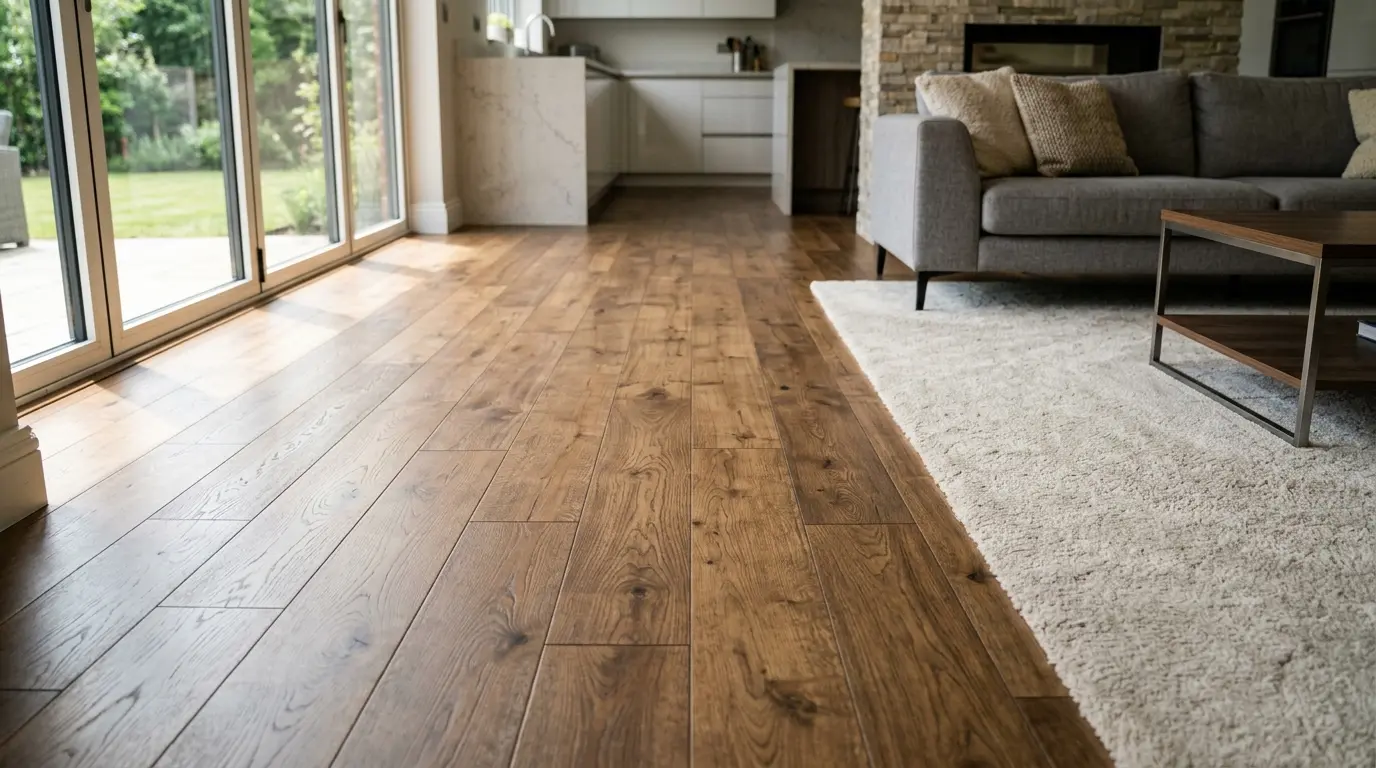

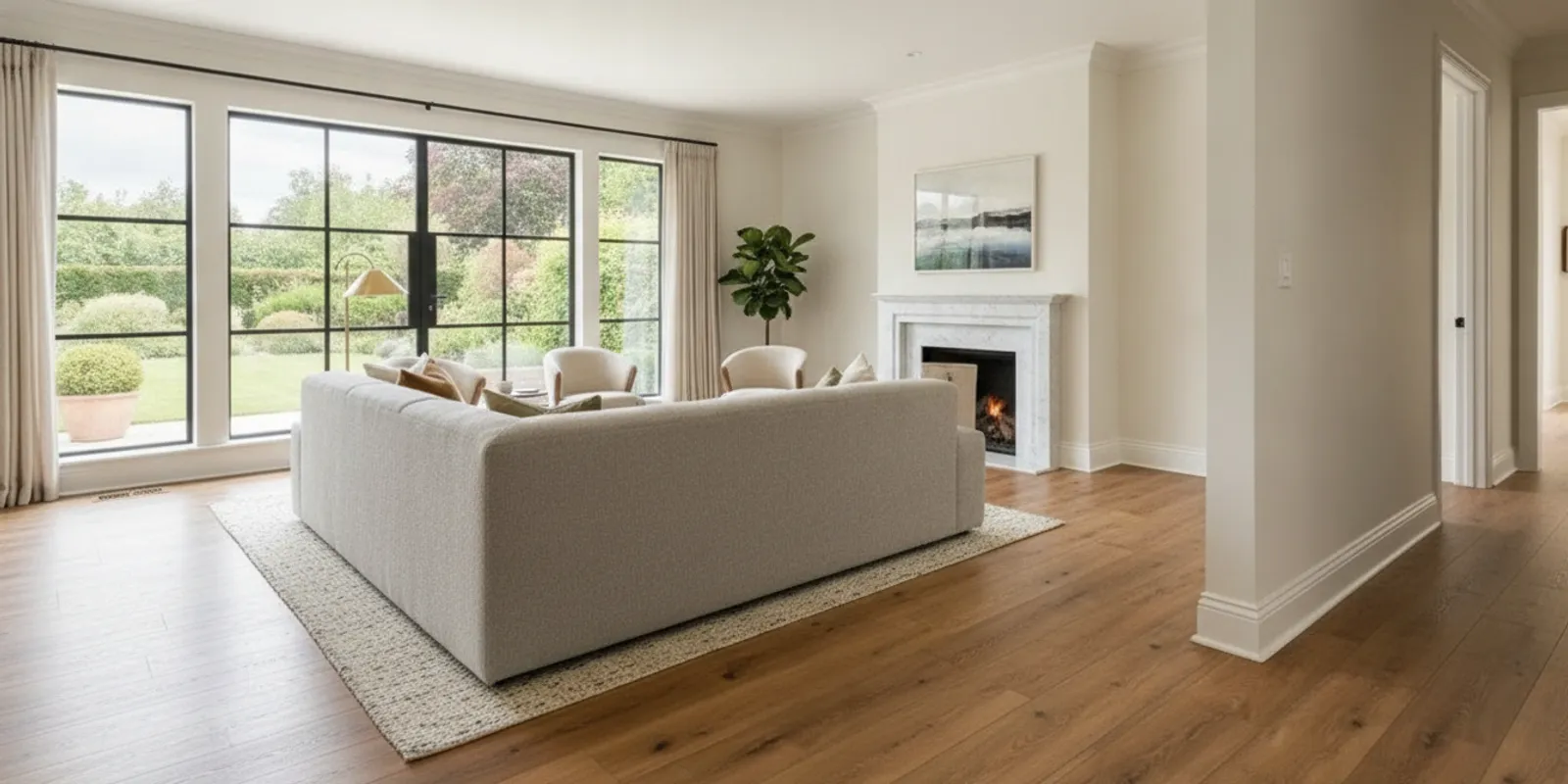
Choosing vinyl plank, laminate, or hardwood is easier when you start with the room rather than a sample board. Vinyl plank flooring, laminate, and hardwood each behave differently around moisture, daily traffic, spills, pets, furniture, and the care you are willing to give them. The right fit depends on the room's conditions and the exact product, not on a universal ranking of materials.
This guide helps homeowners compare the three materials room by room. It focuses on material fit, use, and maintenance. It does not assign one flooring type to every kitchen, bedroom, or household. Product specifications, the condition of the subfloor, installation method, and the written project scope all matter. If your home is in Greensboro, High Point, Winston-Salem, Lexington, Kernersville, or Thomasville, you can use these questions to prepare for a discussion with a flooring professional.
Start with the room's conditions, not the color
Flooring affects the way a room looks, but appearance is only one part of the decision. Begin by describing what happens in the room over a normal week. Does water regularly reach the floor? Do people enter from outdoors with damp shoes? Is the space used as a route between rooms? Will pets or children bring in dirt and spills? Is there direct sun, heavy furniture, or a rolling chair? Answers to these questions help narrow the material options before you compare colors and textures.
Try to separate regular conditions from occasional events. A kitchen may see splashes most days but no standing water. A guest room may be quiet for much of the year, but the floor still needs to suit the home's overall temperature and humidity conditions. A mudroom can face tracked-in moisture and grit at the same time. A material should be considered in the context of those conditions and its published installation requirements.
Also note how the room connects to the rest of the home. A floor rarely stops at the doorway in practical terms: it meets another floor, a stair, a cabinet, a fireplace, or an exterior threshold. A material that suits one room may create a change in height, appearance, or transition detail at the next. Take note of those connections while comparing samples, instead of deciding on the material in isolation.
Make a quick room profile
Before shopping, write down a short profile for each space:
- Moisture: Is the room normally dry, exposed to occasional splashes, or likely to experience tracked-in wetness?
- Traffic: How many people cross it, and do they tend to wear shoes indoors?
- Soil and spills: Are grit, food, pet water, or other messes routine?
- Care: Do you want a surface that can be cleaned with a simple routine, or are you comfortable following product-specific care instructions?
- Sound and feel: Does the room need a quieter, warmer-feeling surface, or is that less important than other factors?
- Appearance: Do you want the visible character of real wood, or a wood-inspired pattern and texture?
- Connections: Which doorways, stairs, cabinets, and adjacent floors affect the finish and transition details?
This is not a product specification. It is a way to bring useful information to a consultation and compare options against real use. If two materials appear equally suitable, the room profile helps identify which trade-offs matter most to you.
What distinguishes vinyl plank, laminate, and hardwood?
These categories are not interchangeable, and names alone do not tell you how a particular product should be installed or maintained. Products differ within each category. Check the manufacturer's current instructions for the specific material under consideration, including where it may be installed, how it must be cleaned, and what conditions the subfloor must meet.
Vinyl plank
Luxury vinyl plank is a hard-surface option designed to resemble plank flooring. Depending on the selected product, it may use a floating click-lock installation or a glue-down system. Those approaches have different preparation and installation requirements, so it is important not to assume every vinyl plank can be installed the same way. Ask which system is proposed and how the particular product's instructions apply to the room.
Vinyl plank is often considered when a homeowner wants a wood-inspired appearance and is also weighing spills or routine household mess. That does not make every vinyl product waterproof in every real-world situation, nor does a product label resolve moisture below the floor. Follow the product's stated water and cleaning limitations, and have the substrate and installation conditions assessed. The luxury vinyl plank installation page describes the service and installation considerations ValorCraft Flooring presents for this material.
Laminate
Laminate flooring commonly uses a floating click-lock system. It can offer a wood-like visual without being solid wood. A particular laminate's water tolerance and approved locations depend on that product's specifications. Do not treat the word "water-resistant" as a promise that the floor can sit in water or that moisture from below is harmless. Ask for the exact product guidance and clarify how spills should be handled.
Laminate may suit a room where you want a consistent plank appearance and a floating installation is appropriate for the product and subfloor. Underlayment, expansion provisions, perimeter details, and transitions need to follow the specified system. A sample can help compare color and texture, but it cannot show whether the subfloor is suitable or whether the floor will meet the neighboring surface cleanly. See the laminate flooring service page for more information about that option.
Hardwood
Hardwood brings the character of real wood into a room. Solid and engineered products are available, but they are not installed in exactly the same way, and neither is automatically right for every subfloor. Product construction, moisture conditions, installation system, and the manufacturer's requirements all influence whether a selected wood floor is appropriate.
Wood also responds to its environment. Changes in moisture and temperature can matter, so the product and project conditions should be reviewed before installation. Ask how the chosen product is intended to be installed, whether the substrate is suitable, and what care the finish requires. Do not rely on general advice about all wood flooring when the chosen product has its own specifications.
Hardwood may be a compelling choice when the real-wood appearance and the homeowner's willingness to follow product-specific care are central priorities. It may not be the simplest answer for every space with frequent spills or changing moisture conditions. The hardwood flooring service page covers installation options and the importance of reviewing the substrate and conditions. For existing wood rather than a new installation, the hardwood sanding and refinishing page describes a separate service that starts with evaluating the floor's condition.
How should moisture influence the choice?
Moisture is not just a bathroom question. Water can reach floors through spills, wet footwear, plumbing issues, cleaning routines, or conditions in the subfloor. The amount, frequency, and source matter. A product's surface may tolerate some contact while the complete floor assembly still has limits. No flooring label eliminates the need to consider the room and installation conditions.
Kitchens and dining areas
Kitchens combine foot traffic with food spills and occasional splashes. Vinyl plank, laminate, and hardwood can all be considered in some kitchen projects, but the right decision depends on the specific product and household habits. If you cook often, have children, or keep water bowls near the kitchen, account for those routines. Ask what the product's instructions say about spills, cleaning, and moisture exposure rather than relying on a broad claim about an entire flooring category.
Bathrooms, laundry rooms, and other wet-prone areas
These rooms deserve more caution because water exposure may be more frequent. Do not select a floor simply because a product is advertised with water-related language. Confirm the manufacturer's allowed locations, installation details, and care rules for the exact product. Ask what happens at edges, doorways, cabinets, and other places where the flooring meets a different surface. Conditions beneath the floor matter as well as what happens on top.
Hardwood is not a one-size-fits-all answer for a wet-prone room, and neither are vinyl plank or laminate. The product instructions, subfloor, room conditions, and installation details need to be considered together. If a space has had a leak, dampness, or another moisture concern, address that condition before treating a new floor as the solution. Flooring selection should not conceal an unresolved source of moisture.
Entryways, mudrooms, and rooms beside exterior doors
Entrances can collect water, grit, and debris from outside. Think about the way the family comes in, whether shoes are removed, and whether a mat or other routine is used. Small particles can affect the visible surface and cleaning workload, while moisture exposure should be checked against the product's specifications. A floor suitable for an interior living room may not be the best fit for the entry if the usage is different.
Basements and rooms over concrete
Concrete deserves particular attention because its condition and moisture can affect what installation systems are suitable. Do not infer that a floor is ready merely because the surface looks dry. The appropriate checks and any mitigation depend on the selected product, project conditions, and applicable instructions. Avoid treating a generic moisture threshold as universal.
Ask what evaluation is proposed for the specific floor system and what the result means for product choice. Clarify whether preparation, testing, or moisture-related work is included in the written estimate. These are scope questions, not assumptions to make from a product sample or a broad material description. ValorCraft's subfloor preparation page explains that preparation is a distinct consideration in flooring work.
How much traffic does each room get?
Traffic is more than a footstep count. Grit, chair movement, pet nails, and the path from the door can matter as much as how often people cross the room.
Living rooms and family rooms
These rooms can be a mix of high use and occasional exposure to food, drinks, toys, or pet activity. A household that uses the room every evening has different needs from a formal room used occasionally. Consider whether you want a continuous look through nearby halls and whether the floor will sit under rugs or heavy furniture. Review the product's instructions for rugs, protective pads, and cleaning.
Bedrooms
Bedrooms are often lower-traffic spaces than entries or kitchens, but they are not automatically free from wear. Consider pets, children, work-from-home furniture, and whether the bedroom connects directly to a bathroom. Think about the feel and sound you prefer when getting up or moving around. Hardwood may appeal for its real-wood character; vinyl plank and laminate may appeal when a wood-like plank look is desired. The decision still rests on product-specific requirements and the full household routine.
Hallways and stairs
Hallways receive repeated traffic and connect rooms with different floor conditions. Choose a material that fits the traffic and the adjacent spaces, then plan transitions and trim. Pay attention to narrow areas where the plank layout and room geometry may be particularly visible. Ask how the installation direction will relate to doorways and adjoining rooms.
Stairs need their own review. A flooring product intended for a flat room does not automatically translate into an appropriate stair installation. Stair shape, edge details, nosings, and the chosen installation method matter. If you are continuing a floor onto stairs, ask specifically how that scope will be handled. ValorCraft describes custom stair tread work and glue-down stairs as separate services; those pages can help you frame questions about the stair portion of a project.
Home offices and rooms with rolling chairs
A desk chair changes the use pattern of a room. Repeated rolling and pivoting can put localized wear on a small area. Ask the flooring manufacturer what chair mats or floor protectors are suitable for the selected product, and follow its care instructions. Consider where the desk will sit and how much space the chair needs to move.
Pets and children
Pets and children add activity, spills, grit, and frequent cleaning to the room profile. Consider where water and food bowls sit, whether paws come in from outside, and whether toys or furniture are dragged across the floor. Look up the exact product's cleaning and protection instructions. Do not assume any material is scratch-proof or impervious to damage.
Think realistically about your household's care routine. If a spill is likely to remain until later, make that part of the decision and check whether the product guidance supports that use. If the room is cleaned often, use only permitted methods and products. A material that matches the family's habits can be easier to live with than one chosen only for its display appearance.
What does upkeep look like in everyday life?
Upkeep is not just the occasional deep clean. It includes the small choices made every day: how spills are handled, how grit is removed, which cleaner is used, and whether protective pads are installed under furniture. Before making a selection, read the manufacturer's care instructions and ask which practices should be avoided. The care routine is part of material fit.
Plan for dirt and grit
Grit can be carried into a home on shoes, paws, and bags. Entry mats, regular dry cleaning, and sensible shoe habits may help manage it, but follow the product's guidance for cleaning and mats. Consider where dirt is most likely to enter and whether a nearby entry floor will receive more exposure than the rest of the home.
Respond to spills appropriately
For any material, know how the manufacturer expects spills to be handled. A product's stated water tolerance does not necessarily mean standing liquid can be left in place or that seams, edges, and the subfloor have no limitations. Promptly follow the published care method and get clarification before installation if your household has a routine that might conflict with it.
Protect the surface from furniture
Furniture placement and movement are worth planning in advance. Ask which pads or protectors are appropriate for the product, and use care when moving heavy pieces. If dining chairs, desk chairs, or mobile storage will move across the floor frequently, mention that when comparing options. A plan for protection can be as important as selecting a color that fits the room.
Rugs can affect the floor underneath, too. Confirm that the rug backing and any pad are compatible with the flooring and finish. Avoid assuming every backing or pad is acceptable. Product instructions are the right place to check, especially when a rug will cover a large area or remain in place for a long time.
Understand the care commitment for wood
Hardwood's finish and product instructions determine the correct cleaning approach. Use the recommended products and avoid treating all wood floors alike. If you are considering an existing hardwood floor, first distinguish routine cleaning from refinishing. Refinishing is a separate project that depends on the floor's condition and the scope of work; it is not a routine maintenance step that every floor needs on a fixed schedule.
Homeowners comparing a new floor with an existing wood floor may find it useful to review how sanding and replacement differ as decisions. For details about the factors involved in a hardwood sanding estimate, see the separate hardwood floor sanding cost guide. Those resources address separate questions; this guide stays focused on matching a material to a room.
How do the three options compare at a glance?
The table below is a starting point, not a product guarantee. Each material category contains products with different instructions and performance details. Use the table to identify what you need to verify for the exact flooring you are considering.
| Room consideration | Vinyl plank | Laminate | Hardwood |
|---|---|---|---|
| Moisture exposure | Check the product's stated water limitations, installation method, and substrate conditions. | Confirm permitted locations, spill care, and the specific product's water guidance. | Review the wood product, finish, moisture conditions, and installation requirements. |
| Busy routes | Compare product wear details and care instructions against the room's routine. | Compare the exact product's wear information and approved uses. | Consider traffic, finish care, and the household's willingness to protect and maintain the surface. |
| Appearance | Wood-inspired plank designs vary in pattern, texture, and sheen. | Wood-inspired designs and surface details vary by product. | Real wood character varies by species, product, grade, and finish. |
| Installation questions | Confirm floating or glue-down method and preparation requirements. | Confirm click-lock system, underlayment, expansion details, and transitions. | Confirm solid or engineered product, suitable installation system, and substrate. |
| Upkeep | Follow product-specific cleaning, spill, and protection directions. | Follow product-specific cleaning and moisture directions. | Follow the finish and manufacturer's cleaning and protection directions. |
Use the comparison to make a shortlist, then compare actual products and their written specifications. When the manufacturer's guidance does not fit the way you use a room, do not assume a different installation technique will make it suitable. Ask a qualified flooring professional to review the specific product and project conditions.
Which material might fit each room?
Room names are a starting point, not a rule. Two kitchens can have very different exposure, and a bedroom can be a quiet guest room or a high-use play space. Compare the exact vinyl plank, laminate, or hardwood product with the room's real use and the manufacturer's instructions.
- Kitchen and dining: Start with spills, how quickly they are cleaned, and whether the kitchen opens into another room. A continuous floor has to suit the more demanding space, not only the drier one. Chair movement and food mess matter in a dining area.
- Living room: Weigh routine traffic, pets, children, furniture, and whether you want real wood or a wood-inspired look. Upkeep is not the same across the three categories, so check the product's care directions.
- Bedroom: Consider traffic, rugs, desk furniture, and any connection to a bathroom. A consistent finish with the hall can look continuous, but door clearances and transitions still have to be planned in the written estimate.
- Entry and mudroom: Map where rain, grit, and outdoor shoes land. A mat helps, but it does not replace the product's exposure limits. Match the floor to how the household actually comes in.
- Bathroom and laundry: Begin with the manufacturer's approved uses and water-related instructions. Spills, splashes, appliance leaks, and the edges at fixtures all matter. A category label is not the same as written product guidance.
- Basement: Identify the substrate and any history of dampness before you choose a look. A floor that looks dry on one visit is not a moisture test. Then match the product to how the room is actually used.
- Hall and stairs: Treat the route as one path, including doorways and stairs. Stair details are scoped separately from a flat floor. Ask how nosing, trim, and finished height are handled in the estimate.
A practical process for narrowing the shortlist
When more than one material looks plausible, use a short sequence so a striking sample does not outrun basic fit.
- Describe real use. Write what the room sees on a normal day and on its busiest ordinary day. Include pets, children, rolling chairs, and how quickly spills get cleaned. Choose for the household you have.
- Note moisture and the substrate. Record known water events, damp smells, or prior repairs, and say where and when. Do not guess what is under the floor. Ask what can be confirmed before removal and what may only be clear after the existing floor is lifted.
- Separate must-haves from preferences. A manufacturer's room restriction or a door-clearance limit is a constraint. Color, plank width, and visible wood character are preferences. Rank only a few priorities so the comparison stays useful.
- Compare products, not categories. Keep the product name with its current use, installation, cleaning, and moisture instructions. Similar colors can have different construction. A general description of vinyl plank, laminate, or hardwood cannot replace those instructions.
- Check the edges. Walk doorways, cabinets, stairs, thresholds, and any change to another floor. Decide where one continuous floor is wanted and where a transition is acceptable. The written estimate should say how those edges are handled.
Take the shortlist back to the room profile before you decide. If a product looks right but conflicts with the care routine or the stated room-use conditions, set it aside. You should be able to explain the choice in a few plain sentences: why it fits the room, what care it needs, and which installation details still have to be confirmed.
What should you compare when you bring home samples?
Samples are useful for evaluating color, grain pattern, texture, and sheen. Look at them in the room at different times of day, next to cabinets, wall colors, and trim. If possible, view multiple planks together so you can see variation and pattern repetition. A single small piece may not represent the overall floor.
Then test the decision against function. Read the product information, note the approved room uses, and compare care instructions. Ask whether the installation type is floating or glue-down, what preparation is required, and what the product instructions say about moisture and the subfloor. Do not rely on the sample card to answer technical questions.
Bring samples to the thresholds and transitions that matter. A color can look appealing by itself but contrast sharply with a nearby floor or stair. Consider whether you prefer continuity or a visible change between spaces. Think about plank direction and layout as well as the color, because orientation affects how the floor relates to the room's shape and light.
Finally, include the people who will maintain the floor. If one household member prefers a particular cleaning routine, check whether that routine is compatible with the product. If pets regularly use a room, review the care and protection directions together. Shared expectations help avoid choosing a finish based on assumptions about how it will be used.
Questions to ask before choosing or installing
Good questions help turn a general preference into a clear material and project plan. Bring the room profile, any known moisture history, and the products you are considering. Ask for answers tied to the exact product and site conditions.
- Is this exact product approved for the room and its moisture exposure?
- What installation system is specified, and what conditions must the subfloor meet?
- How will the subfloor be assessed, and what preparation is included in the written estimate?
- What are the product's cleaning, spill, rug, and furniture-protection instructions?
- How will the new floor meet adjoining rooms, stairs, cabinets, doorways, and exterior thresholds?
- Does the proposed scope include removal of existing flooring, disposal, leveling, or moisture-related work, or are those separate items?
- What should the homeowner move or prepare before work begins, and what is outside the installation scope?
- Which details depend on manufacturer instructions or conditions discovered during preparation?
These questions are especially useful when comparing proposals. The written estimate should control what is included. Removal, haul-off, leveling, moisture mitigation, furniture or appliance moves, damaged-board repairs, stair details, and trim work are not automatically part of every flooring installation. Ask the contractor to identify the scope clearly so that product selection and project expectations match.
ValorCraft Flooring presents flooring installation and refinishing services for homeowners and other clients in the Piedmont Triad. For a room-specific discussion of vinyl plank, laminate, or hardwood, share the room's use, any known moisture concerns, the adjoining surfaces, and your preferred appearance through the contact route. A free estimate is a consultation and quote; it is not a promise that every preparation item or related task is included.
Share your room details and request an estimate
Frequently asked questions
Is vinyl plank always the right choice for a kitchen?
No. A specific vinyl plank product may be a candidate, but the decision should account for its instructions, the room's spills and cleaning habits, the subfloor, and the installation method. Compare those details with laminate and hardwood options rather than relying on a category-wide claim.
Can laminate be used anywhere that looks dry?
Not necessarily. A room's appearance does not establish that a particular laminate is approved for it or that the subfloor meets installation requirements. Check the exact product guidance and consider moisture conditions, transitions, and the home's use of the space.
Is hardwood a poor fit for a busy home?
Not automatically. Busy households should consider traffic, spills, furniture, finish care, and the selected product's instructions. Hardwood may be appropriate for some homes and rooms, but the choice should reflect the homeowner's expectations and willingness to follow the product-specific care routine.
Can one flooring material continue throughout the house?
It may be possible, but room conditions, product approvals, subfloor, stairs, transitions, and doorways all matter. A continuous appearance should not override a room's requirements. Review the layout as a whole and confirm that the selected product and installation plan suit each connected space.
What if I already have hardwood?
First have the existing floor's condition assessed. Depending on its condition and the homeowner's goals, refinishing or replacement may be considered; neither is automatic. ValorCraft's separate sanding-versus-replacement guide can help frame that decision. The next step is to discuss the actual floor and project scope.
The most reliable choice is the one that fits the room's real moisture, traffic, appearance, and upkeep needs, and whose product instructions and installation plan support those conditions. Compare the exact products, plan transitions, and make sure the written scope explains the work before choosing a floor.