A bathroom may be one of the smallest rooms in your home, but its flooring has a demanding job. It faces splashes from the tub, dripping towels, wet feet, cleaning products, humidity, and leaks around plumbing fixtures. That is why waterproof flooring for bathroom renovations deserves careful research before you place an order. Water-resistant and waterproof products do not offer identical protection, and even a waterproof plank can fail when the subfloor is damp or the edges are poorly finished. This guide compares popular materials, explains the details that affect performance, and outlines what to ask an installer before work begins.
Key Takeaways
- Match the flooring to the bathroom: Compare LVP, LVT, sheet vinyl, porcelain, and ceramic tile based on moisture exposure, traffic, comfort, traction, upkeep, and warranty coverage.
- Prepare the room before installation: Repair leaks, test for moisture, level the subfloor, and finish seams, fixture openings, transitions, grout, and perimeter edges correctly.
- Get a complete project plan: Request a written estimate that includes removal, disposal, preparation, materials, trim, transitions, and installation. Confirm bathroom approval, compatible accessories, care requirements, and warranty limits before ordering.
What Makes Bathroom Flooring Waterproof?
Bathroom flooring must handle more than an occasional splash. It may be exposed to wet feet, humidity, cleaning water, dripping towels, and standing water near a tub, shower, or toilet. A flooring product’s waterproof rating matters, but the installation and the surface beneath it matter just as much.
Water can move through seams, exposed edges, gaps, and damaged subfloor materials. Even a waterproof plank or tile may allow moisture to reach the subfloor if it is installed incorrectly or if the room has an unresolved leak. Before choosing a product, review its construction, installation requirements, warranty language, and bathroom approval.
Compare waterproof and water-resistant claims
“Water-resistant” and “waterproof” do not mean the same thing. Water-resistant flooring may slow moisture penetration, but prolonged exposure can still cause swelling, staining, or deterioration. Waterproof flooring is designed to resist water passing through the product itself, although seams, edges, and the surrounding installation still require careful attention.
Not every vinyl product is waterproof. Check the manufacturer’s specifications for terms such as “waterproof,” “rigid core,” or “approved for bathroom use.” These waterproof flooring specifications can help you compare products before buying. Also read the warranty for the exact product line.
Pay attention to what the warranty covers. Some warranties protect the flooring only, not the subfloor, installation labor, water entering through joints, or damage from prolonged standing water. Ask whether the product is approved for the entire bathroom, including areas beside a tub or shower.
See how cores, wear layers, backing, glaze, and absorption affect performance
A floor’s construction affects how it handles moisture, wear, and everyday use. LVP and LVT often use synthetic cores that do not absorb water like wood-based materials. Their wear layers protect the printed surface from scratches and scuffs, while the backing may provide added comfort, sound control, or stability.
A thicker wear layer does not automatically make a product waterproof. It primarily affects surface durability. The core, locking joints, backing, and installation method also play important roles. Many LVP and LVT products are popular for bathrooms because they use waterproof synthetic cores, as explained in this bathroom flooring guide.
Tile has its own performance factors. Porcelain generally absorbs less water than standard ceramic tile, but the tile is only one part of the system. Grout, underlayment, transitions, and the subfloor must also be suitable for bathroom conditions.
Seal seams, grout, edges, transitions, and perimeter gaps
Water usually finds its way into flooring through a seam, exposed edge, loose transition, cracked grout joint, or gap around a fixture. Careful installation limits these entry points and helps keep moisture away from the subfloor.
Click-lock LVP can work well in a bathroom when the product is approved for the space and installed according to the manufacturer’s instructions. Glue-down flooring may suit rooms with complex layouts, but the adhesive, floor preparation, and perimeter details still matter. Sheet vinyl has fewer seams, making it a practical choice when broad, continuous coverage is important.
Tile also requires attention to detail. Grout joints should be installed correctly, and flexible sealant is typically needed where the floor meets a tub, shower, wall, or another change in plane. Grout does not replace waterproofing behind shower walls. Doorways, toilet openings, baseboards, thresholds, and perimeter gaps should also be addressed during installation.
Match flooring construction to standing water and humidity
Think about how the bathroom is used before choosing a floor. A powder room has different demands than a children’s bathroom, a busy primary bath, or a commercial restroom. Frequent splashes, wet towels, dripping clothing, and standing water call for a product with suitable moisture performance and carefully protected joints.
Sheet vinyl can be a practical option when minimizing seams is a priority. When installed correctly, it provides broad coverage with fewer places for liquid to enter. LVP and LVT offer more design flexibility and allow individual planks or tiles to be replaced, but their seams and perimeter edges need proper attention.
Humidity also affects the room over time. Pair the flooring with working exhaust ventilation, sealed fixtures, and a dry, stable subfloor. No flooring product should be treated as permission to ignore leaks or leave standing water in place. Clean up spills promptly and address recurring moisture at its source.
Pair flooring with proper shower waterproofing and a sound subfloor
Bathroom flooring cannot compensate for a failed shower waterproofing system. Water behind shower tile can travel into framing, insulation, and subfloor materials even when the visible floor appears intact. Shower walls, pans, thresholds, and drains need compatible waterproofing details of their own.
The subfloor should be clean, dry, level, and structurally sound before installation begins. Soft areas, stains, swelling, movement, or lingering odors may point to moisture damage. Tile is particularly dependent on proper preparation because movement below the tile can cause cracked grout or loose pieces.
Professional flooring installation services can include evaluating the existing surface, identifying preparation needs, and selecting an installation method suited to the room. Covering damaged materials may create problems that appear only after the new floor is installed.
Test moisture, improve ventilation, and spot subfloor damage
Moisture testing helps determine whether a subfloor is ready for new flooring. The correct test depends on the subfloor material and flooring system, so follow the product instructions or ask an experienced installer to evaluate it. A surface may feel dry while moisture remains below it.
Look for discoloration, swelling, soft spots, peeling finishes, loose fasteners, and musty odors. Inspect areas around toilets, supply lines, tubs, showers, and exterior walls. Repair plumbing or shower leaks before installing the new floor.
Ventilation remains important after installation. Run the exhaust fan while bathing and for the recommended period afterward. Keep water from pooling, and use absorbent mats where appropriate. Periodically inspect caulk, grout, seams, and transitions for changes. Prompt repairs can help prevent a small maintenance issue from becoming damage to the flooring and subfloor.
Choose Waterproof Flooring for Your Bathroom
Bathroom flooring must handle splashes, wet feet, humidity, cleaning products, and occasional standing water. The best material depends on the room’s moisture exposure, the condition of the subfloor, your comfort preferences, and the amount of maintenance you want to handle.
LVP, LVT, sheet vinyl, porcelain tile, and ceramic tile can all perform well in a bathroom when the product and installation method fit the space. Flooring alone does not waterproof a shower or stop leaks from plumbing. Proper subfloor preparation, finished edges, transitions, grout, caulk, and fixture openings all play a role in protecting the floor assembly.
Choose LVP and LVT for comfort, durability, and design flexibility
Luxury vinyl plank and luxury vinyl tile are popular bathroom choices because they combine moisture resistance, comfort, and design flexibility. LVP creates the appearance of hardwood planks, while LVT can resemble stone, marble, or ceramic tile. Both are available in many colors, textures, plank sizes, and patterns, so you can coordinate the floor with vanities, cabinets, walls, and trim.
Many LVP and LVT products use synthetic cores and waterproof construction intended for rooms where spills are common. They are also softer and warmer underfoot than tile, which can make a noticeable difference during cold mornings. Click-lock flooring may simplify installation, while glue-down products can work well in bathrooms with unusual layouts or heavier traffic. Material prices often range from about $1 to $5 per square foot before installation, although thickness, wear layer, design, and brand affect the final price. Compare waterproof vinyl flooring options to review styles and product details.
LVP and LVT still require careful installation. Poorly fitted edges, open joints, and gaps around toilets or tubs can allow water to reach the subfloor. A professional installer can check the surface, make necessary repairs, and create precise cuts around fixtures.
Choose sheet vinyl for affordable, seamless coverage
Sheet vinyl offers broad coverage with fewer seams than many plank or tile products. It comes in large rolls, often wide enough to cover a small bathroom with little or no center seam. Fewer seams can reduce potential entry points for water, provided the flooring is measured, fitted, adhered, and finished correctly.
This flooring is available in wood, stone, and tile-inspired patterns. Its resilient surface also provides some cushioning underfoot, making it more comfortable than many hard tile floors. Sheet vinyl can be a practical choice for guest bathrooms, rental homes, laundry rooms, and other spaces where easy cleaning and cost control matter.
Installation requires accurate measurements and careful cuts around toilets, vanities, doorways, heating vents, and plumbing fixtures. Adhesive, seam treatment, and perimeter finishing also affect how well the floor performs over time. Browse a sheet vinyl flooring collection to compare patterns and construction. If the existing floor is uneven, soft, or damaged, it may need leveling or repair before the vinyl is installed.
Choose porcelain or ceramic tile for durability and customization
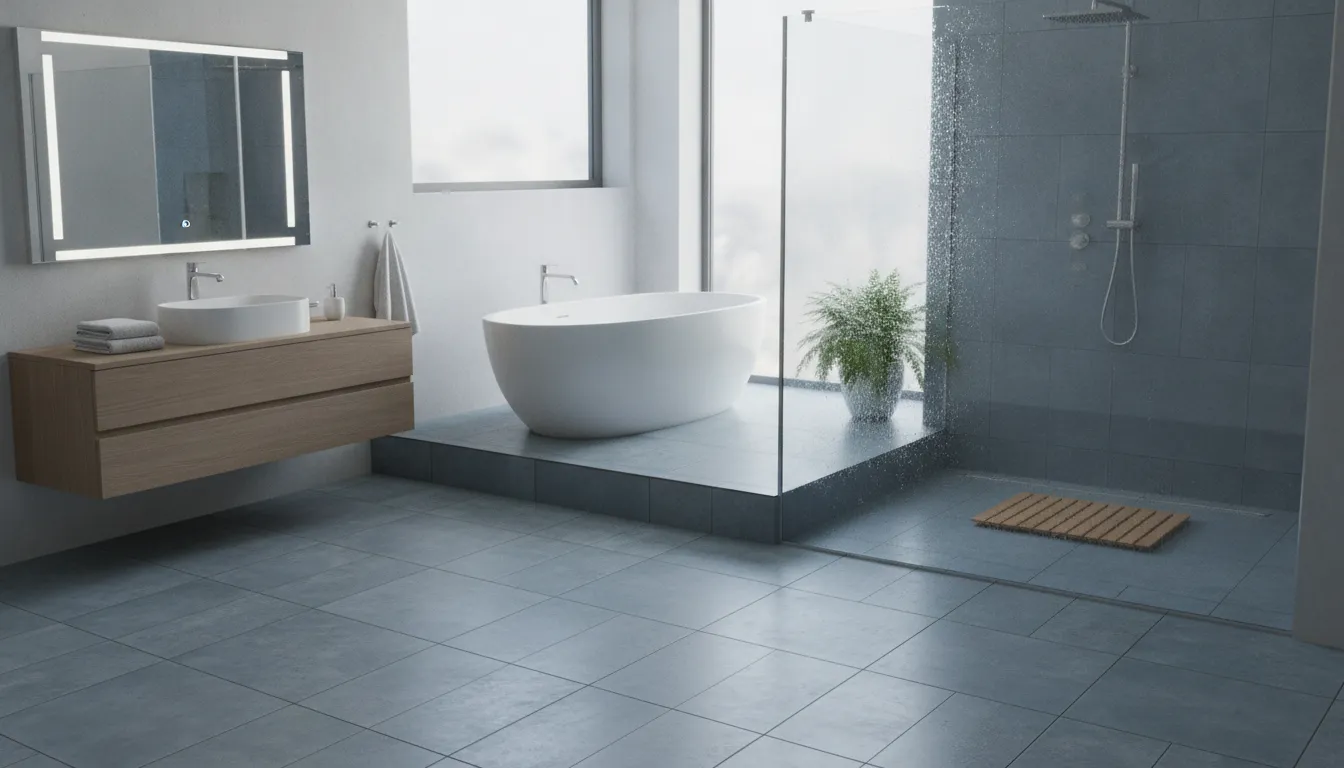
Porcelain and ceramic tile remain reliable options for bathrooms because they offer a hard surface, broad design selection, and long service life when installed correctly. Available styles include wood looks, natural stone patterns, geometric shapes, mosaics, large-format pieces, and solid colors. Porcelain is denser and less absorbent than standard ceramic tile, which can make it suitable for areas with frequent moisture.
Tile performance depends on more than the tile itself. The installation may require a stable subfloor, suitable underlayment, properly mixed thinset, consistent grout joints, and finished transitions. Grout lines and perimeter joints still need care, even when the tile has low water absorption. Shower waterproofing is a separate part of the project and should be completed with the appropriate waterproofing system.
Safety should be part of the selection process. Textured or slip-resistant surfaces can provide better traction than highly polished products when wet. Smaller tiles may offer additional grout lines, while large polished tiles can become slippery. Review bathroom flooring guidance before choosing a product based only on its appearance.
Understand waterproof laminate’s limits and bathroom warranty restrictions
Laminate products may be labeled water-resistant or waterproof, but these terms do not always mean the same thing. A waterproof product may tolerate spills for a specific period under stated conditions. It may not be approved for standing water, repeated saturation, open joints, plumbing leaks, or moisture rising from the subfloor.
Many laminate floors contain a wood-based core that can swell when water reaches the inner layers. For that reason, installation details matter around toilets, tubs, showers, doorways, and transitions. The manufacturer may require specific sealants, expansion gaps, underlayment, or installation methods. Failing to follow those instructions can affect the warranty.
Read the complete warranty before buying laminate for a bathroom. Check whether the product is approved for a full bathroom, whether floor drains are excluded, and whether standing water or subfloor moisture is covered. For many projects, waterproof LVP or sheet vinyl may provide a more straightforward option when moisture exposure is a primary concern.
Match flooring to water exposure, traffic, comfort, safety, and household needs
Begin with the way the bathroom is used. A low-traffic powder room has different requirements than a busy family bathroom with children, pets, and several daily showers. Frequent moisture exposure calls for waterproof construction, secure edges, finished transitions, and a surface that can be dried and cleaned easily.
Comfort is another important consideration. LVP, LVT, and sheet vinyl generally feel warmer and softer than tile. Tile provides a firm, durable surface and may work with radiant heat when the flooring system is designed for it. For safety, look for suitable wet-surface traction, particularly if older adults, young children, or anyone with limited mobility uses the room.
Maintenance should also influence your decision. Smooth vinyl may simplify daily cleaning, while tile requires regular grout care. Think about how easily damaged sections can be repaired, whether replacement material will remain available, and how the flooring will coordinate with the rest of the room. ValorCraft Flooring offers flooring services for homeowners and property owners across North Carolina.
Choose flooring for homes, rentals, multifamily properties, and commercial restrooms
The right bathroom flooring depends on the property and the demands placed on it. Homeowners may prioritize comfort, design, and coordination with cabinetry and trim. Rental and multifamily properties often require durable materials that are easy to clean, quick to install, and available for future repairs. Waterproof vinyl can be useful in these settings because it handles everyday spills without the same absorption concerns as wood-based flooring.
Commercial restrooms may need products that withstand heavier foot traffic, frequent cleaning, carts, and occasional standing water. LVP, sheet vinyl, and tile can all work, but the product’s wear rating, maintenance requirements, slip resistance, and warranty terms should match the space. Some projects may also require commercial adhesive, coved edges, or other specifications.
Before installation, inspect for soft subfloor areas, uneven transitions, moisture damage, and poor ventilation. ValorCraft Flooring is a veteran-owned company serving homeowners, builders, property managers, and commercial clients with licensed and insured in-house crews. Contact ValorCraft Flooring to discuss bathroom flooring options and request a clear estimate for your North Carolina project.
Compare LVP/LVT, Sheet Vinyl, and Tile
Choosing bathroom flooring involves more than comparing waterproof claims. You also need to consider comfort, installation, maintenance, safety, design, and the condition of the subfloor. Luxury vinyl plank (LVP), luxury vinyl tile (LVT), sheet vinyl, and porcelain or ceramic tile can all perform well in bathrooms, but each material has different strengths.
Installation quality matters just as much as product selection. Water can reach the subfloor through loose seams, gaps around fixtures, damaged grout, or poorly sealed transitions. ValorCraft Flooring provides luxury vinyl plank installation for homeowners, builders, and property owners across North Carolina.
Compare performance around spills, humidity, and standing water
LVP and LVT have synthetic surfaces and cores that handle everyday splashes, spills, and bathroom humidity well. Their performance depends on the specific product and installation. Edges around toilets, tubs, walls, and transitions need careful fitting so water does not reach the subfloor. A waterproof plank does not make every part of the room waterproof.
Sheet vinyl offers broad, continuous coverage with fewer seams than plank or tile flooring. That makes it a practical option for bathrooms where splashing is common. However, seams and perimeter edges still need proper installation and protection.
Porcelain and ceramic tile resist surface moisture, but grout joints can absorb water and may require maintenance. Remove standing water promptly from any flooring type. Also remember that bathroom flooring does not replace a properly waterproofed shower assembly.
Compare material and installation costs
LVP and LVT often offer a balance between reasonable material costs and a finished appearance. Prices vary based on thickness, wear layer, attached backing, pattern, brand, and installation method. Click-lock products may take less time to install, while glue-down flooring requires careful adhesive application and more demanding subfloor preparation.
Sheet vinyl is often one of the more affordable bathroom flooring choices, especially in smaller rooms. Its broad design can also reduce the number of visible joints. Tile may cost more because the project can involve backer board, waterproofing, leveling, thinset, grout, and specialized labor.
When comparing estimates, ask for separate prices for removal, disposal, subfloor repairs, flooring, trim, transitions, and installation. ValorCraft Flooring’s contact page is a practical place to request project information and discuss pricing for your bathroom.
Compare comfort, warmth, sound, softness, and radiant heat compatibility
Vinyl flooring generally feels warmer and softer than tile, which can be more comfortable when walking barefoot. LVP and LVT may also reduce footfall noise, particularly when the product includes an approved backing or is installed over compatible underlayment. The result depends on the flooring, subfloor, and installation method.
Sheet vinyl has a resilient feel and may provide more cushioning than rigid flooring. Tile feels harder and colder, although rugs and radiant heating can improve comfort. If you are considering radiant heat beneath tile, confirm that the tile, underlayment, adhesive, grout, and heating system are compatible.
Do not assume every vinyl product can be installed over electric or hydronic heating. Check the manufacturer’s installation instructions before purchasing materials, since excess heat can affect some flooring products or adhesives.
Compare wet-surface traction and slip resistance
A glossy finish does not automatically mean a floor is unsafe, but smooth surfaces can feel less secure when wet. Look for manufacturer information about wet-surface traction instead of judging a product only by its showroom appearance. Textured LVP and LVT may provide more grip, although deeply textured surfaces can take longer to clean.
Tile traction depends on the finish, texture, size, and layout. Smaller tiles create more grout lines and may offer additional contact points, but grout is not a substitute for a flooring product designed for wet areas. Sheet vinyl is also available with textured finishes intended to improve traction.
Use bath mats carefully, keep spills under control, and repair leaks quickly. These steps are especially important in homes with children, older adults, or pets. Ask your installer which products are suitable for the bathroom’s moisture and safety needs.
Compare wood looks, stone looks, patterns, sizes, colors, and design options
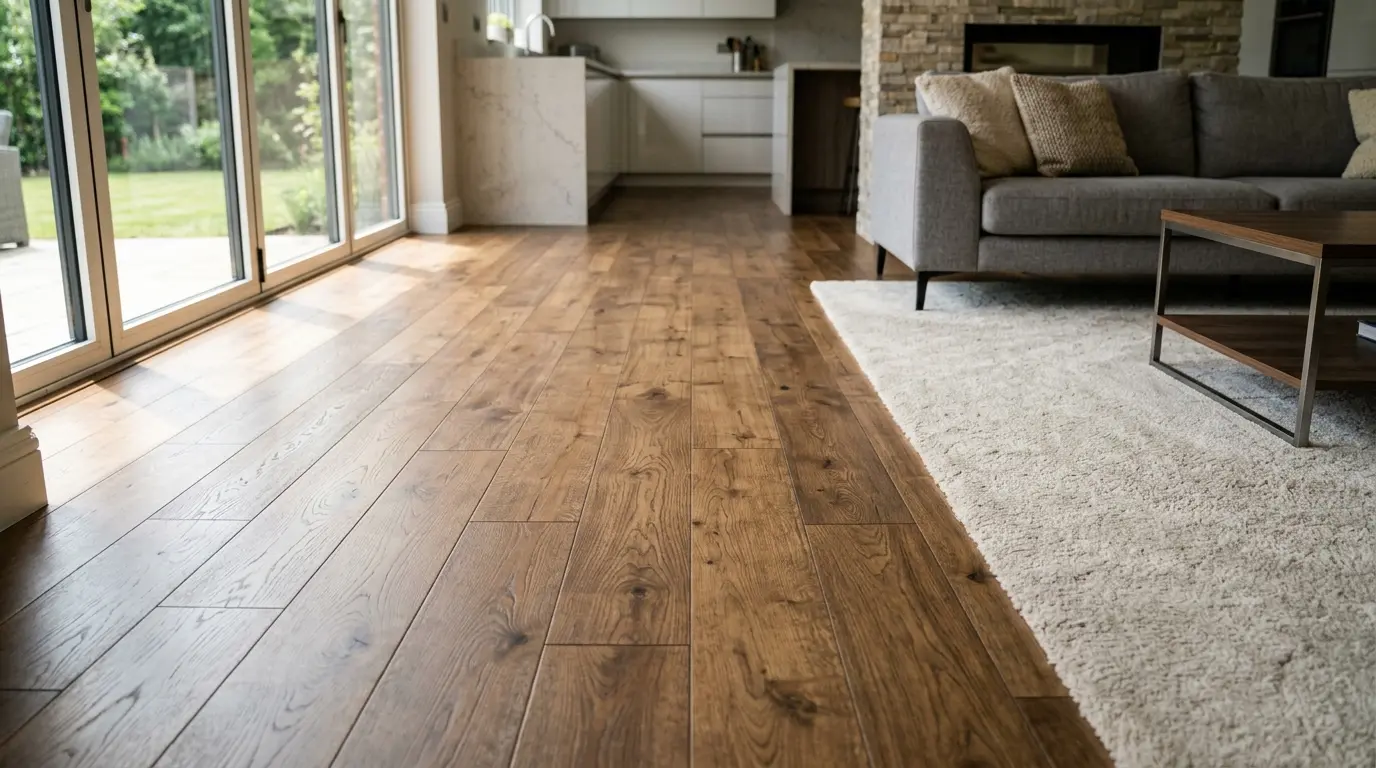
LVP and LVT offer extensive design flexibility. Planks can resemble oak, maple, hickory, and other wood species, while LVT can imitate marble, slate, concrete, or ceramic tile. You can choose from brown, beige, gray, white, and mixed-color patterns without taking on the upkeep associated with some natural materials.
Sheet vinyl also comes in wood, stone, tile, and geometric designs. Its broad pattern can create a more continuous appearance in a small bathroom. Tile provides additional control over size, shape, color, layout, borders, and grout contrast.
Order samples or bring them into the room before making a decision. View each option beside the vanity, cabinets, wall tile, tub, trim, and other finishes. Bathroom lighting can change how a color or pattern appears compared with a showroom or online listing.
Compare installation needs, subfloor requirements, disruption, waste, and DIY potential
Click-lock LVP and LVT can be suitable for some DIY projects, but the subfloor still needs to be clean, dry, stable, and reasonably level. Floating floors also require correct perimeter gaps, transitions, and clearances around fixtures. Glue-down vinyl requires especially careful preparation because small bumps and depressions can show through the finished surface.
Sheet vinyl requires accurate measuring, templating, cutting, adhesive work, and seam treatment. Tile installation is typically more involved because it may include an approved underlayment, waterproofing, thinset, precise cuts, grout, and curing time.
Removing existing flooring can reveal moisture damage, movement, or uneven areas. A professional crew can identify these problems before the new floor is installed. ValorCraft’s flooring services include installation and preparation for projects where a stable base is essential.
Compare cleaning, grout care, repairs, replacement, lifespan, warranties, resale appeal, and best uses
LVP, LVT, and sheet vinyl are generally easy to maintain with regular sweeping and damp mopping. Use a manufacturer-approved, pH-neutral cleaner, and avoid abrasive products, wax, and unapproved steam cleaning. Keep the product name, color, lot number, and purchase date in case you need replacement material later.
Tile can last for decades when installed over a stable base, but grout may need periodic cleaning, sealing, or repair. Cracked tile or loose grout can signal movement below the surface, so repairs should address the underlying problem rather than only the visible damage.
Review warranty terms before buying. Some warranties exclude improper installation, excessive subfloor moisture, standing water, or unapproved cleaners. LVP and LVT may suit households seeking comfort and easier plank replacement. Sheet vinyl can work well for budget-conscious bathrooms and rental properties. Tile may appeal to buyers who value durability, customization, and long-term resale appeal. For larger homes and commercial spaces, ValorCraft’s commercial flooring services can help match materials to traffic, maintenance, and project requirements.
Compare Product Specs, Brands, and Warranty Details
A waterproof flooring label is only the starting point. Products that look similar in a showroom can differ in core construction, wear layer, installation method, moisture limits, and warranty coverage. Those details matter in a bathroom, where splashes, humidity, cleaning products, and plumbing leaks can test every seam and edge.
Compare products within the same category, then review the full technical specifications instead of relying on a large “waterproof” badge. Check the flooring’s approved use, installation requirements, maintenance instructions, and warranty exclusions. The right product must also work with your subfloor, room layout, water exposure, and expected traffic.
A professional installer can help you evaluate those details before you buy. ValorCraft Flooring offers professional flooring installation services across North Carolina, including LVP, laminate, glue-down flooring, subfloor preparation, and trim work.
Compare leading brands and product lines
Many flooring brands offer several product lines with different specifications. An entry-level vinyl product may have a thinner wear layer and basic backing, while a premium line may offer a more durable finish, enhanced acoustic backing, or a longer warranty. Compare the actual product details rather than choosing based on brand recognition alone.
For each product, review the core type, wear layer, total thickness, plank or tile dimensions, finish, texture, installation method, and approved rooms. Confirm whether the warranty applies to bathrooms, full-time residences, rentals, or commercial spaces. Retailers such as Lumber Liquidators organize waterproof products by type, which can make your initial comparison easier.
Request samples from two or three product lines. Place them beside your vanity, cabinets, wall tile, and fixtures to compare color, texture, edge detail, sheen, and comfort underfoot.
Compare LVP/LVT cores, wear layers, thickness, backing, and underlayment
LVP and LVT use synthetic vinyl construction designed to handle everyday moisture. Rigid-core products may use SPC or WPC construction, while glue-down products typically have a thinner, flexible body. Your choice should match the subfloor, installation method, room layout, sound preferences, and expected traffic.
The wear layer protects the printed design from scuffs, stains, and daily use. A thicker wear layer may be useful in a family bathroom, rental, or commercial restroom, but it cannot correct an uneven subfloor or poor installation. Total thickness also affects door clearance and the transition to nearby rooms.
Check the backing and underlayment instructions carefully. Some planks include attached padding, while others require a specific underlayment or prohibit one altogether. An unapproved layer can affect stability and warranty coverage. Twenty & Oak’s bathroom flooring guide provides useful points to compare.
Compare sheet vinyl wear layers, backings, adhesive, seams, and room approvals
Sheet vinyl can cover a bathroom with fewer joints than plank flooring, which makes it appealing when you want to limit potential entry points for water. Its performance still depends on precise measuring, proper fitting, compatible adhesive, and careful finishing around fixtures and room edges.
Compare the product’s wear layer, backing, surface finish, and approved installation method. Some products require full-spread adhesive, while others permit different methods only under specific conditions. Confirm that the manufacturer approves the material for bathrooms and allows installation over your existing surface.
Pay close attention to seams. A poorly fitted or bonded seam can allow water to reach the subfloor, especially near a tub, shower, or toilet. Ask how seams will be positioned, sealed, and finished. The installer should also explain how the material will be secured at walls, thresholds, and plumbing penetrations.
Compare tile types, water absorption, PEI ratings, traction, and grout
Porcelain and ceramic tile can both work well in bathrooms, but their specifications differ. Porcelain generally has a lower water absorption rate than standard ceramic tile, making it a strong option for wet areas and high-use spaces. The finished floor still depends on proper installation, grout, transitions, and a stable subfloor.
Review the tile’s water absorption rating and PEI rating before buying. PEI ratings help indicate how well a glazed tile can handle wear, but they are only one part of the decision. Choose a product rated for floors rather than a wall-only tile. Examine the surface texture and traction as well, especially in bathrooms used by children, older adults, or anyone with mobility concerns.
Grout also affects maintenance. Cement-based grout may require sealing, while epoxy grout generally offers stronger stain resistance. Neither can compensate for movement beneath the tile or inadequate waterproofing. Your installer can recommend suitable setting materials, grout joints, and layout options.
Check waterproof laminate restrictions, installation requirements, and warranty exclusions
Some laminate products are marketed as waterproof or water-resistant, but those terms do not mean the flooring can tolerate every bathroom condition. The surface may resist a spill while the edges, joints, or core remain vulnerable to prolonged moisture. Standing water or a leak beneath the flooring can still cause damage.
Read the installation instructions before ordering. The manufacturer may require a specific underlayment, expansion gap, sealant, or perimeter treatment. Some products may be approved for powder rooms but not bathrooms with tubs or showers. Others may exclude areas exposed to excessive humidity, plumbing leaks, or standing water.
Review the warranty exclusions closely. Coverage may apply to manufacturing defects but exclude damage from improper installation, subfloor moisture, unapproved cleaning products, or missed maintenance requirements. If you are considering laminate, ask the retailer or installer to confirm its approved bathroom use in writing.
Review standing-water, subfloor moisture, installation, and commercial-use limits
Waterproof flooring is not a replacement for a dry, stable installation surface. A leak from a toilet, supply line, tub, or shower can send water beneath the floor, where it may damage the subfloor. Seams, edges, and perimeter gaps also require careful treatment in areas that receive regular splashes.
Ask how the subfloor will be inspected and prepared. The work may include repairing damaged wood, removing loose material, correcting uneven areas, or testing for moisture. ValorCraft Flooring includes subfloor preparation among its services, helping create a stable base for the finished floor.
For a rental, multifamily property, office, retail space, or other commercial setting, verify the product’s commercial rating. Residential and commercial warranties may have different traffic, cleaning, and installation requirements. A product that suits a lightly used guest bathroom may not be appropriate for a busy public restroom.
Check samples, product lots, returns, shipping, discontinued lines, and replacement stock
Request samples and review them in the actual bathroom before ordering. Lighting can change how a floor’s color and texture appear, while nearby paint, tile, cabinets, and countertops can affect the overall look. Place several planks or tiles together to check variation between pieces.
Record the product name, collection, color, size, lot number, and quantity. Manufacturing lots may vary slightly in shade and texture, so inspect boxes from different lots before installation. Order enough material for cuts and keep extra pieces for future repairs.
Review the retailer’s return policy, delivery terms, restocking fees, and damage claim process. Confirm that matching trim, transitions, adhesive, grout, and underlayment are available. Flooring collections can be discontinued, making replacement pieces difficult to find later. Floor & Decor’s waterproof vinyl selection illustrates how product availability and compatible accessories can affect the buying decision.
What Does Waterproof Bathroom Flooring Cost?
Bathroom flooring costs depend on more than the price printed on a flooring box. Your final estimate may include the material, installation, old-floor removal, subfloor repairs, trim, transitions, and detailed work around plumbing fixtures. A small bathroom can also have a higher per-square-foot installation cost because the project still requires careful cuts and finish work.
Before choosing a product, request a written estimate that separates each part of the project. This makes it easier to compare flooring options and reduces the chance of unexpected charges after the existing floor is removed. ValorCraft Flooring provides professional flooring installation for homeowners, builders, property managers, and commercial clients across North Carolina.
Compare material and installation costs by flooring type
Material prices vary by product quality, thickness, finish, brand, and design. Sheet vinyl often has a lower material cost, while luxury vinyl plank and luxury vinyl tile offer more wood and stone looks. Porcelain and ceramic tile range from affordable to premium, depending on the size, surface texture, pattern, and decorative details.
Installation costs vary just as much. Sheet vinyl requires precise measuring, cutting, adhesive, and seam treatment. LVP may use a floating click-lock system or glue-down installation. Glue-down flooring typically requires more subfloor preparation and careful placement. Tile installation often costs more because it involves underlayment, thinset, grout, detailed cuts, and curing time.
When comparing estimates, confirm whether the price includes both materials and labor. Also ask whether the quote covers transition pieces, adhesive, underlayment, and finish work. Comparing product prices alone can make one option appear less expensive when its installation requirements have not been included.
Budget for removal, disposal, waste, and subfloor preparation
Removing an existing bathroom floor can uncover problems that were not visible during the initial visit. An installer may find damp wood, loose underlayment, uneven areas, damaged particleboard, or adhesive that must be removed before the new flooring can be installed. Each issue can add labor and material costs.
Ask your installer to identify demolition, hauling, disposal, and floor preparation charges separately. The estimate should also include a material waste allowance. Extra flooring is needed for cuts, layout adjustments, and future repairs. A simple rectangular room may require less waste than a bathroom with several corners, closets, alcoves, or built-in features.
Subfloor preparation may include patching, sanding, fastening loose sections, replacing damaged panels, or leveling low areas. These steps help create a stable, dry, and level base. Skipping them can contribute to floor movement, separated joints, cracked grout, and early wear. A detailed estimate should explain which preparation steps are included and which conditions could change the final price.
Include moisture treatment, leveling, underlayment, adhesive, grout, trim, and transitions
A complete flooring quote should account for the products needed to install and finish the floor correctly. Depending on the material, this may include a moisture barrier, primer, underlayment, adhesive, thinset, grout, transition strips, baseboards, quarter round, and waterproof caulk.
Underlayment can improve support, sound control, and comfort, but the correct product depends on the flooring manufacturer’s instructions and the condition of the subfloor. Some LVP includes attached backing, while other products require a separate layer. Using an unapproved underlayment can affect floor performance or warranty coverage.
Tile projects may require cement board or another approved tile underlayment, along with thinset and grout. Glue-down LVP requires the appropriate adhesive and a properly prepared surface. Matching transitions and trim also affect the finished appearance. Ask whether the estimate includes sealing, caulking, and edge protection around areas exposed to frequent splashes.
Budget for toilet, tub, shower, threshold, and fixture fitting
Bathrooms require more detailed fitting than open living areas. Flooring may need to be cut around toilets, vanities, tubs, shower bases, floor registers, and door jambs. Your estimate should state whether the installer will remove and reset the toilet or whether that work must be completed by a plumber.
A toilet flange that sits too high, too low, or out of alignment may need attention before installation. The same applies to uneven tub edges, shower thresholds, and transitions to nearby bedrooms or hallways. These details can affect both labor time and material requirements.
Ask how the installer will handle caulking around tubs and shower bases, as well as the transition at the bathroom door. A clean fit helps protect exposed edges and makes routine cleaning easier. If the project includes vanity removal, plumbing changes, or fixture relocation, confirm which contractor will complete that work and how it affects the flooring schedule.
Weigh upfront cost against comfort, durability, repairability, and replacement costs
The least expensive material is not always the least expensive choice over time. Sheet vinyl can provide seamless coverage at a modest price. LVP may offer a warmer, softer surface and allow individual planks to be replaced if a localized area is damaged. Tile can last for many years, but replacing a cracked tile may require removing surrounding grout and matching the original product.
Consider how the bathroom will be used. A busy family bathroom may benefit from a durable wear layer and a finish that hides everyday marks. A rental property may need flooring that is easy to clean and practical to repair between tenants. Comfort matters too, particularly in a bathroom where someone spends time standing at a vanity or getting ready in the morning.
Review cleaning instructions, warranty terms, and replacement availability before buying. Save leftover planks, tiles, or sheet vinyl whenever possible. Having matching material on hand can make future repairs easier, especially if the product line is discontinued.
Compare lifecycle costs for homes, rentals, and commercial properties
A homeowner may prioritize appearance, comfort, and resale appeal, while a property manager may focus on quick repairs and consistent replacement materials. Commercial restrooms often need flooring and installation methods suited to heavier traffic, frequent cleaning, and structured maintenance routines.
For rental and multifamily properties, the total cost includes more than installation. Consider how quickly the bathroom can return to service, whether damaged sections can be repaired without replacing the entire floor, and how easily staff can clean the surface. Using one or two standard products across multiple units may also simplify ordering and future repairs.
Commercial projects may involve additional requirements for moisture testing, floor preparation, accessibility transitions, adhesive selection, and after-hours installation. A low initial quote can become more expensive if it excludes preparation or specifies a product that is not approved for the space. Compare expected service life, maintenance needs, repair procedures, and replacement availability alongside the initial price.
Get clear estimates and financing options from ValorCraft Flooring across North Carolina
A professional estimate should explain the selected flooring, installation method, preparation work, finish materials, fixture coordination, disposal, and any tasks that remain the homeowner’s responsibility. It should also identify conditions that could change the price, such as hidden subfloor damage or moisture problems discovered after removal.
ValorCraft Flooring is a veteran-owned, licensed, and insured company serving clients across North Carolina, including the Triad area. Its carpenter-run operation uses professional in-house crews rather than subcontractors, giving customers a clear point of contact throughout the project. You can contact ValorCraft Flooring to discuss your bathroom, request an estimate, and ask about available financing options.
When comparing estimates, look beyond the total. Confirm the product name, installation method, preparation allowance, warranty details, payment schedule, and expected timeline. A detailed quote helps you choose flooring that suits both your budget and the conditions of your bathroom.
Buy Waterproof Flooring and Schedule Installation
Choosing waterproof bathroom flooring involves more than comparing colors and prices. The product must suit the room’s moisture exposure, existing subfloor, traffic level, and installation method. You also need to confirm that the flooring is approved for bathroom use and that compatible accessories, such as transitions, trim, adhesive, or grout, are available.
Decide whether you want an installer involved before ordering materials. A professional can help you account for waste, floor height, layout, moisture concerns, and transitions between rooms. ValorCraft Flooring serves homeowners, builders, property managers, and commercial clients across North Carolina with flooring installation, subfloor preparation, trim work, and related services. Review its flooring services before scheduling a consultation.
Get product guidance, clear estimates, and professional installation from ValorCraft Flooring
Bring product details, room measurements, and photos of the existing bathroom floor to your consultation. ValorCraft Flooring can help you assess whether luxury vinyl plank, glue-down flooring, or another option fits the room and subfloor. Professional guidance is especially helpful when the bathroom has uneven areas, damaged flooring, unusual thresholds, or signs of moisture.
Ask for a written estimate that separates installation, removal, disposal, subfloor repairs, trim, transitions, and other project costs. ValorCraft Flooring is a licensed and insured, veteran-owned company with in-house, carpenter-run crews instead of subcontractors. Read more about the company on its about page, then use the contact form to discuss your project.
Compare flooring showrooms, home centers, and online retailers
Flooring showrooms let you view larger displays and compare several products in person. Staff may also help you review installation systems, trim options, and product specifications. Home centers can offer convenient pickup, local inventory, and a broad selection of price points. Online retailers often provide more styles and detailed filters, but you may need to order samples and confirm shipping details yourself.
When comparing sellers, look beyond the listed price per square foot. Check the product specifications, availability, delivery window, return policy, and replacement stock. Retailers such as Floor & Decor offer waterproof vinyl plank and tile in various styles. Save the product page or technical sheet so your installer can review the flooring before installation.
Review samples in your bathroom’s lighting and surrounding finishes
A sample can look different in a store, warehouse, or online photograph than it does in your bathroom. Place samples near the vanity, tub, shower, toilet, trim, and doorway. Check them in daylight, overhead lighting, and evening light to see how the color works with your walls, cabinets, countertops, and fixtures.
Review texture as well as color. Heavily embossed planks may disguise dust and small marks, while smoother surfaces may be easier to clean. You can order flooring samples before purchasing to compare finishes at home. Keep the samples until installation is complete so you can confirm that the delivered flooring matches your selection.
Confirm product availability, matching trim, transitions, adhesive, and grout
Create a complete materials list before placing your order. Include the flooring, underlayment if required, adhesive, matching edge pieces, baseboards, reducers, thresholds, and transitions between different floor types. Tile projects may also require waterproofing materials, thinset, grout, spacers, sealant, and trim pieces.
Confirm that each accessory is compatible with the selected product. Click-lock flooring may require a specific underlayment and perimeter gap, while glue-down LVP may need an approved adhesive and carefully prepared subfloor. Tile grout and sealant should suit the bathroom’s moisture exposure and cleaning routine. Ordering materials together can help prevent color differences and discontinued accessory issues.
Check sales, clearance prices, rebates, and financing promotions
Compare the complete project cost instead of focusing only on the flooring price. Clearance products may cost less, but they can be difficult to replace if a plank becomes damaged later. Before choosing a discontinued line, make sure you have enough material for installation waste, repairs, and future replacements.
Ask retailers and installers about sales, rebates, and financing promotions. Some offers apply only to certain brands, quantities, or installation packages. Floor & Decor lists waterproof vinyl products across a range of prices, which can help you compare materials while setting a budget. For help estimating installation costs, ask ValorCraft Flooring about financing options and project estimates.
Review return policies, warranties, delivery times, and installation requirements
Read the return policy before ordering, particularly when buying online. Check whether opened cartons, special orders, clearance items, and cut materials can be returned. Ask who pays return shipping and whether the retailer accepts unused boxes after delivery. Keep your receipt, order confirmation, product label, and lot information in case you need to make a claim or order matching material later.
Review the manufacturer’s warranty for bathroom use, standing water, commercial spaces, and installation requirements. A warranty may exclude issues caused by excessive subfloor moisture, incorrect adhesive, poor ventilation, or an unapproved installation method. Confirm the delivery schedule as well. Depending on the product and manufacturer instructions, flooring may need time to arrive and acclimate before installation.
Confirm the product’s approval for bathroom use before buying
Do not rely on the word “water-resistant” alone. Confirm that the product is specifically approved for bathroom use and understand what its waterproof rating covers. Some flooring protects the surface from spills but does not allow prolonged standing water, leaking fixtures, or moisture beneath the floor.
Review the installation guide for requirements around toilets, tubs, showers, seams, and room edges. Even waterproof flooring cannot correct a leaking supply line, failed caulk, wet subfloor, or inadequate shower waterproofing. If the product information is unclear, ask the retailer or your installer before ordering. A professional evaluation can help you choose flooring that matches the bathroom’s moisture exposure and installation conditions.
Install Bathroom Flooring Professionally
Bathroom flooring needs more than a neat pattern and clean finish. The installation must account for moisture, uneven surfaces, plumbing fixtures, door clearances, and the product manufacturer’s requirements. Even flooring labeled waterproof can fail when water reaches an unsealed seam, damaged subfloor, or open perimeter gap.
A professional installer evaluates the room and existing floor before recommending a product or installation method. That process helps determine whether click-lock LVP, glue-down LVP, sheet vinyl, or tile is the better fit. It also helps prevent common problems such as joint separation, hollow spots, cracked grout, and flooring that shifts underfoot.
Waterproof flooring does not replace a properly waterproofed shower or tub surround. The flooring and surrounding wet-area systems must work together, while the subfloor must remain sound, dry, and stable. Product instructions often specify requirements for flatness, moisture levels, acclimation, adhesive, expansion gaps, and cleaning. Following those instructions is essential for performance and warranty coverage. The National Wood Flooring Association’s installation guidance also explains why site conditions and subfloor preparation matter when hardwood products are involved.
Measure the room, plan the layout, and inspect the existing floor
Accurate measurements help determine how much flooring, adhesive, underlayment, trim, and transition material the project requires. A professional measures around walls, doorways, vanities, toilets, tubs, and other fixed features, then adds an appropriate amount for cuts and waste.
Layout planning matters just as much. Installers consider plank direction, tile centering, seam placement, pattern continuity, and the location of visible cuts. In a narrow bathroom, the layout can make the room feel more balanced. Around a toilet or vanity, thoughtful planning reduces small, awkward pieces that can be difficult to secure.
The existing floor also needs a close inspection. Installers look for soft spots, low areas, movement, loose fasteners, damaged flooring, and signs of moisture. If the room connects to a hallway or bedroom, they check how the new flooring height will meet adjoining surfaces. Product guidance, such as Floor & Decor’s waterproof flooring information, can help identify preparation requirements before work begins.
Remove old flooring and identify moisture damage or subfloor problems
Removing existing flooring exposes conditions that may be hidden beneath vinyl, laminate, carpet, or tile. During removal, an installer checks for darkened wood, swelling, delamination, mold-like odors, loose sections, and deterioration near plumbing fixtures. Damage around a toilet, tub, or shower may point to a leak that needs attention before new flooring goes down.
Subfloor problems can include water-damaged plywood, weak particleboard, cracked concrete, or areas that flex when walked on. Covering these issues may leave the new floor uneven or unstable. It can also allow moisture damage to continue beneath the finished surface.
Older flooring may contain materials that require special handling, especially in homes built before modern product regulations. If the material or adhesive could contain asbestos, do not scrape or remove it casually. The Environmental Protection Agency’s asbestos information explains why testing and qualified removal may be necessary. A flooring professional can help identify when the project needs another specialist before installation continues.
Test, dry, level, and strengthen the subfloor
A stable subfloor gives bathroom flooring the support it needs. Installers check concrete or wood for moisture, then correct the source of excess moisture before covering the surface. A damp slab may need additional drying time, while a wood subfloor may require leak repairs, replacement sections, or improved ventilation.
Flatness matters because dips and ridges can show through resilient flooring or prevent click-lock planks from joining correctly. Professionals may fill low areas, grind high spots, replace damaged panels, or reinforce sections that move. They also remove dust, grease, old adhesive, and loose material so the flooring or adhesive can bond properly.
The right preparation depends on the product. Floating LVP may require a specific flatness tolerance, while glue-down vinyl usually needs a smoother surface because imperfections can show through. Tile may require a suitable underlayment and movement planning. Resources from the Tile Council of North America explain why tile installations depend on proper substrate preparation and setting materials.
Install click-lock floating LVP/LVT
Click-lock LVP and LVT use interlocking edges to create a floating floor that is not fastened directly to the subfloor. The installer typically leaves the manufacturer’s required expansion space around walls and fixed objects, then covers those gaps with trim or approved molding.
Before assembly, planks may need to acclimate to the room’s temperature and humidity. The installer checks the starting wall, staggers end joints, and keeps seams aligned without forcing the locking edges. Bathrooms require careful fitting around toilets, cabinets, door jambs, and floor registers.
Floating flooring can be practical and relatively quick, but it still depends on a flat, clean subfloor. It should not be treated as a solution for moisture entering from below. The installer also verifies whether the product is approved for bathroom use and whether the manufacturer requires special treatment around wet areas. Extra adhesive or fasteners should not be added unless the product instructions specifically call for them.
Install glue-down LVP/LVT
Glue-down LVP and LVT are secured to the prepared subfloor with an adhesive selected for the product and site conditions. This method can provide a firm feel underfoot and works well in rooms where a stable surface is important. It may also simplify the replacement of an individual plank, provided the installer can remove the damaged piece without harming nearby flooring.
Preparation is especially important because adhesive can reveal dust, ridges, moisture, and surface texture beneath the planks. The installer spreads adhesive with the specified trowel, observes the required open time, places the flooring according to the layout, and rolls the surface when the instructions require it.
Bathrooms also need careful detailing at the perimeter and around plumbing fixtures. Adhesive does not correct an active leak or make an improperly prepared subfloor suitable. Product-specific instructions for adhesive type, moisture limits, working time, and post-installation use should guide the installation.
Fit sheet vinyl with templates, adhesive, and seam treatment
Sheet vinyl can reduce the number of joints in a bathroom, which makes careful measuring and fitting particularly valuable. An installer may create a paper or digital template that captures the room’s walls, corners, doorways, toilet opening, vanity, and other obstacles. The template is then transferred to the flooring for precise cutting.
Once the sheet is positioned, the installer applies the approved adhesive in the required area and presses the material into place without creating wrinkles or bubbles. Seams, when necessary, require accurate alignment and the manufacturer’s recommended seaming method. Edges around fixtures and walls must also be finished so water cannot collect beneath the flooring.
Sheet vinyl is not automatically suitable for every bathroom. Confirm its room approval, adhesive requirements, seam instructions, and care restrictions before buying. Retailer guidance, such as Armstrong Flooring’s sheet vinyl resources, can help you compare construction and installation details.
Install tile with underlayment, waterproofing, thinset, grout, and cure time
Tile installation requires a rigid, properly prepared base. Depending on the subfloor and tile system, that may include cement backer board, an uncoupling membrane, or another approved underlayment. The installer plans movement joints, checks the surface, and addresses transitions before setting tile.
In areas exposed to direct water, such as a shower floor, waterproofing must be part of the complete shower system. Floor tile alone does not stop water from reaching the structure. The installer then uses the specified thinset, places the tile with consistent coverage, and maintains the planned joints. Grout fills those joints after the thinset has set.
Cure time matters at every stage. Walking on the floor, installing fixtures, or exposing the area to water too soon can weaken the installation. Tile selection also matters, especially for wet floors. The Tile Council of North America’s standards provide technical information about tile performance and installation requirements.
Finish around toilets, tubs, showers, thresholds, baseboards, and trim
Detail work around fixtures often separates a durable bathroom installation from a short-lived one. Flooring should be cut carefully around the toilet flange rather than forced tightly against plumbing. If the toilet is being replaced, coordinating the flooring and toilet installation can create a cleaner seal and reduce the chance of an awkward patch.
At tubs and showers, the flooring edge must meet the surrounding waterproofing and finish materials correctly. Thresholds should sit securely and create a smooth transition to nearby flooring. Door casings may need to be trimmed so the new material can slide beneath them without leaving a large gap.
Baseboards, shoe molding, stair trim, and other finishing pieces should cover required expansion spaces without pinning a floating floor in place. Flexible sealant may be appropriate in select perimeter locations, but it should not block drainage or hide an active leak. The installer should follow flooring and fixture manufacturers’ instructions for caulk, transitions, and edge treatment.
Compare installation methods by labor cost, project time, and DIY difficulty
Click-lock LVP often has a shorter installation time than tile, especially when the subfloor needs little correction. However, cutting around fixtures and maintaining expansion space still requires care. Glue-down LVP can take longer because the subfloor must be exceptionally smooth and the adhesive needs proper handling.
Sheet vinyl may use fewer seams, but fitting a single large piece accurately can be difficult. Tile usually involves more steps, including underlayment, layout, cutting, thinset, grout, and curing. It can also add more weight and create a longer period before the bathroom is ready for use.
DIY difficulty depends on more than the flooring material. A simple, square room with a sound subfloor is easier than a small bathroom with multiple fixtures, uneven floors, or previous water damage. Compare professional labor with potential waste, tool purchases, replacement materials, and repairs. A clear estimate should identify removal, subfloor work, installation, trim, transitions, and cleanup separately.
Choose licensed, insured, carpenter-run crews through ValorCraft’s in-house process
The installation crew you choose affects the quality of the finished floor and how unexpected problems are handled. Ask whether the company is licensed and insured, who will perform the work, and whether subcontractors will be involved. You should also receive a written estimate that identifies the flooring scope, subfloor preparation, trim work, and exclusions.
ValorCraft Flooring is a veteran-owned company serving homeowners, builders, property managers, and commercial clients across North Carolina, including the Triad area. Its flooring services include luxury vinyl plank, glue-down flooring, subfloor preparation, trim work, hardwood, laminate, and commercial flooring.
ValorCraft uses professional in-house crews rather than subcontractors, with a carpenter-run approach focused on accurate preparation and clean finish work. Before scheduling, contact ValorCraft Flooring to discuss your bathroom, review product options, and request a clear estimate. Ask about financing, project timing, moisture concerns, and the preparation needed for the flooring you are considering.
Use Reviews and Expert Guidance for Lasting Performance
Product descriptions can confirm whether flooring is labeled waterproof, but customer reviews often show how it performs after months or years of use. Look for feedback from homeowners with similar bathrooms, including comparable ventilation, traffic, cleaning routines, and installation methods. A review from a lightly used powder room may not reflect the demands of a busy family bathroom.
Use reviews to identify questions, then verify the answers through manufacturer instructions, warranty terms, and professional recommendations. Flooring problems can stem from the product, installation, moisture, or subfloor movement. ValorCraft Flooring’s bathroom flooring services include subfloor preparation, installation, and trim work, giving homeowners practical guidance before the material is ordered.
Look for LVP/LVT reviews about swelling, joint separation, scratches, fading, and comfort
When reading LVP or LVT reviews, look for specific details rather than general comments about quality. Search for reports of swollen edges, separated joints, scratched wear layers, fading near windows, or planks that feel soft underfoot. Note whether the reviewer used click-lock or glue-down flooring, since installation method affects movement, repairs, and moisture protection.
Comfort is another useful comparison point. Vinyl often feels warmer and softer than tile, especially when you stand at the vanity. That feel can vary with plank thickness, attached backing, underlayment, and subfloor condition. Compare reviews with bathroom flooring guidance from Twenty & Oak and the manufacturer’s installation requirements.
Look for sheet vinyl reviews about lifted seams, tears, wear paths, and cleaning
Sheet vinyl has fewer joints than plank flooring, which can make it practical for bathrooms with frequent splashes. In customer reviews, look for comments about lifted edges, failed adhesive, tears around fixtures, and worn paths near sinks or doorways. Pay attention to whether the floor was installed as one continuous piece or required seams because of the room’s size or shape.
Cleaning feedback also matters. Reviewers may mention whether dirt collects in the texture, the finish becomes dull, or certain cleaners leave residue. Even high-quality sheet vinyl needs a smooth, stable subfloor and compatible adhesive. Use sheet vinyl product information from All Season American Flooring to compare construction details before making a purchase.
Look for tile reviews about cracks, loose grout, stains, traction, and temperature
Tile reviews should cover more than color and appearance. Look for reports of cracked tiles, loose or discolored grout, staining, chipped edges, and difficult repairs. These problems may relate to the material, but they can also result from subfloor movement, poor mortar coverage, incorrect grout selection, or insufficient curing time.
Traction deserves close attention in a bathroom. A polished surface may become slippery when wet, while a textured finish can provide more grip but may require additional cleaning. Tile can also feel cold compared with vinyl, particularly during winter. Compare product specifications with Daltile’s bathroom flooring resources, then consider the comfort and maintenance needs of everyone using the room.
Judge reviews by service time, water exposure, traffic, and maintenance
A review becomes more helpful when it explains how long the floor has been in service. A product that looks perfect after three weeks has not faced the same conditions as one that has handled years of showers, cleaning, and daily foot traffic. Give more weight to reviews that mention the installation date, moisture exposure, household size, and maintenance routine.
Look for patterns across several reviews instead of relying on one dramatic complaint. If multiple homeowners report damage near tubs or toilets, investigate edge sealing, fixture installation, and possible leaks. If complaints follow the use of harsh cleaners, the issue may involve maintenance rather than material quality. Recommendations from the National Wood Flooring Association can also help when moisture may affect wood flooring in nearby or connected rooms.
Separate product defects from installation errors, subfloor movement, and moisture
Not every flooring failure indicates a defective product. Joint separation may result from an uneven subfloor, insufficient expansion space, or temperature changes. Cracked tile may point to movement below the installation. Swelling, lifting, or staining near a toilet or tub may indicate an active leak or an unsealed perimeter rather than a failure of the flooring core.
When reading reviews, check whether the installer tested the subfloor, followed acclimation requirements, used the correct adhesive, and sealed transitions and fixture edges. These details can explain why similar products perform differently in different homes. ValorCraft’s about page describes its carpenter-run, in-house approach, which keeps preparation and installation with one experienced crew.
Compare customer feedback with manufacturer guidance and professional recommendations
Use customer reviews to identify questions, then confirm the answers through official product documents. Check the installation guide for bathroom approval, subfloor moisture limits, expansion requirements, adhesive specifications, cleaning restrictions, and standing-water exclusions. Read the warranty carefully because a product labeled waterproof may still exclude damage from leaks, flooding, improper installation, or moisture below the floor.
An experienced installer can assess ventilation, floor height, transitions, fixture clearances, and subfloor condition before you order materials. Ask for a written estimate that identifies preparation, installation, trim, disposal, and warranty responsibilities. Contact ValorCraft Flooring to discuss bathroom flooring options and installation requirements for your North Carolina home or property.
Maintain Waterproof Bathroom Flooring
Waterproof bathroom flooring still needs regular care. Its construction helps protect against spills and everyday moisture, but dirt, standing water, damaged seams, and poor ventilation can still affect the finished floor and the subfloor beneath it. A consistent maintenance routine keeps the surface looking its best and helps you catch small issues before they become costly repairs.
Your flooring type also determines the right cleaning method. LVP, LVT, sheet vinyl, and tile respond differently to moisture, cleaning products, and scrubbing. Check the product’s care guide before cleaning, especially if the flooring is newly installed or covered by a manufacturer warranty. Regular inspections are just as important as mopping because they can reveal failing caulk, cracked grout, lifted edges, or moisture damage.
Clean LVP/LVT and sheet vinyl with sweeping, damp mopping, and pH-neutral products
Sweep or vacuum regularly to remove grit, hair, and debris that can scratch the floor’s protective finish. Use a vacuum without a beater bar, or choose a soft brush attachment. For routine cleaning, damp mop LVP, LVT, and sheet vinyl with a product approved for the specific flooring. The mop should be damp, not soaked, so it removes residue without leaving excess water behind.
A pH-neutral cleaner is often a suitable option, but the flooring manufacturer’s instructions should come first. Do not pour cleaner directly onto the floor. Apply it to the mop or dilute it according to the label. Floor & Decor’s vinyl flooring care guidance provides additional recommendations for cleaning products and equipment.
Wipe up spills promptly, particularly around the toilet, bathtub, vanity, and shower entrance. Water can reach the subfloor through open seams, damaged transitions, or gaps around fixtures, even when the flooring surface itself is waterproof.
Maintain tile with grout cleaning, required sealing, and mildew prevention
Tile is durable, but grout requires regular care. Sweep or vacuum first, then clean the tile with a product approved for its surface. Use a soft grout brush to loosen buildup around the shower entrance, toilet, and vanity. Avoid aggressive scrubbing, which can wear away grout or damage a tile’s finish.
Some grout products require sealing after installation and periodic resealing. Grout sealer helps reduce staining and moisture absorption, but it does not replace proper shower waterproofing or routine cleaning. Follow the sealer manufacturer’s instructions for application, drying time, and reapplication.
Keep the bathroom dry between uses by running the exhaust fan during a shower and for several minutes afterward. Wipe moisture from walls, fixtures, and floors when needed. If grout repeatedly turns dark, smells musty, or stays damp, inspect the area for poor ventilation, a plumbing leak, or moisture behind the finished surface. ValorCraft Flooring can also help with related subfloor preparation and flooring services.
Use mats and ventilation to reduce tracked-in moisture and humidity
Place absorbent, slip-resistant mats near the bathroom entrance, tub, shower, and vanity. Mats collect water from wet feet and help keep grit from spreading across the floor. Choose mats with flooring-safe backing, and lift them regularly so moisture does not become trapped underneath.
Wash and dry mats according to their care instructions. A damp mat left in place can encourage mildew and may discolor some flooring materials. Avoid rubber-backed products unless the manufacturer approves them, since certain backings can react with vinyl finishes.
Ventilation is equally important. Use the exhaust fan during showers, leave the bathroom door open afterward when practical, and confirm that the fan vents outdoors. If condensation remains on mirrors and walls for an extended period, the room may need better airflow. Managing humidity helps protect grout, trim, caulk, and the subfloor from prolonged moisture exposure. Floor & Decor’s waterproof vinyl guidance offers additional care recommendations for vinyl flooring.
Avoid steam, abrasives, wax, and unapproved chemicals
Waterproof flooring cannot tolerate every cleaning method. Steam mops can force heat and moisture into seams, edges, and joints, and some manufacturers prohibit their use. Using a steam mop against the product instructions could also affect warranty coverage.
Skip abrasive powders, scouring pads, steel wool, and stiff brushes. These materials can scratch vinyl, dull a protective finish, or remove grout from narrow joints. Wax, polish, and oil-based products may leave a slippery film and can interfere with future repairs or recoating.
Use bleach, ammonia, solvent-based cleaners, and disinfectants only when the flooring manufacturer approves them. Never mix cleaning products. To remove a stain, test the recommended cleaner in a hidden area first, then wipe or rinse the surface as directed. For product-specific advice, rely on the manufacturer’s care guide instead of a general household cleaning recommendation.
Inspect caulk, seams, grout, edges, transitions, and perimeter gaps
Inspect the bathroom floor every few months, and check it more closely after a plumbing leak or fixture installation. Look at seams between vinyl planks or sheets, grout joints, caulk around the tub and toilet, and transitions between the bathroom and adjoining rooms.
Watch for lifted edges, darkened gaps, soft spots, cracked caulk, and areas that remain wet after the rest of the floor dries. These signs may indicate that moisture is moving below the finished flooring. Check door casings, baseboards, shower thresholds, and the room’s perimeter as well.
Caulk can shrink, crack, or separate over time, particularly in areas exposed to frequent moisture. Replace failing caulk with a product approved for the location, and clean and dry the area before applying it. If damage extends below the surface, a professional may need to remove flooring and inspect the subfloor before resealing the area.
Address standing water, scratches, damaged planks, lifted seams, and cracked grout
Dry standing water as soon as you notice it. Water can move through open joints, damaged edges, or gaps around fixtures and reach the subfloor, even when the main flooring surface is waterproof. Look for the source instead of wiping up only the visible water. A loose toilet, leaking supply line, failing shower seal, or damaged caulk may require prompt attention.
Repair scratches and gouges according to the flooring manufacturer’s instructions. Do not fill a damaged vinyl plank with an unapproved product or sand it aggressively. A severely damaged plank may need replacement. Keeping spare planks from the original installation can make it easier to achieve a close match later.
Lifted seams, swollen edges, soft areas, loose tiles, and cracked grout deserve a closer inspection. If the floor feels unstable, limit use of the area and address the moisture source before replacing the finish. Contact ValorCraft Flooring for guidance on whether the issue involves the surface, installation, or subfloor.
Follow manufacturer cleaning instructions and warranty requirements
Keep the flooring box, product name, lot information, installation instructions, and warranty documents after the project is complete. These details can help identify the correct cleaner, replacement product, adhesive, grout, or repair method. They may also be necessary if you need to submit a warranty claim.
Manufacturer requirements can cover more than cleaning. Some warranties require specific installation methods, approved underlayment, moisture testing, expansion gaps, adhesive, or room conditions. Others exclude damage caused by flooding, improper maintenance, excessive moisture, steam cleaning, or installation over an unsuitable subfloor.
Ask your installer which maintenance steps apply to your exact product. A professional in-house crew should be able to explain how the floor was installed and what to monitor over time. ValorCraft Flooring is a licensed and insured, veteran-owned company with carpenter-run crews serving North Carolina. Its team can provide flooring guidance and project support based on the material installed.
Frequently Asked Questions
What is the best waterproof flooring for a bathroom?
LVP, LVT, sheet vinyl, porcelain tile, and ceramic tile can all work well when they are approved for bathroom use and installed correctly. LVP and sheet vinyl offer comfort and easy cleaning, while tile provides extensive design options and long-term durability. Your choice should also account for moisture exposure, traction, maintenance, and subfloor condition.
Is waterproof flooring enough to protect a bathroom from water damage?
No. Waterproof flooring helps resist moisture at the surface, but water can still enter through open seams, damaged edges, fixture gaps, failed caulk, or a leaking toilet or pipe. A dry, stable subfloor and properly waterproofed shower system are also essential.
How much does waterproof bathroom flooring cost?
The total cost depends on the flooring material, room size, installation method, removal, disposal, subfloor repairs, trim, transitions, and fixture fitting. Tile and glue-down flooring may require more preparation than floating LVP. Request a written estimate that lists each part of the project separately.
Can waterproof flooring be installed over an existing bathroom floor?
Sometimes, but the existing surface must be clean, dry, stable, and sufficiently level. Soft spots, swelling, loose materials, moisture damage, and uneven areas should be repaired before installation. Covering a damaged or damp subfloor can lead to movement and future flooring problems.
How can I find the right bathroom flooring installer in North Carolina?
Look for a licensed and insured company with experience in bathroom flooring, subfloor preparation, trim, and fixture details. ValorCraft Flooring is a veteran-owned company serving North Carolina with professional in-house crews rather than subcontractors. You can contact ValorCraft Flooring to discuss materials, preparation needs, financing options, and a clear project estimate.