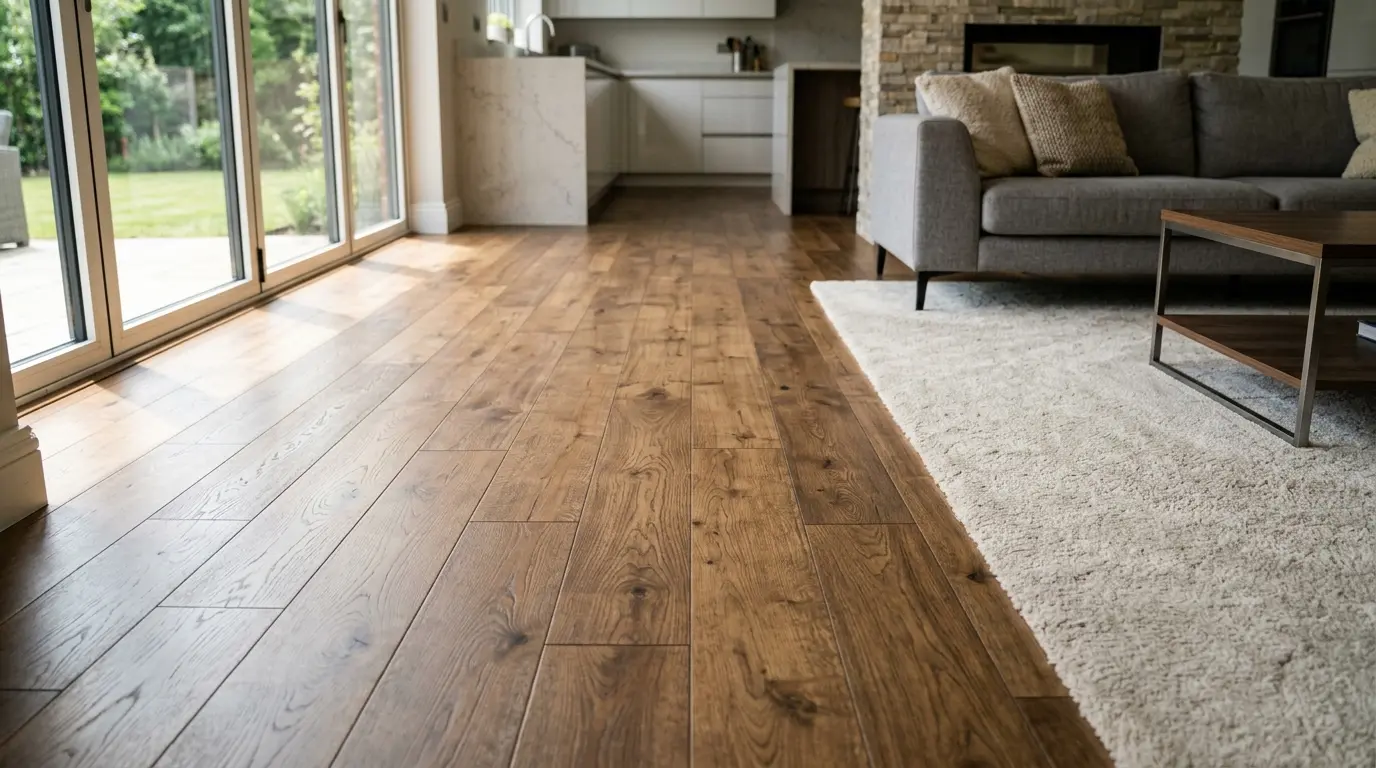

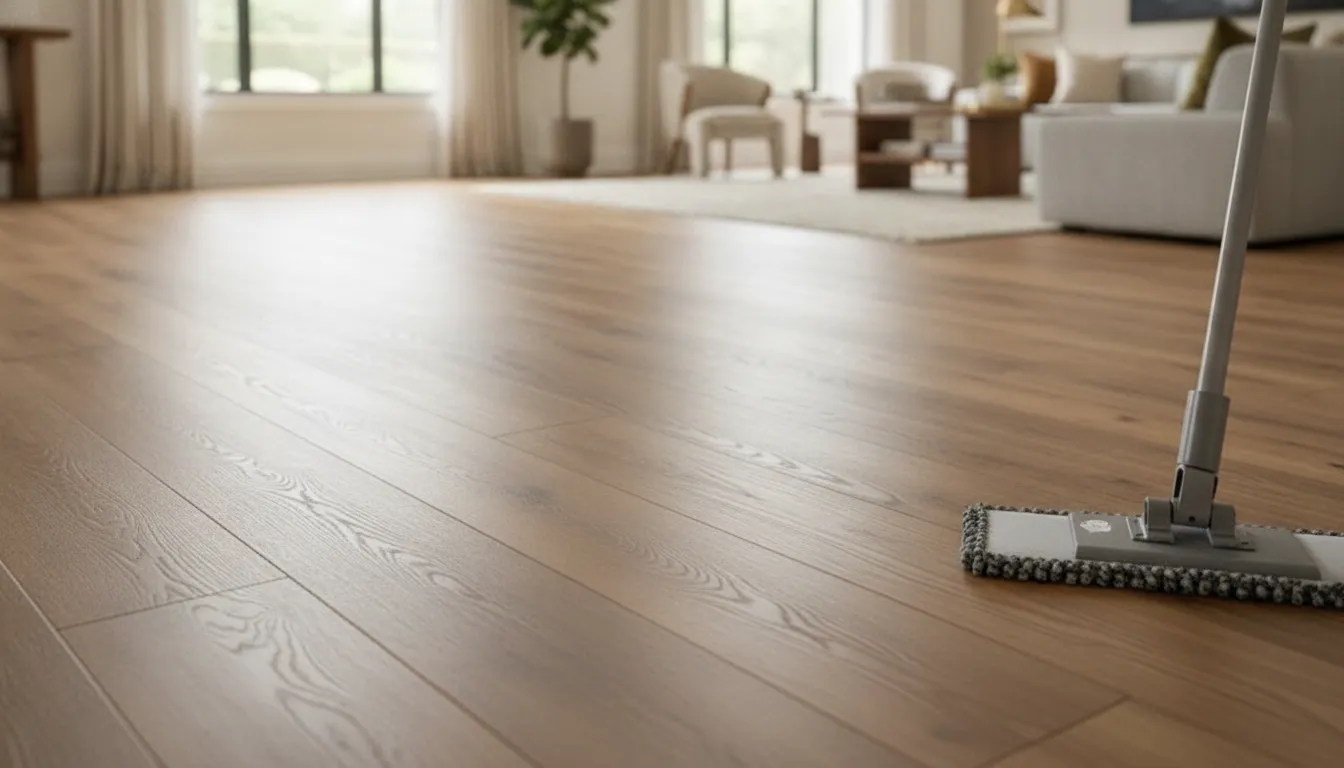
The safest way to clean hardwood floors is to remove dry grit first, use a cleaner approved for the floor's finish, and keep moisture controlled. Sweep or vacuum with a bare-floor setting, wipe spills promptly, and use a lightly damp microfiber mop rather than soaking the floor. Always follow the flooring and cleaner manufacturer's instructions when they differ.
How to clean hardwood floors without damaging the finish
Cleaning a hardwood floor is mostly about controlling what touches the finish. Dust, sand, and small stones can act like abrasives under shoes or furniture. Too much water can work into seams, edges, or damaged areas. A strong household chemical can dull, soften, or discolor a finish that was not designed for it.
Before cleaning, identify what you can about the floor. Solid hardwood, engineered hardwood, prefinished boards, and site-finished floors can have different surface systems. A floor may also have a coating that a previous owner applied. If you are not sure what the finish is, start with the least aggressive routine and test any product in a hidden area. Do not mix cleaners or assume that a method safe for tile, vinyl, or laminate is safe for finished wood.
A low-risk routine has four parts:
- Remove dry soil with a soft broom, dust mop, or vacuum set for bare floors.
- Wipe spills and tracked-in moisture as soon as practical with a clean, absorbent cloth.
- Use a small amount of finish-compatible cleaner on a microfiber mop, following its label.
- Leave the floor free of standing moisture and let it dry according to the product directions.
That routine handles ordinary dust, crumbs, and light footprints without turning routine care into a wet cleaning project.
Start with dry cleaning, not water
Dry debris is often the first source of avoidable wear. Grit can move across the finish each time someone walks over it, especially near exterior doors, kitchens, mudrooms, and busy hallways. Removing that material before damp cleaning reduces the amount of rubbing needed later.
Choose one of these tools:
- A soft-bristled broom and dustpan for corners, thresholds, and quick touch-ups.
- A microfiber dust mop for open areas and regular whole-room maintenance.
- A vacuum with a bare-floor setting, soft floor head, or brush attachment that will not drag a beater bar across the finish.
Inspect the vacuum head before using it. A trapped stone, worn wheel, or rough edge can leave a mark even if the machine is advertised for hard floors. Move furniture carefully rather than pulling it across the room, and pick up small objects before vacuuming.
Dry clean more often in the areas that collect the most grit. A short pass through an entryway can be more protective than waiting until the entire floor looks dirty. Place a mat at an exterior entry where it is appropriate for the space, and keep the mat clean so it does not become a source of abrasive debris. Check the backing and the flooring manufacturer's guidance before leaving any mat in place for long periods, because some backings can hold moisture against the finish.
Use a finish-safe cleaner and a lightly damp mop
The right cleaner depends on the finish, the product manufacturer, and the soil you are trying to remove. A cleaner made for finished hardwood is a safer starting point than a general-purpose degreaser. Read the label for dilution, application, and whether the product should be sprayed on the mop or used another way.
Use a microfiber mop that can be wrung out well. The mop should be damp enough to lift residue, not wet enough to leave puddles or visible trails of water. Work in manageable sections. If a section stays wet, reduce the amount of solution and improve ventilation rather than adding more product.
A practical damp-cleaning sequence looks like this:
- Remove furniture and small objects only if you can do so without dragging them.
- Dry mop or vacuum the floor, including edges and under accessible furniture.
- Prepare the cleaner exactly as its label directs. Do not add vinegar, bleach, detergent, or another product unless the flooring or cleaner instructions specifically allow it.
- Test the solution in a discreet spot if you have not used it on this floor before.
- Mop a small section with the microfiber head lightly dampened and wrung out.
- Rinse or change the mop head when it picks up visible soil, following the cleaner's instructions.
- Check for wet spots, residue, or streaks before moving to the next section.
Never leave a bucket, spray bottle, or saturated mop sitting on hardwood. Wipe accidental spills instead of spreading them across a larger area. Pay particular attention to joints, board ends, transitions, and areas beside sinks or exterior doors.
Clean spills and stains according to the material
A fresh spill is usually easier to manage than a set stain. Blot liquid with a soft cloth, then use the cleaner approved for the floor if residue remains. Avoid scrubbing hard enough to create a shiny patch or remove the finish around the spill.
Different marks call for different caution:
- Dust and loose soil usually need dry removal, not stronger chemicals.
- Food or drink residue may need a small amount of finish-safe cleaner on a cloth or mop.
- Grease can spread when rubbed, so use the product instructions and change to a clean part of the cloth as needed.
- Black scuffs may lift with gentle, finish-safe cleaning, but aggressive rubbing can change the sheen.
- Dark gray, black, or persistent pet stains may have reached the wood fiber below the finish. Cleaning alone may not remove them.
- Water marks, cupping, swelling, or open seams need more than a surface-cleaning routine. Find and address the moisture source before adding more liquid.
Do not sand a stain or scrape a finish simply because a household cleaner did not remove it. The repair may require a finish assessment, board repair, screening, or a full refinish. If the flooring is a recent installation, check the product warranty and ask the installer what maintenance products are approved.
Products and tools that can damage a hardwood finish
A product can leave a floor looking shiny while still creating a maintenance problem. Some formulas leave a film that attracts soil or makes future recoating difficult. Others are too alkaline, acidic, abrasive, or solvent-heavy for a particular finish. The label and flooring documentation matter more than a generic cleaning shortcut.
Avoid using the following unless the flooring manufacturer or finish professional specifically confirms that they are appropriate:
- Steam mops or hot steam, which can force heat and moisture into seams or vulnerable areas.
- Abrasive powders, scouring pads, stiff brushes, or rough scrubbers.
- Bleach, ammonia, strong degreasers, or mixed household chemicals.
- Vinegar solutions or other acidic mixtures promoted as universal floor cleaners.
- Wax, polish, oil soap, or restorer products that leave a film when the finish system does not allow them.
- Excess water, spray that pools, or a soaking string mop.
- Adhesive-backed pads and rubber or plastic materials that trap moisture or react with the finish.
A finish may appear dull after repeated use of a product that was too strong or left residue. That does not mean another coat of cleaner will restore it. Stop using the product, remove only residue that the manufacturer says can be removed safely, and have the surface assessed if the appearance does not improve.
| Floor situation | Safer starting point | Avoid until the floor is assessed |
|---|---|---|
| Routine dust and grit. | Soft dust mop, broom, or bare-floor vacuum. | Abrasive pads and hard brush heads. |
| Light spills or footprints. | Finish-safe cleaner and a well-wrung microfiber mop. | Standing water and saturated mops. |
| Dull finish with no deep damage. | Product-approved maintenance cleaner and a finish review. | Wax, polish, or restorer products that leave an unknown film. |
| Deep stains, cupping, or open seams. | Stop adding liquid and find the moisture or finish issue. | Scraping, sanding, bleach, or spot chemicals. |
Protect the floor between cleanings
Cleaning is only one part of hardwood floor care. Prevention reduces how much soil and moisture reach the finish in the first place. Use felt or other floor-protection pads that are suitable for the furniture and replace them when they collect grit or flatten. Lift furniture to reposition it, and use a suitable moving aid rather than sliding heavy pieces across the floor.
Keep an eye on these habits:
- Trim pet nails as needed and keep pet paws free of tracked-in grit or moisture.
- Use entry mats in locations allowed by the flooring instructions and keep them clean and dry.
- Wipe wet shoes, spilled drinks, and tracked-in rain instead of letting moisture sit.
- Use rugs only when their backing is compatible with the floor and does not hold moisture.
- Keep indoor humidity within the range recommended for the flooring product and local conditions.
- Watch for loose boards, expanding gaps, cupping, or finish changes that cleaning will not correct.
Avoid assuming that a hardwood floor is sealed against every spill. A finished surface slows absorption, but joints, edges, damage, and worn finish areas can still be vulnerable. Kitchens, entryways, and commercial spaces may need a more frequent dry-cleaning schedule because they receive more grit and traffic.
When cleaning is not enough
A floor that looks dull is not automatically a candidate for sanding. First determine whether the issue is loose soil, cleaner residue, light wear in the finish, or damage in the wood itself. The distinction affects the scope and the risk of changing the floor's color or surface.
A screen and recoat may fit a floor with a sound finish that has lost sheen or developed light surface wear. This process lightly abrades the existing finish and applies a new coat without removing the floor down to bare wood. It does not erase deep stains, major dents, cupping, or damage below the finish. Read the guide to screening and recoating versus sanding and refinishing before treating a new topcoat as a universal fix.
A sand and refinish is a larger intervention. It can remove the existing finish and some wood, address certain scratches or stains, and allow a new finish or approved stain system. The amount of material available, previous sanding, board condition, and any moisture issue all matter. ValorCraft's hardwood sand and refinish service describes assessment, sanding, finish choices, and board repair as separate parts of the conversation.
For a new installation or a floor that is failing in a broader way, cleaning should not hide preparation questions. A flooring professional may need to discuss the substrate, moisture conditions, transitions, trim, repairs, and the product's care requirements. Review the available hardwood flooring installation service and ask what the written estimate includes before work begins.
Questions to ask before a cleaning or refinishing plan
A clear scope helps prevent the wrong treatment from being applied to the floor. Bring photos of the problem areas and note where moisture, pets, furniture, or heavy traffic are involved. Then ask:
- What finish or coating is on the floor, and which cleaner does the product manufacturer approve?
- Is the concern surface dirt, cleaner residue, finish wear, or damage in the wood?
- Can a small test area confirm the recommended method before the full room is treated?
- Will furniture moving, appliance moving, repairs, stain samples, and cleanup be included or excluded?
- If sanding or recoating is proposed, which rooms, edges, closets, transitions, and stairs are in the scope?
- Are cure, ventilation, access, and furniture replacement instructions provided in writing?
- What moisture source, substrate issue, or board movement needs attention before finish work?
For a commercial or multi-unit property, add questions about access windows, work phasing, occupant protection, recurring cleaning products, and who approves extra work. A maintenance routine is easier to follow when the product, area, frequency, and responsible team are documented.
FAQs: Hardwood floor cleaning questions to settle first
Can I use a steam mop on hardwood floors?
Do not assume a steam mop is safe because the floor is sealed. Heat and moisture can reach seams, edges, or areas where the finish is worn. Use a steam mop only if the flooring and finish manufacturer specifically allows it for that product. Otherwise, use dry removal followed by a controlled, lightly damp cleaning method.
Is vinegar safe for cleaning hardwood floors?
Vinegar is often recommended as a household shortcut, but an acidic mixture is not a universal hardwood cleaner. It can affect the appearance of some finishes or leave a result the manufacturer does not support. Choose a cleaner labeled for the specific finished floor, and test it in a hidden area when the product history is uncertain.
How often should hardwood floors be damp mopped?
There is no single interval for every home or building. Dry-clean busy areas whenever grit is visible, then damp clean when the floor has residue that dry removal cannot lift. Traffic, pets, entry conditions, spills, finish type, and the product instructions should determine the schedule. More frequent damp mopping is not automatically better if it adds unnecessary moisture.
How do I know if cleaning or refinishing is needed?
Look at the location and depth of the problem. Loose soil and light residue should respond to the approved routine. A dull but intact finish may call for a maintenance review or screen and recoat. Deep scratches, stains in the wood, cupping, peeling finish, or open seams need an assessment before anyone applies more cleaner.
A simple hardwood floor care schedule
Use the flooring manufacturer's instructions as the controlling reference, then adapt the frequency to traffic and conditions. The schedule below is a starting framework, not a promise that every floor needs the same treatment.
- Daily or as needed: Remove visible grit, wipe spills, and check entry points after wet weather.
- Several times each week in busy areas: Dust mop or vacuum with a suitable bare-floor setting.
- Periodically: Damp clean with an approved product and a well-wrung microfiber mop.
- Seasonally: Check furniture pads, mats, transitions, and high-traffic finish areas.
- When the appearance changes: Stop experimenting with stronger products and determine whether the problem is residue, finish wear, moisture, or damage.
The goal is not to make the floor wet or glossy. The goal is to remove soil while preserving the finish system and catching moisture or wear before it becomes a larger flooring question.
Contact ValorCraft Flooring to talk through your project.